







Mexican prints reframe war, nationhood at Tehran museum
The Tehran Museum of Contemporary Art (TMoCA) mounted a rare exhibition of Mexican printmaking that traces the intertwined narratives of war, resistance and national identity, presenting works from its collection as part of its ongoing ‘Art & War’ series in Tehran.
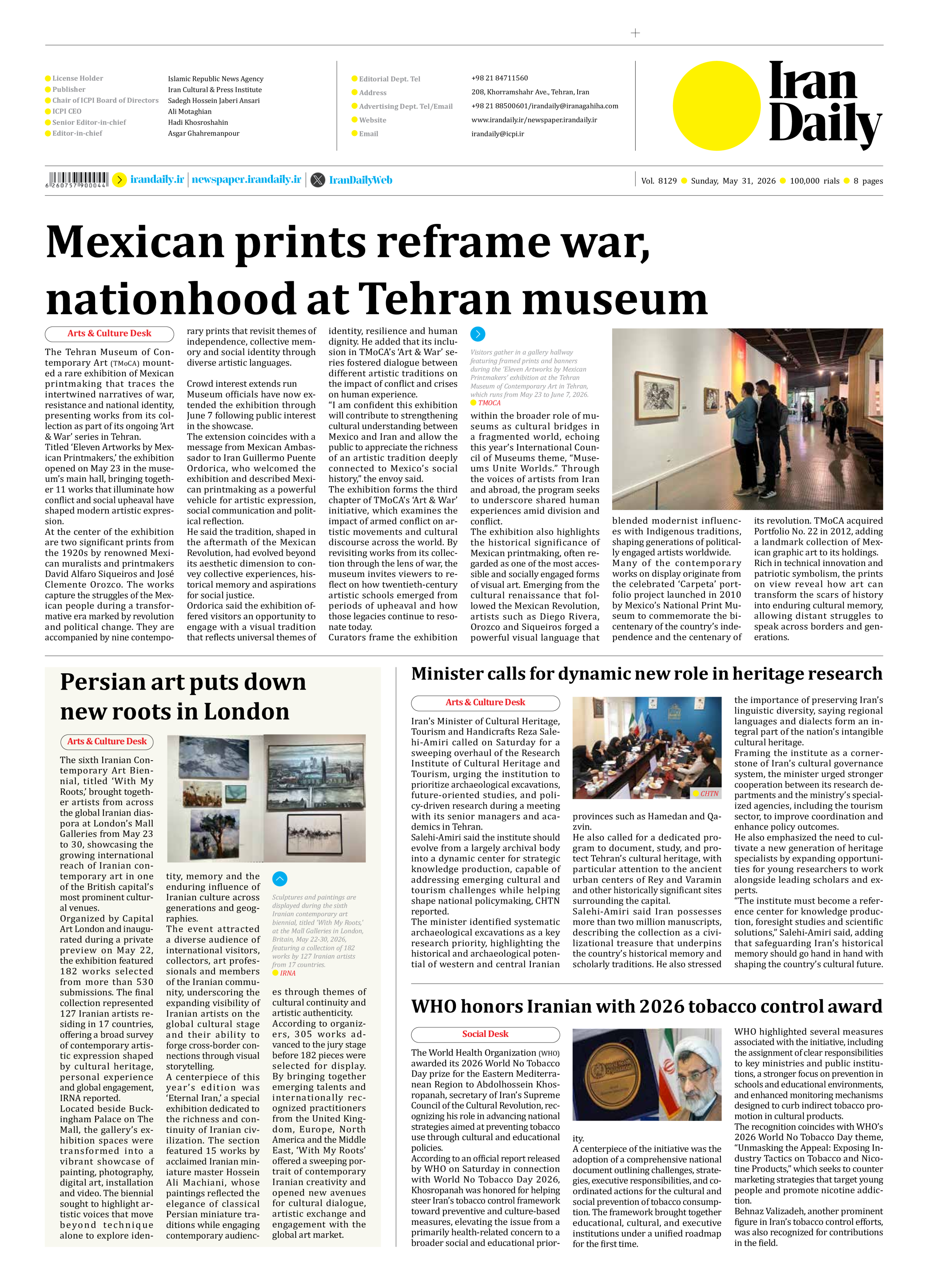
Titled ‘Eleven Artworks by Mexican Printmakers,’ the exhibition opened on May 23 in the museum’s main hall, bringing together 11 works that illuminate how conflict and social upheaval have shaped modern artistic expression.
At the center of the exhibition are two significant prints from the 1920s by renowned Mexican muralists and printmakers David Alfaro Siqueiros and José Clemente Orozco. The works capture the struggles of the Mexican people during a transformative era marked by revolution and political change. They are accompanied by nine contemporary prints that revisit themes of independence, collective memory and social identity through diverse artistic languages.
Crowd interest extends run
Museum officials have now extended the exhibition through June 7 following public interest in the showcase.
The extension coincides with a message from Mexican Ambassador to Iran Guillermo Puente Ordorica, who welcomed the exhibition and described Mexican printmaking as a powerful vehicle for artistic expression, social communication and political reflection.
He said the tradition, shaped in the aftermath of the Mexican Revolution, had evolved beyond its aesthetic dimension to convey collective experiences, historical memory and aspirations for social justice.
Ordorica said the exhibition offered visitors an opportunity to engage with a visual tradition that reflects universal themes of identity, resilience and human dignity. He added that its inclusion in TMoCA’s ‘Art & War’ series fostered dialogue between different artistic traditions on the impact of conflict and crises on human experience.
“I am confident this exhibition will contribute to strengthening cultural understanding between Mexico and Iran and allow the public to appreciate the richness of an artistic tradition deeply connected to Mexico’s social history,” the envoy said.
The exhibition forms the third chapter of TMoCA’s ‘Art & War’ initiative, which examines the impact of armed conflict on artistic movements and cultural discourse across the world. By revisiting works from its collection through the lens of war, the museum invites viewers to reflect on how twentieth-century artistic schools emerged from periods of upheaval and how those legacies continue to resonate today.
Curators frame the exhibition within the broader role of museums as cultural bridges in a fragmented world, echoing this year’s International Council of Museums theme, “Museums Unite Worlds.” Through the voices of artists from Iran and abroad, the program seeks to underscore shared human experiences amid division and conflict.
The exhibition also highlights the historical significance of Mexican printmaking, often regarded as one of the most accessible and socially engaged forms of visual art. Emerging from the cultural renaissance that followed the Mexican Revolution, artists such as Diego Rivera, Orozco and Siqueiros forged a powerful visual language that blended modernist influences with Indigenous traditions, shaping generations of politically engaged artists worldwide.
Many of the contemporary works on display originate from the celebrated ‘Carpeta’ portfolio project launched in 2010 by Mexico’s National Print Museum to commemorate the bicentenary of the country’s independence and the centenary of its revolution. TMoCA acquired Portfolio No. 22 in 2012, adding a landmark collection of Mexican graphic art to its holdings.
Rich in technical innovation and patriotic symbolism, the prints on view reveal how art can transform the scars of history into enduring cultural memory, allowing distant struggles to speak across borders and generations.