







4,800-year-old Anubanini Relief seeks recognition in Kermanshah
Thanks to its four-season climate, towering mountains, fertile plains, abundant rivers and springs, and strategic location along the ancient route connecting the Iranian plateau to Mesopotamia, the western Iranian province of Kermanshah has long been a focal point for civilizations, empires, and rulers throughout history.
The province is home to nearly 5,000 identified historical sites, making it one of Iran’s three richest provinces in terms of archaeological heritage. Yet despite this wealth of antiquities, only a handful of landmarks — including the UNESCO-listed Bisotun Inscription, Taq-e Bostan, the Temple of Anahita, Biglarbeigi Tekyeh, and Moaven al-Molk Tekyeh — have received national and international recognition, according to ISNA.
Historians and cultural heritage experts say that nearly 99 percent of Kermanshah’s historical treasures remain largely unknown, despite many possessing cultural value equal to or even greater than the province’s most famous monuments.
As Iran marks Cultural Heritage Week (May 18-24), renewed attention is being drawn to one such neglected site: the Anubanini Inscription in Sarpol-e Zahab, which some historians consider one of the oldest inscriptions in both Iran and the Middle East.
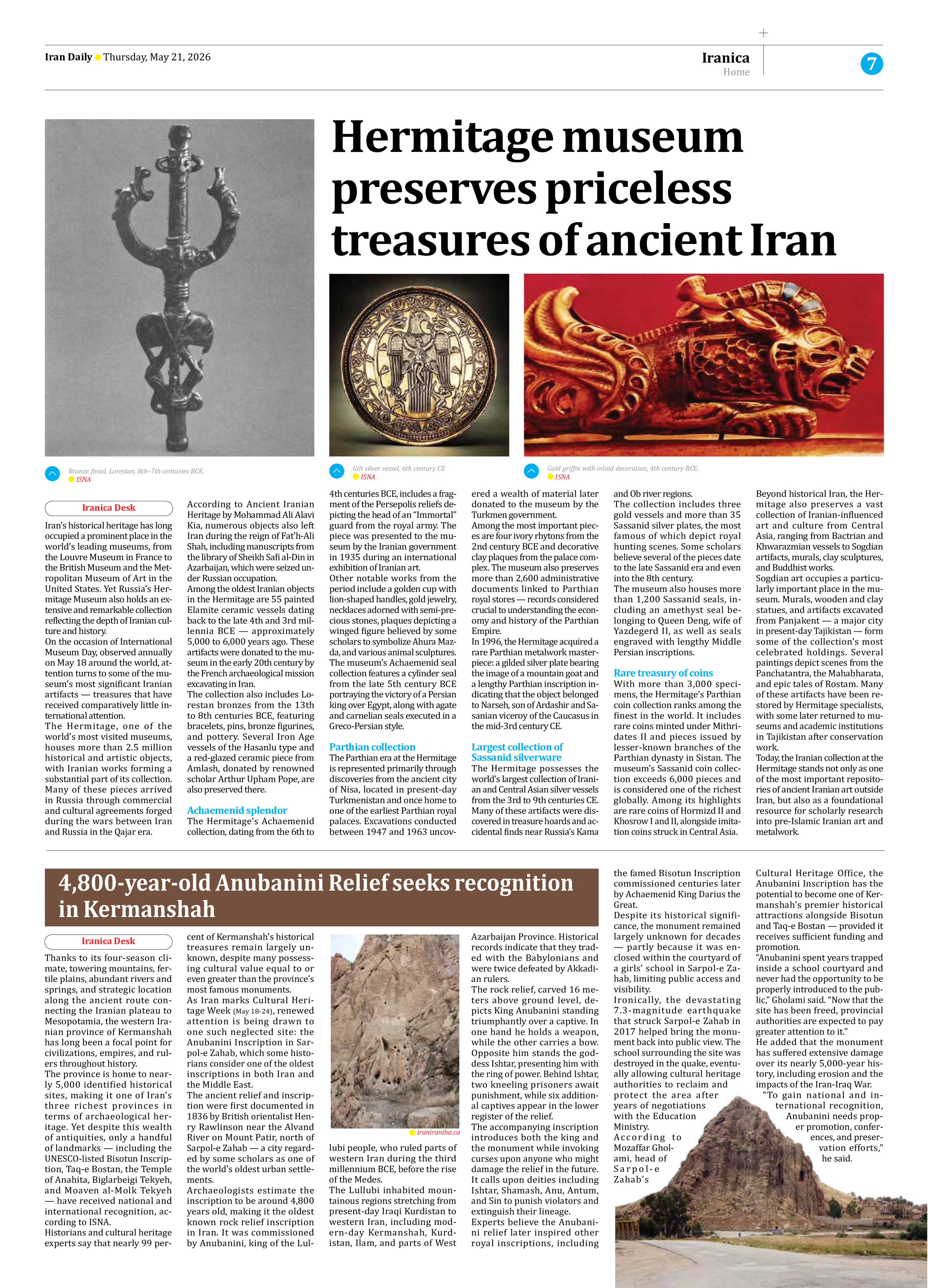
The ancient relief and inscription were first documented in 1836 by British orientalist Henry Rawlinson near the Alvand River on Mount Patir, north of Sarpol-e Zahab — a city regarded by some scholars as one of the world’s oldest urban settlements.
Archaeologists estimate the inscription to be around 4,800 years old, making it the oldest known rock relief inscription in Iran. It was commissioned by Anubanini, king of the Lullubi people, who ruled parts of western Iran during the third millennium BCE, before the rise of the Medes.
The Lullubi inhabited mountainous regions stretching from present-day Iraqi Kurdistan to western Iran, including modern-day Kermanshah, Kurdistan, Ilam, and parts of West Azarbaijan Province. Historical records indicate that they traded with the Babylonians and were twice defeated by Akkadian rulers.
The rock relief, carved 16 meters above ground level, depicts King Anubanini standing triumphantly over a captive. In one hand he holds a weapon, while the other carries a bow. Opposite him stands the goddess Ishtar, presenting him with the ring of power. Behind Ishtar, two kneeling prisoners await punishment, while six additional captives appear in the lower register of the relief.
The accompanying inscription introduces both the king and the monument while invoking curses upon anyone who might damage the relief in the future. It calls upon deities including Ishtar, Shamash, Anu, Antum, and Sin to punish violators and extinguish their lineage.
Experts believe the Anubanini relief later inspired other royal inscriptions, including the famed Bisotun Inscription commissioned centuries later by Achaemenid King Darius the Great.
Despite its historical significance, the monument remained largely unknown for decades — partly because it was enclosed within the courtyard of a girls’ school in Sarpol-e Zahab, limiting public access and visibility.
Ironically, the devastating 7.3-magnitude earthquake that struck Sarpol-e Zahab in 2017 helped bring the monument back into public view. The school surrounding the site was destroyed in the quake, eventually allowing cultural heritage authorities to reclaim and protect the area after years of negotiations with the Education Ministry.
According to Mozaffar Gholami, head of Sarpol-e Zahab’s Cultural Heritage Office, the Anubanini Inscription has the potential to become one of Kermanshah’s premier historical attractions alongside Bisotun and Taq-e Bostan — provided it receives sufficient funding and promotion.
“Anubanini spent years trapped inside a school courtyard and never had the opportunity to be properly introduced to the public,” Gholami said. “Now that the site has been freed, provincial authorities are expected to pay greater attention to it.”
He added that the monument has suffered extensive damage over its nearly 5,000-year history, including erosion and the impacts of the Iran-Iraq War.
“To gain national and international recognition, Anubanini needs proper promotion, conferences, and preservation efforts,” he said.