







Copy in clipboard...
Gov’t reviews trade, transit expansion with neighbors in focus
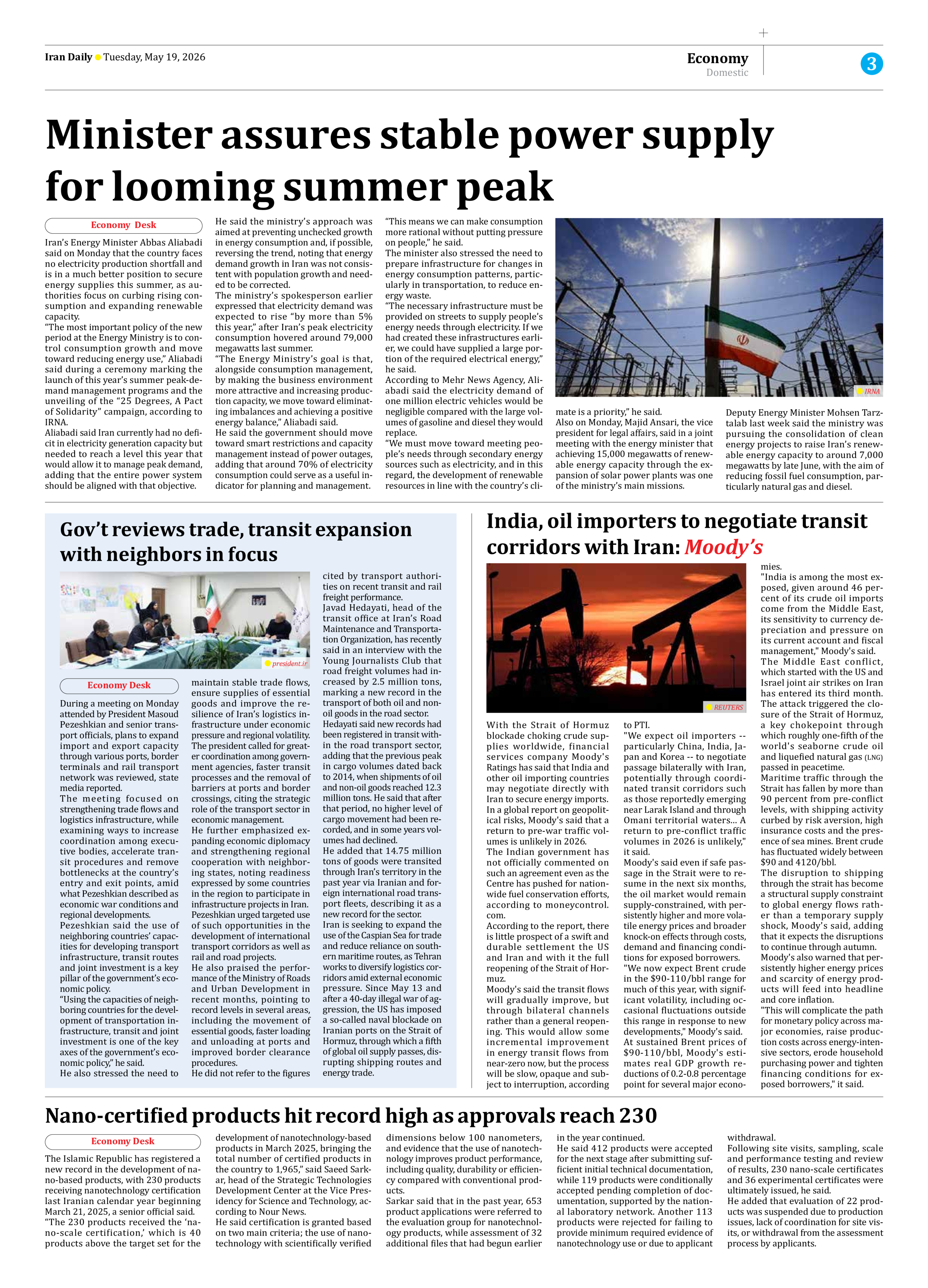
During a meeting on Monday attended by President Masoud Pezeshkian and senior transport officials, plans to expand import and export capacity through various ports, border terminals and rail transport network was reviewed, state media reported.
The meeting focused on strengthening trade flows and logistics infrastructure, while examining ways to increase coordination among executive bodies, accelerate transit procedures and remove bottlenecks at the country’s entry and exit points, amid what Pezeshkian described as economic war conditions and regional developments.
Pezeshkian said the use of neighboring countries’ capacities for developing transport infrastructure, transit routes and joint investment is a key pillar of the government’s economic policy.
“Using the capacities of neighboring countries for the development of transportation infrastructure, transit and joint investment is one of the key axes of the government’s economic policy,” he said.
He also stressed the need to maintain stable trade flows, ensure supplies of essential goods and improve the resilience of Iran’s logistics infrastructure under economic pressure and regional volatility.
The president called for greater coordination among government agencies, faster transit processes and the removal of barriers at ports and border crossings, citing the strategic role of the transport sector in economic management.
He further emphasized expanding economic diplomacy and strengthening regional cooperation with neighboring states, noting readiness expressed by some countries in the region to participate in infrastructure projects in Iran.
Pezeshkian urged targeted use of such opportunities in the development of international transport corridors as well as rail and road projects.
He also praised the performance of the Ministry of Roads and Urban Development in recent months, pointing to record levels in several areas, including the movement of essential goods, faster loading and unloading at ports and improved border clearance procedures.
He did not refer to the figures cited by transport authorities on recent transit and rail freight performance.
Javad Hedayati, head of the transit office at Iran’s Road Maintenance and Transportation Organization, has recently said in an interview with the Young Journalists Club that road freight volumes had increased by 2.5 million tons, marking a new record in the transport of both oil and non-oil goods in the road sector.
Hedayati said new records had been registered in transit within the road transport sector, adding that the previous peak in cargo volumes dated back to 2014, when shipments of oil and non-oil goods reached 12.3 million tons. He said that after that period, no higher level of cargo movement had been recorded, and in some years volumes had declined.
He added that 14.75 million tons of goods were transited through Iran’s territory in the past year via Iranian and foreign international road transport fleets, describing it as a new record for the sector.
Iran is seeking to expand the use of the Caspian Sea for trade and reduce reliance on southern maritime routes, as Tehran works to diversify logistics corridors amid external economic pressure. Since May 13 and after a 40-day illegal war of aggression, the US has imposed a so-called naval blockade on Iranian ports on the Strait of Hormuz, through which a fifth of global oil supply passes, disrupting shipping routes and energy trade.