







Copy in clipboard...
Hormuz crisis rests with ‘initiators of war’ against Iran, region: UN envoy
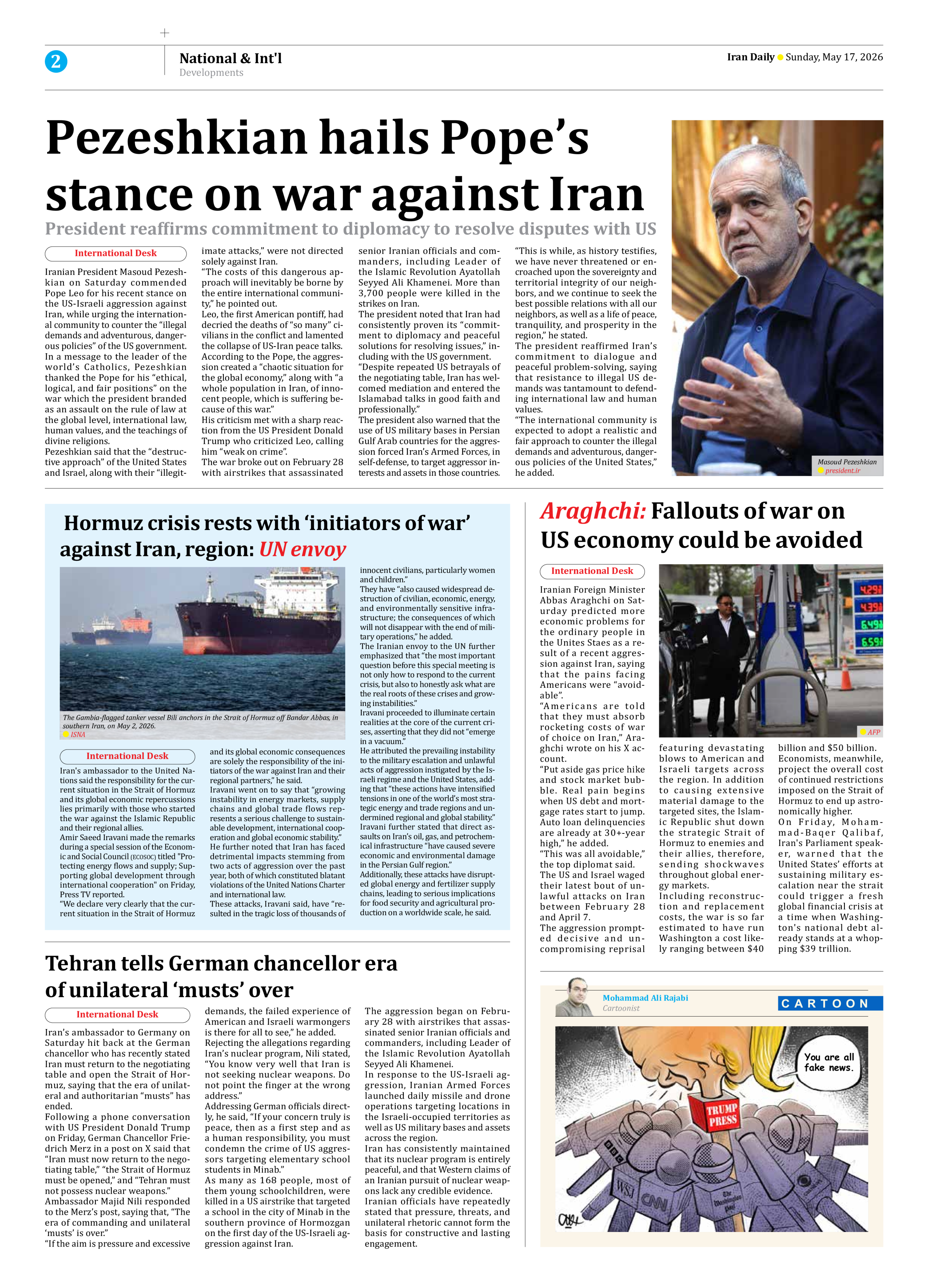
Iran's ambassador to the United Nations said the responsibility for the current situation in the Strait of Hormuz and its global economic repercussions lies primarily with those who started the war against the Islamic Republic and their regional allies.
Amir Saeed Iravani made the remarks during a special session of the Economic and Social Council (ECOSOC) titled "Protecting energy flows and supply; Supporting global development through international cooperation" on Friday, Press TV reported.
“We declare very clearly that the current situation in the Strait of Hormuz and its global economic consequences are solely the responsibility of the initiators of the war against Iran and their regional partners,” he said.
Iravani went on to say that “growing instability in energy markets, supply chains and global trade flows represents a serious challenge to sustainable development, international cooperation and global economic stability.”
He further noted that Iran has faced detrimental impacts stemming from two acts of aggression over the past year, both of which constituted blatant violations of the United Nations Charter and international law.
These attacks, Iravani said, have “resulted in the tragic loss of thousands of innocent civilians, particularly women and children.”
They have “also caused widespread destruction of civilian, economic, energy, and environmentally sensitive infrastructure; the consequences of which will not disappear with the end of military operations,” he added.
The Iranian envoy to the UN further emphasized that “the most important question before this special meeting is not only how to respond to the current crisis, but also to honestly ask what are the real roots of these crises and growing instabilities.”
Iravani proceeded to illuminate certain realities at the core of the current crises, asserting that they did not “emerge in a vacuum.”
He attributed the prevailing instability to the military escalation and unlawful acts of aggression instigated by the Israeli regime and the United States, adding that “these actions have intensified tensions in one of the world’s most strategic energy and trade regions and undermined regional and global stability.”
Iravani further stated that direct assaults on Iran’s oil, gas, and petrochemical infrastructure “have caused severe economic and environmental damage in the Persian Gulf region.”
Additionally, these attacks have disrupted global energy and fertilizer supply chains, leading to serious implications for food security and agricultural production on a worldwide scale, he said.