







Minister calls for wider cultural access for children
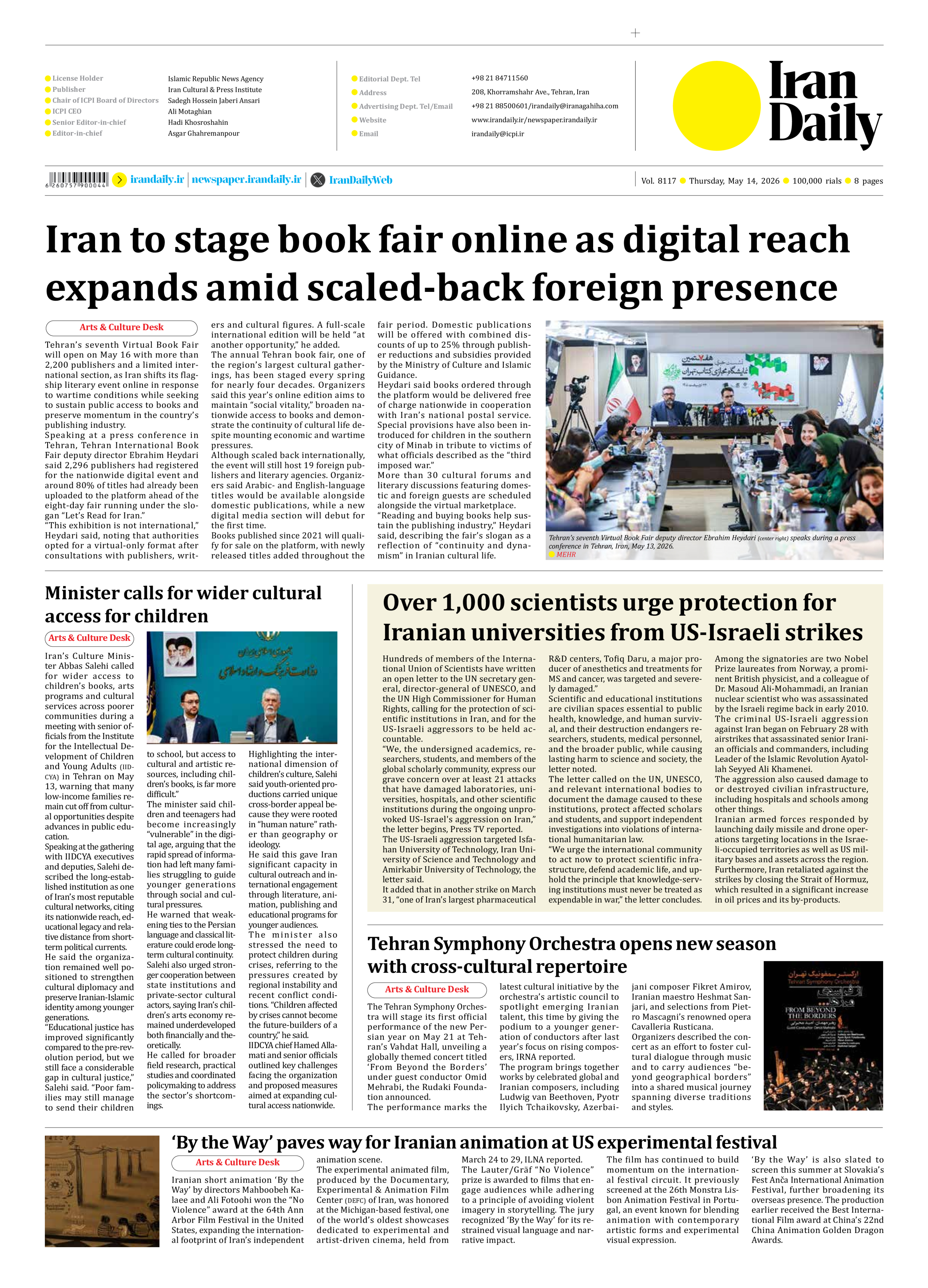
Iran’s Culture Minister Abbas Salehi called for wider access to children’s books, arts programs and cultural services across poorer communities during a meeting with senior officials from the Institute for the Intellectual Development of Children and Young Adults (IIDCYA) in Tehran on May 13, warning that many low-income families remain cut off from cultural opportunities despite advances in public education.
Speaking at the gathering with IIDCYA executives and deputies, Salehi described the long-established institution as one of Iran’s most reputable cultural networks, citing its nationwide reach, educational legacy and relative distance from short-term political currents.
He said the organization remained well positioned to strengthen cultural diplomacy and preserve Iranian-Islamic identity among younger generations.
“Educational justice has improved significantly compared to the pre-revolution period, but we still face a considerable gap in cultural justice,” Salehi said. “Poor families may still manage to send their children to school, but access to cultural and artistic resources, including children’s books, is far more difficult.”
The minister said children and teenagers had become increasingly “vulnerable” in the digital age, arguing that the rapid spread of information had left many families struggling to guide younger generations through social and cultural pressures.
He warned that weakening ties to the Persian language and classical literature could erode long-term cultural continuity.
Salehi also urged stronger cooperation between state institutions and private-sector cultural actors, saying Iran’s children’s arts economy remained underdeveloped both financially and theoretically.
He called for broader field research, practical studies and coordinated policymaking to address the sector’s shortcomings.
Highlighting the international dimension of children’s culture, Salehi said youth-oriented productions carried unique cross-border appeal because they were rooted in “human nature” rather than geography or ideology.
He said this gave Iran significant capacity in cultural outreach and international engagement through literature, animation, publishing and educational programs for younger audiences.
The minister also stressed the need to protect children during crises, referring to the pressures created by regional instability and recent conflict conditions. “Children affected by crises cannot become the future-builders of a country,” he said.
IIDCYA chief Hamed Allamati and senior officials outlined key challenges facing the organization and proposed measures aimed at expanding cultural access nationwide.