







Oil prices slip on easing tensions; Iran light crude holds at $110
Oil prices dropped for a second straight day on Wednesday on optimism over easing geopolitical tensions in West Asia, while data showed Iranian crude trading at $110 per barrel, according to market reports.
The specialized OilPrice website said in its latest update that Iran’s light crude for delivery at the Sidi Kerir terminal in Egypt was priced at $110.64 per barrel, marking one of its highest levels.
According to the data, Iranian heavy crude was priced at $108.49 per barrel for delivery at Sidi Kerir, while light and heavy grades delivered in the Mediterranean were quoted at $108.74 and $106.59 per barrel, respectively, with Sidi Kerir recording the highest prices.
Oil prices plunged on Wednesday after reports that the United States and Iran are close to agreeing on a one-page memorandum.
Brent crude fell 10% to $98 and US West Texas Intermediate dropped more than 12% to $89 after reports emerged that Washington and Tehran are discussing a one-page memorandum to pause the Hormuz conflict.
Separately, in official settlement data, Brent futures fell $1.89, or 1.7%, to $107.98 a barrel, after a 4% drop in the previous session, while US West Texas Intermediate crude declined $1.83, or 1.8%, to $100.44 per barrel following a 3.9% fall a day earlier.
A US naval blockade of Iranian ports since mid-April has sharply reduced oil exports, leading to a rapid buildup of crude both onshore and offshore. Data from analytics firm Kpler showed Iranian crude loadings dropping from around 2.1 million barrels per day (bpd) before the blockade to about 567,000 bpd in recent weeks.
US Treasury Secretary Scott Bessent has recently warned that Iran may be forced to shut down oil wells within a week as storage nears capacity under intensified sanctions and maritime restrictions. Maritime intelligence firm TankerTrackers challenged US claims that Iran’s oil production is close to shutdown due to storage constraints, saying output could be sustained even if exports fall sharply.
The US pressure is proclaimed to be part of “Operation Economic Fury,” targeting Iran’s oil exports, financial networks and shipping routes to strain its economy. US President Donald Trump imposed the naval blockade on Iran’s ports in mid-April, aiming to pressure Tehran into a peace agreement after a war that began in late February.
Meanwhile, Iran said it would continue monitoring traffic through the Strait of Hormuz. Under new conditions set by Tehran, only commercial vessels with prior authorization are allowed to transit, while ships linked to the United States, Israel and other “hostile states” are barred.
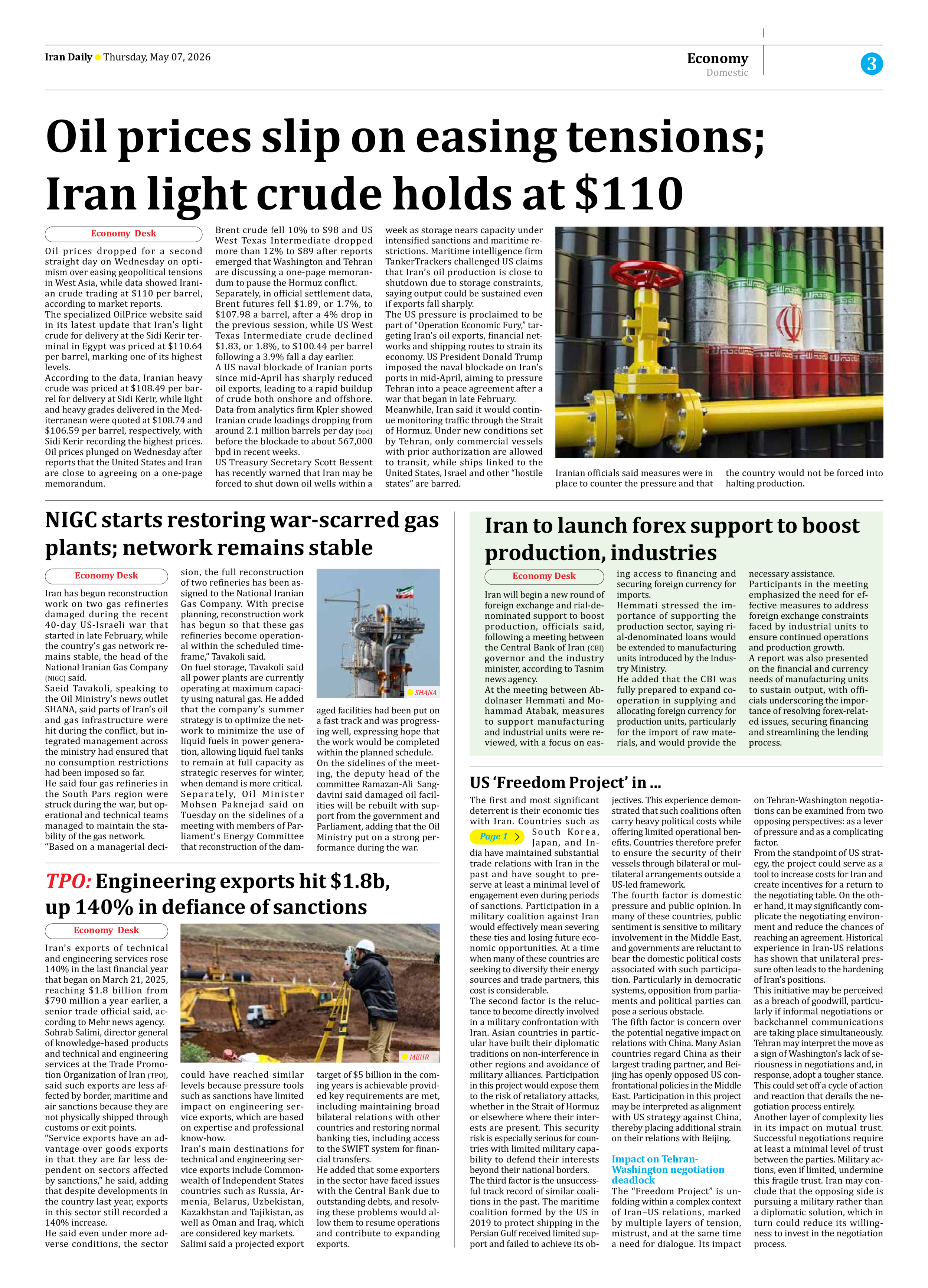
Iranian officials said measures were in place to counter the pressure and that the country would not be forced into halting production.