







Rural homestays become ‘nat’l shelters’ in post-war tourism
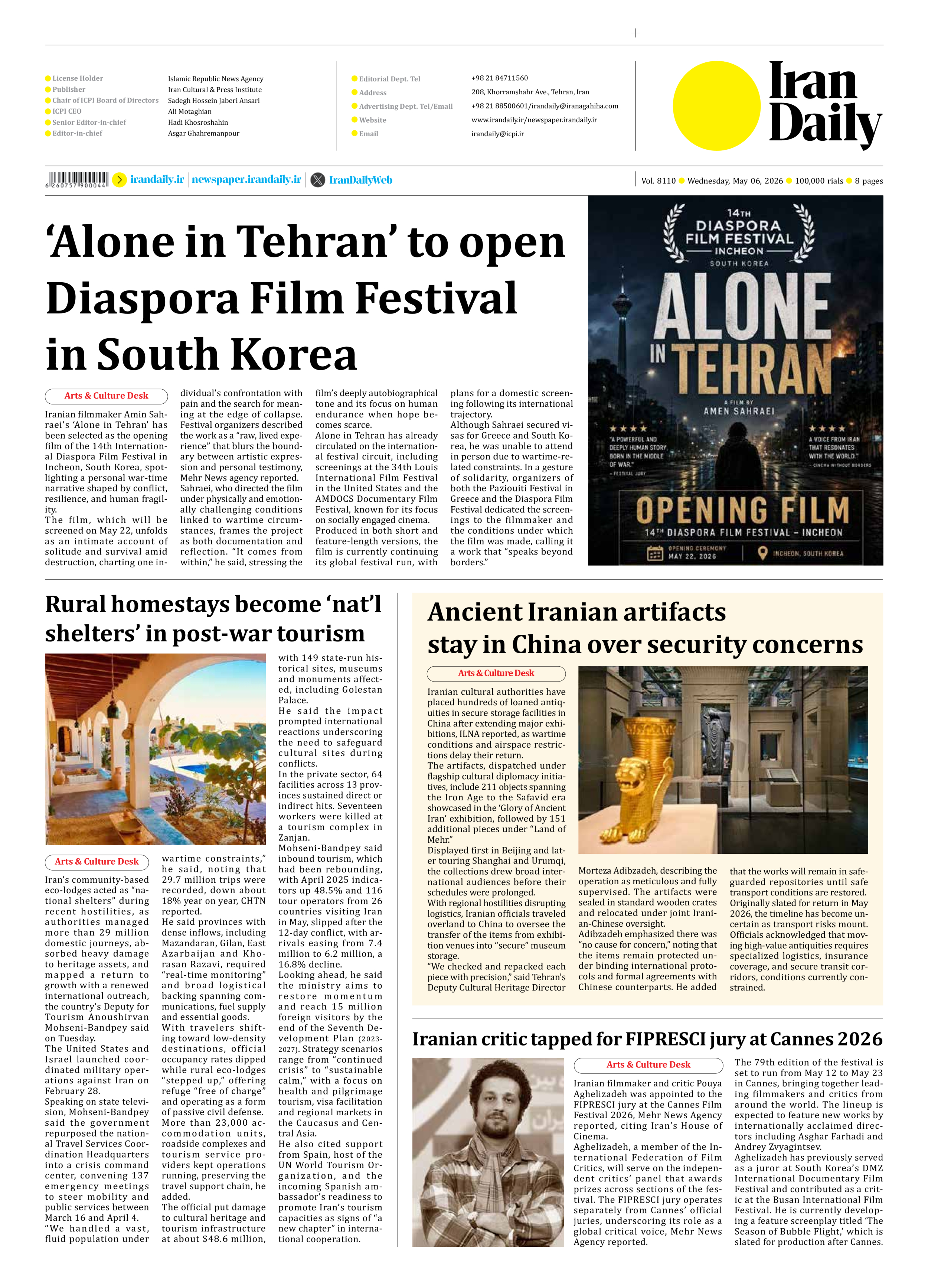
Iran’s community-based eco-lodges acted as “national shelters” during recent hostilities, as authorities managed more than 29 million domestic journeys, absorbed heavy damage to heritage assets, and mapped a return to growth with a renewed international outreach, the country’s Deputy for Tourism Anoushirvan Mohseni-Bandpey said on Tuesday.
The United States and Israel launched coordinated military operations against Iran on February 28.
Speaking on state television, Mohseni-Bandpey said the government repurposed the national Travel Services Coordination Headquarters into a crisis command center, convening 137 emergency meetings to steer mobility and public services between March 16 and April 4.
“We handled a vast, fluid population under wartime constraints,” he said, noting that 29.7 million trips were recorded, down about 18% year on year, CHTN reported.
He said provinces with dense inflows, including Mazandaran, Gilan, East Azarbaijan and Khorasan Razavi, required “real-time monitoring” and broad logistical backing spanning communications, fuel supply and essential goods.
With travelers shifting toward low-density destinations, official occupancy rates dipped while rural eco-lodges “stepped up,” offering refuge “free of charge” and operating as a form of passive civil defense.
More than 23,000 accommodation units, roadside complexes and tourism service providers kept operations running, preserving the travel support chain, he added.
The official put damage to cultural heritage and tourism infrastructure at about $48.6 million, with 149 state-run historical sites, museums and monuments affected, including Golestan Palace.
He said the impact prompted international reactions underscoring the need to safeguard cultural sites during conflicts.
In the private sector, 64 facilities across 13 provinces sustained direct or indirect hits. Seventeen workers were killed at a tourism complex in Zanjan.
Mohseni-Bandpey said inbound tourism, which had been rebounding, with April 2025 indicators up 48.5% and 116 tour operators from 26 countries visiting Iran in May, slipped after the 12-day conflict, with arrivals easing from 7.4 million to 6.2 million, a 16.8% decline.
Looking ahead, he said the ministry aims to restore momentum and reach 15 million foreign visitors by the end of the Seventh Development Plan (2023-2027). Strategy scenarios range from “continued crisis” to “sustainable calm,” with a focus on health and pilgrimage tourism, visa facilitation and regional markets in the Caucasus and Central Asia.
He also cited support from Spain, host of the UN World Tourism Organization, and the incoming Spanish ambassador’s readiness to promote Iran’s tourism capacities as signs of “a new chapter” in international cooperation.