







Torqabeh and Shandiz recognized as leading tourism destination in eastern Iran
The governor of Torqabeh and Shandiz in Iran’s Khorasan Razavi Province has emphasized that the region holds a distinguished position on the province’s tourism map, pointing to its exceptional combination of natural landscapes, historical heritage, and cultural richness as key factors that have made it a popular destination for visitors.
Speaking during a visit to the registered archaeological site of the Dizdar rock carvings, Yadollah Beshkani stressed the importance of protecting this ancient heritage. He described the site as a valuable cultural asset that reflects the identity and historical depth of the region. He also called for coordinated planning and closer cooperation among government agencies to ensure effective preservation of this ancient legacy, ISNA wrote.
Beshkani noted that the Dizdar rock carvings are estimated to be more than 4,000 years old. He added that their national registration represents an important step in both introducing and safeguarding the site. According to him, the protection of such historical works should not be limited to administrative procedures alone, but should be regarded as a collective social responsibility requiring public participation and awareness.
He further stressed that sustainable development in the region must follow a comprehensive and balanced approach. In his view, economic growth and infrastructure expansion should go hand in hand with the preservation of cultural and historical heritage. He highlighted that it is essential to advance tourism facilities while simultaneously maintaining the authenticity and historical identity of the area.
He also underlined the importance of identifying, documenting, and protecting other historical and cultural sites throughout the region. Expressing optimism, he said that with public participation and inter-agency cooperation, significant progress could be made in preserving and introducing these valuable heritage assets to a wider audience.
Describing the region’s tourism position, Beshkani referred to Torqabeh and Shandiz as a “jewel” in the tourism landscape of Khorasan Razavi. He said the area plays a vital role in attracting both domestic tourists and pilgrims traveling to the holy city of Mashhad. According to him, the region has effectively become one of the main drivers of tourism activity in the province.
He also highlighted the strong economic and commercial dimension of the area, stating that it is not only a tourism destination but also a dynamic hub for production, business, and services. Beshkani noted that more than 30 million visitors travel to the area annually. The presence of active tourism facilities, large commercial complexes, and a wide range of local businesses has created a strong economic foundation for the region.
Referring to natural and cultural attractions, he pointed out that the area is known for its pristine environment, mild climate, lush gardens, flowing rivers, and unique landscapes. In addition to these natural features, he emphasized the importance of local culture, traditional hospitality, and widely recognized regional cuisine, all of which contribute to the area’s appeal as a major tourism destination in eastern Iran. He added that many visitors consider their trip to Mashhad incomplete without visiting Torqabeh and Shandiz.
Beshkani also highlighted the significance of rural tourism in the region. He explained that 30 villages have been designated as tourism villages, reflecting their potential in attracting visitors and supporting local development. He said that investing in infrastructure, accommodation facilities, and tourism services in these villages could transform them into attractive destinations while also improving the quality of life for local residents.
Among these villages, the historic village of Kang was introduced as one of the most prominent examples of rural tourism. Known for its stepped architecture, ancient texture, and stunning natural scenery, Kang attracts a large number of visitors each year and is considered one of the oldest and most distinctive tourism sites in the region.
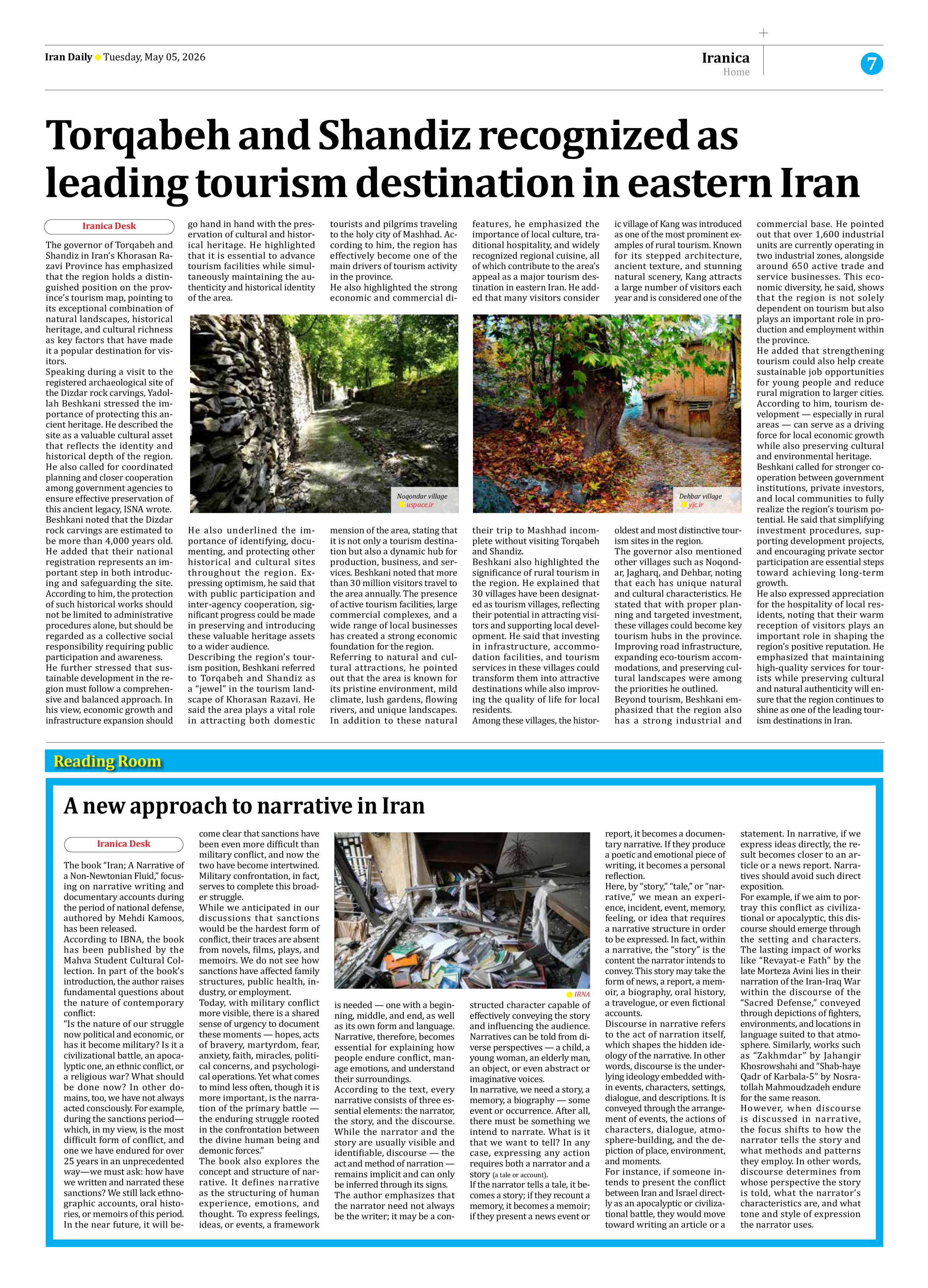
The governor also mentioned other villages such as Noqondar, Jagharq, and Dehbar, noting that each has unique natural and cultural characteristics. He stated that with proper planning and targeted investment, these villages could become key tourism hubs in the province. Improving road infrastructure, expanding eco-tourism accommodations, and preserving cultural landscapes were among the priorities he outlined.
Beyond tourism, Beshkani emphasized that the region also has a strong industrial and commercial base. He pointed out that over 1,600 industrial units are currently operating in two industrial zones, alongside around 650 active trade and service businesses. This economic diversity, he said, shows that the region is not solely dependent on tourism but also plays an important role in production and employment within the province.
He added that strengthening tourism could also help create sustainable job opportunities for young people and reduce rural migration to larger cities. According to him, tourism development — especially in rural areas — can serve as a driving force for local economic growth while also preserving cultural and environmental heritage.
Beshkani called for stronger cooperation between government institutions, private investors, and local communities to fully realize the region’s tourism potential. He said that simplifying investment procedures, supporting development projects, and encouraging private sector participation are essential steps toward achieving long-term growth.
He also expressed appreciation for the hospitality of local residents, noting that their warm reception of visitors plays an important role in shaping the region’s positive reputation. He emphasized that maintaining high-quality services for tourists while preserving cultural and natural authenticity will ensure that the region continues to shine as one of the leading tourism destinations in Iran.