







Copy in clipboard...
Iran proposes 30-day plan to end war, rejects extended ceasefire
Iran’s latest 14-point proposal to the United States calls for issues between the two countries to be resolved within 30 days and aims to end the war rather than extend the ceasefire.
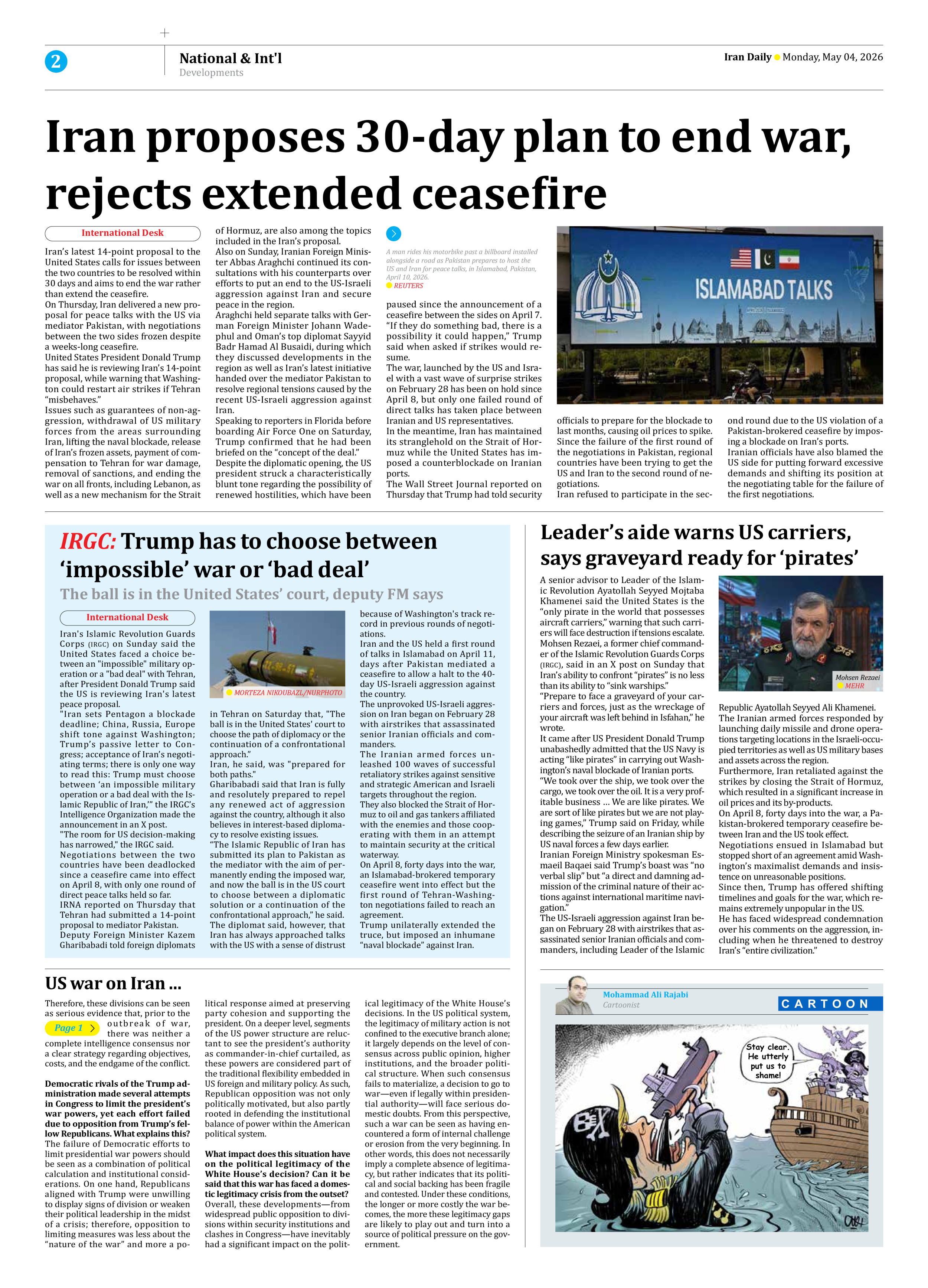
On Thursday, Iran delivered a new proposal for peace talks with the US via mediator Pakistan, with negotiations between the two sides frozen despite a weeks-long ceasefire.
United States President Donald Trump has said he is reviewing Iran’s 14-point proposal, while warning that Washington could restart air strikes if Tehran “misbehaves.”
Issues such as guarantees of non-aggression, withdrawal of US military forces from the areas surrounding Iran, lifting the naval blockade, release of Iran’s frozen assets, payment of compensation to Tehran for war damage, removal of sanctions, and ending the war on all fronts, including Lebanon, as well as a new mechanism for the Strait of Hormuz, are also among the topics included in the Iran’s proposal.
Also on Sunday, Iranian Foreign Minister Abbas Araghchi continued its consultations with his counterparts over efforts to put an end to the US-Israeli aggression against Iran and secure peace in the region.
Araghchi held separate talks with German Foreign Minister Johann Wadephul and Oman’s top diplomat Sayyid Badr Hamad Al Busaidi, during which they discussed developments in the region as well as Iran’s latest initiative handed over the mediator Pakistan to resolve regional tensions caused by the recent US-Israeli aggression against Iran.
Speaking to reporters in Florida before boarding Air Force One on Saturday, Trump confirmed that he had been briefed on the “concept of the deal.”
Despite the diplomatic opening, the US president struck a characteristically blunt tone regarding the possibility of renewed hostilities, which have been paused since the announcement of a ceasefire between the sides on April 7.
“If they do something bad, there is a possibility it could happen,” Trump said when asked if strikes would resume.
The war, launched by the US and Israel with a vast wave of surprise strikes on February 28 has been on hold since April 8, but only one failed round of direct talks has taken place between Iranian and US representatives.
In the meantime, Iran has maintained its stranglehold on the Strait of Hormuz while the United States has imposed a counterblockade on Iranian ports.
The Wall Street Journal reported on Thursday that Trump had told security officials to prepare for the blockade to last months, causing oil prices to spike.
Since the failure of the first round of the negotiations in Pakistan, regional countries have been trying to get the US and Iran to the second round of negotiations.
Iran refused to participate in the second round due to the US violation of a Pakistan-brokered ceasefire by imposing a blockade on Iran’s ports.
Iranian officials have also blamed the US side for putting forward excessive demands and shifting its position at the negotiating table for the failure of the first negotiations.