







Iran nears malaria elimination as cross-border controls bolster regional health
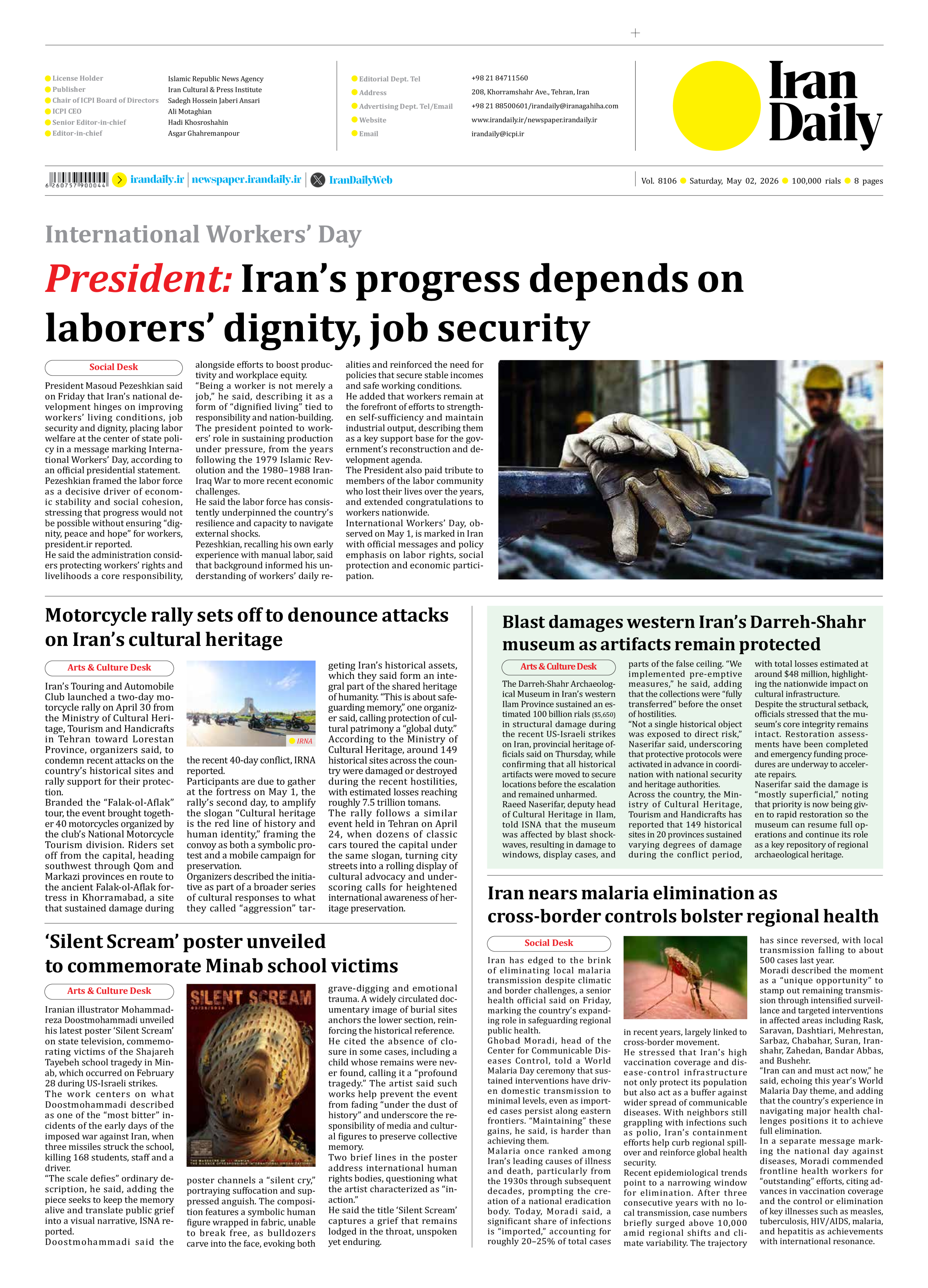
Iran has edged to the brink of eliminating local malaria transmission despite climatic and border challenges, a senior health official said on Friday, marking the country’s expanding role in safeguarding regional public health.
Ghobad Moradi, head of the Center for Communicable Diseases Control, told a World Malaria Day ceremony that sustained interventions have driven domestic transmission to minimal levels, even as imported cases persist along eastern frontiers. “Maintaining” these gains, he said, is harder than achieving them.
Malaria once ranked among Iran’s leading causes of illness and death, particularly from the 1930s through subsequent decades, prompting the creation of a national eradication body. Today, Moradi said, a significant share of infections is “imported,” accounting for roughly 20–25% of total cases in recent years, largely linked to cross-border movement.
He stressed that Iran’s high vaccination coverage and disease-control infrastructure not only protect its population but also act as a buffer against wider spread of communicable diseases. With neighbors still grappling with infections such as polio, Iran’s containment efforts help curb regional spillover and reinforce global health security.
Recent epidemiological trends point to a narrowing window for elimination. After three consecutive years with no local transmission, case numbers briefly surged above 10,000 amid regional shifts and climate variability. The trajectory has since reversed, with local transmission falling to about 500 cases last year.
Moradi described the moment as a “unique opportunity” to stamp out remaining transmission through intensified surveillance and targeted interventions in affected areas including Rask, Saravan, Dashtiari, Mehrestan, Sarbaz, Chabahar, Suran, Iranshahr, Zahedan, Bandar Abbas, and Bushehr.
“Iran can and must act now,” he said, echoing this year’s World Malaria Day theme, and adding that the country’s experience in navigating major health challenges positions it to achieve full elimination.
In a separate message marking the national day against diseases, Moradi commended frontline health workers for “outstanding” efforts, citing advances in vaccination coverage and the control or elimination of key illnesses such as measles, tuberculosis, HIV/AIDS, malaria, and hepatitis as achievements with international resonance.