





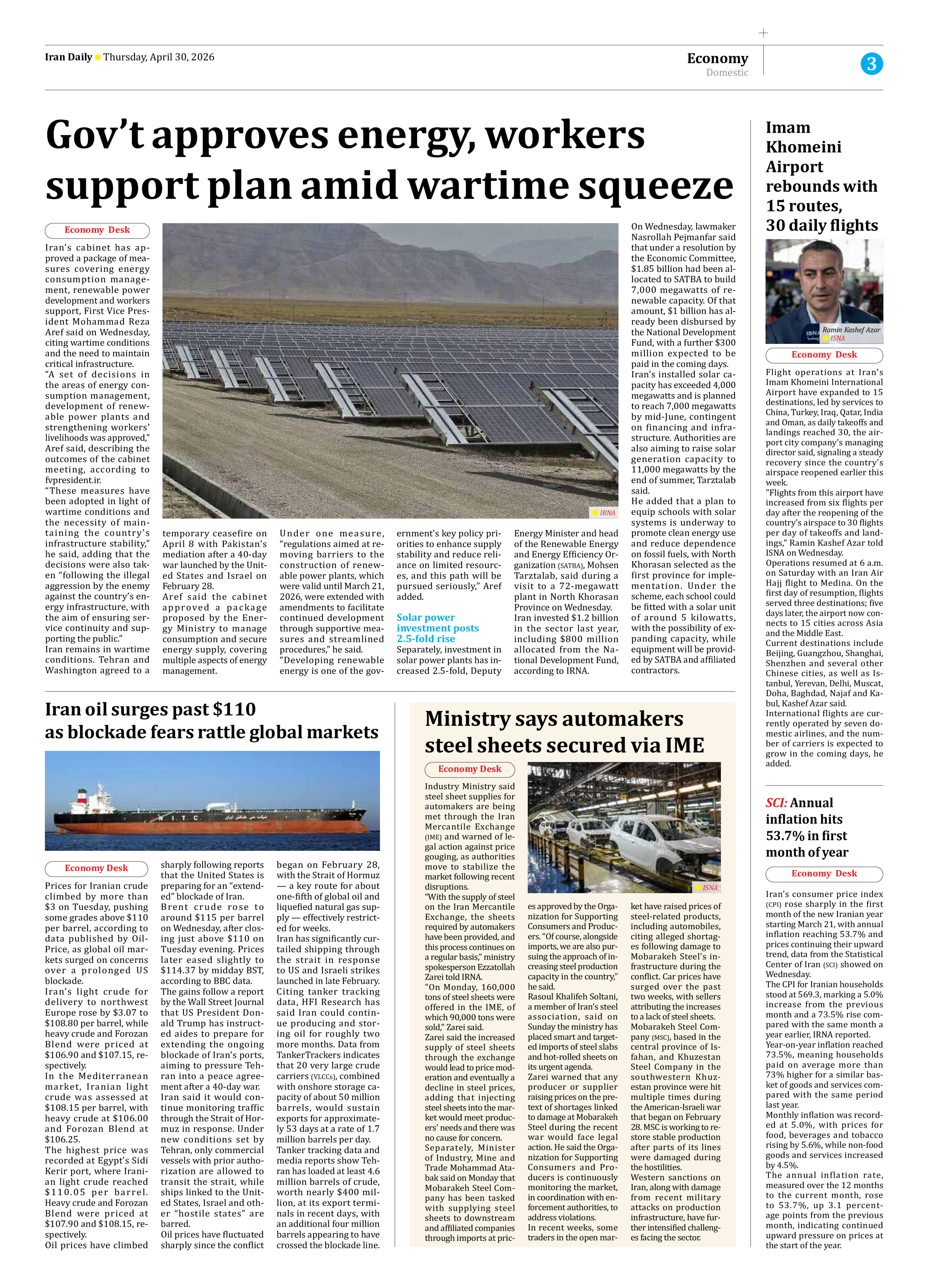


Iran oil surges past $110 as blockade fears rattle global markets
Prices for Iranian crude climbed by more than $3 on Tuesday, pushing some grades above $110 per barrel, according to data published by OilPrice, as global oil markets surged on concerns over a prolonged US blockade.
Iran’s light crude for delivery to northwest Europe rose by $3.07 to $108.80 per barrel, while heavy crude and Forozan Blend were priced at $106.90 and $107.15, respectively.
In the Mediterranean market, Iranian light crude was assessed at $108.15 per barrel, with heavy crude at $106.00 and Forozan Blend at $106.25.
The highest price was recorded at Egypt’s Sidi Kerir port, where Iranian light crude reached $110.05 per barrel. Heavy crude and Forozan Blend were priced at $107.90 and $108.15, respectively.
Oil prices have climbed sharply following reports that the United States is preparing for an “extended” blockade of Iran.
Brent crude rose to around $115 per barrel on Wednesday, after closing just above $110 on Tuesday evening. Prices later eased slightly to $114.37 by midday BST, according to BBC data.
The gains follow a report by the Wall Street Journal that US President Donald Trump has instructed aides to prepare for extending the ongoing blockade of Iran’s ports, aiming to pressure Tehran into a peace agreement after a 40-day war.
Iran said it would continue monitoring traffic through the Strait of Hormuz in response. Under new conditions set by Tehran, only commercial vessels with prior authorization are allowed to transit the strait, while ships linked to the United States, Israel and other “hostile states” are barred.
Oil prices have fluctuated sharply since the conflict began on February 28, with the Strait of Hormuz — a key route for about one-fifth of global oil and liquefied natural gas supply — effectively restricted for weeks.
Iran has significantly curtailed shipping through the strait in response to US and Israeli strikes launched in late February.
Citing tanker tracking data, HFI Research has said Iran could continue producing and storing oil for roughly two more months. Data from TankerTrackers indicates that 20 very large crude carriers (VLCCs), combined with onshore storage capacity of about 50 million barrels, would sustain exports for approximately 53 days at a rate of 1.7 million barrels per day.
Tanker tracking data and media reports show Tehran has loaded at least 4.6 million barrels of crude, worth nearly $400 million, at its export terminals in recent days, with an additional four million barrels appearing to have crossed the blockade line.