







Domestic output covers bulk of thalassemia drugs as sanctions strain access
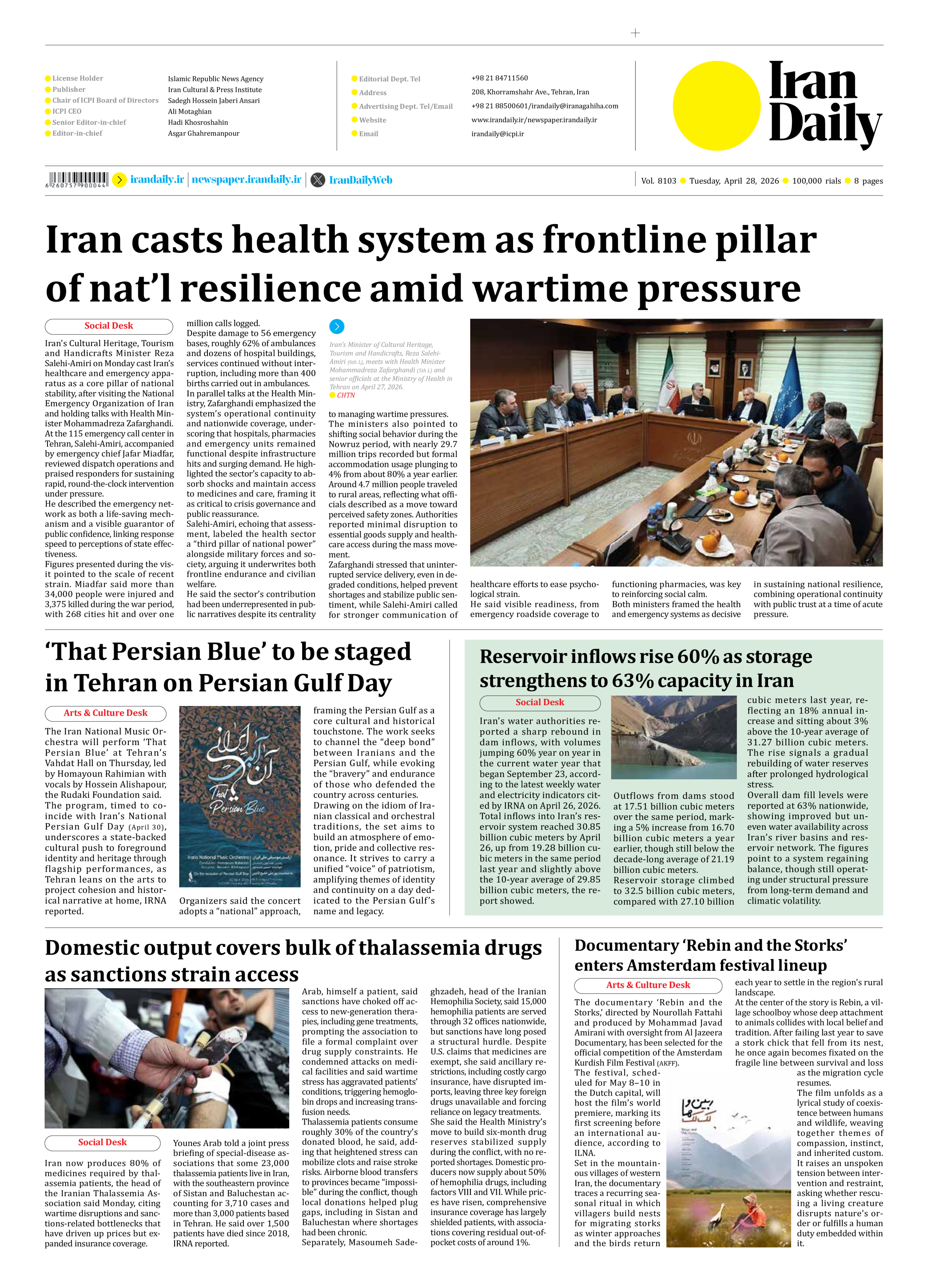
Iran now produces 80% of medicines required by thalassemia patients, the head of the Iranian Thalassemia Association said Monday, citing wartime disruptions and sanctions-related bottlenecks that have driven up prices but expanded insurance coverage.
Younes Arab told a joint press briefing of special-disease associations that some 23,000 thalassemia patients live in Iran, with the southeastern province of Sistan and Baluchestan accounting for 3,710 cases and more than 3,000 patients based in Tehran. He said over 1,500 patients have died since 2018, IRNA reported.
Arab, himself a patient, said sanctions have choked off access to new-generation therapies, including gene treatments, prompting the association to file a formal complaint over drug supply constraints. He condemned attacks on medical facilities and said wartime stress has aggravated patients’ conditions, triggering hemoglobin drops and increasing transfusion needs.
Thalassemia patients consume roughly 30% of the country’s donated blood, he said, adding that heightened stress can mobilize clots and raise stroke risks. Airborne blood transfers to provinces became “impossible” during the conflict, though local donations helped plug gaps, including in Sistan and Baluchestan where shortages had been chronic.
Separately, Masoumeh Sadeghzadeh, head of the Iranian Hemophilia Society, said 15,000 hemophilia patients are served through 32 offices nationwide, but sanctions have long posed a structural hurdle. Despite U.S. claims that medicines are exempt, she said ancillary restrictions, including costly cargo insurance, have disrupted imports, leaving three key foreign drugs unavailable and forcing reliance on legacy treatments.
She said the Health Ministry’s move to build six-month drug reserves stabilized supply during the conflict, with no reported shortages. Domestic producers now supply about 50% of hemophilia drugs, including factors VIII and VII. While prices have risen, comprehensive insurance coverage has largely shielded patients, with associations covering residual out-of-pocket costs of around 1%.