





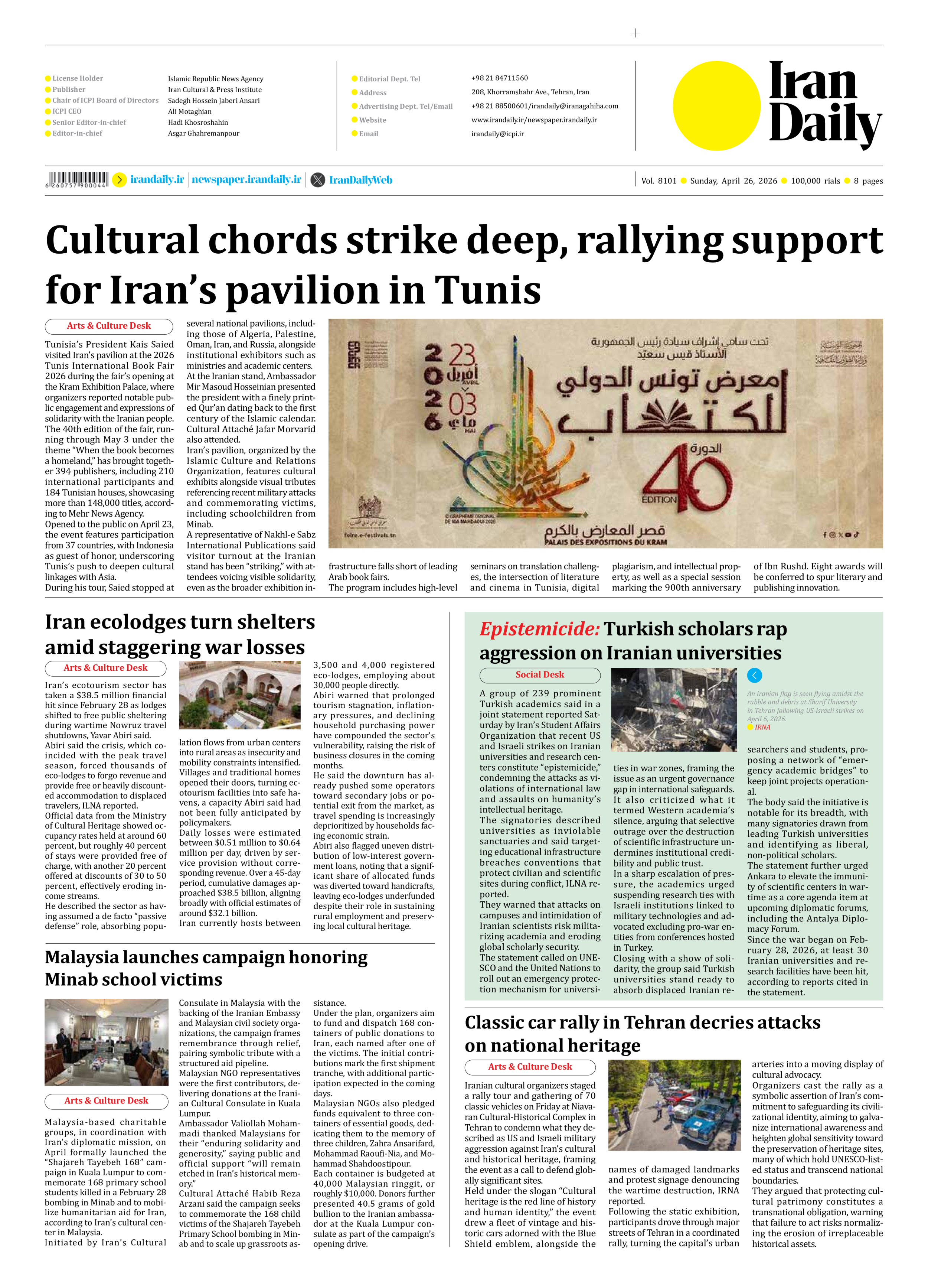


Iran ecolodges turn shelters amid staggering war losses
Iran’s ecotourism sector has taken a $38.5 million financial hit since February 28 as lodges shifted to free public sheltering during wartime Nowruz travel shutdowns, Yavar Abiri said.
Abiri said the crisis, which coincided with the peak travel season, forced thousands of eco-lodges to forgo revenue and provide free or heavily discounted accommodation to displaced travelers, ILNA reported.
Official data from the Ministry of Cultural Heritage showed occupancy rates held at around 60 percent, but roughly 40 percent of stays were provided free of charge, with another 20 percent offered at discounts of 30 to 50 percent, effectively eroding income streams.
He described the sector as having assumed a de facto “passive defense” role, absorbing population flows from urban centers into rural areas as insecurity and mobility constraints intensified. Villages and traditional homes opened their doors, turning ecotourism facilities into safe havens, a capacity Abiri said had not been fully anticipated by policymakers.
Daily losses were estimated between $0.51 million to $0.64 million per day, driven by service provision without corresponding revenue. Over a 45-day period, cumulative damages approached $38.5 billion, aligning broadly with official estimates of around $32.1 billion.
Iran currently hosts between 3,500 and 4,000 registered eco-lodges, employing about 30,000 people directly.
Abiri warned that prolonged tourism stagnation, inflationary pressures, and declining household purchasing power have compounded the sector’s vulnerability, raising the risk of business closures in the coming months.
He said the downturn has already pushed some operators toward secondary jobs or potential exit from the market, as travel spending is increasingly deprioritized by households facing economic strain.
Abiri also flagged uneven distribution of low-interest government loans, noting that a significant share of allocated funds was diverted toward handicrafts, leaving eco-lodges underfunded despite their role in sustaining rural employment and preserving local cultural heritage.