







Copy in clipboard...
Iranian FM, Pakistan’s top echelon meet amid diplomatic logjam with US
Iran’s top diplomat on Saturday held talks with Pakistani officials amid diplomatic efforts by Islamabad to end the ongoing war between Iran and the United States.
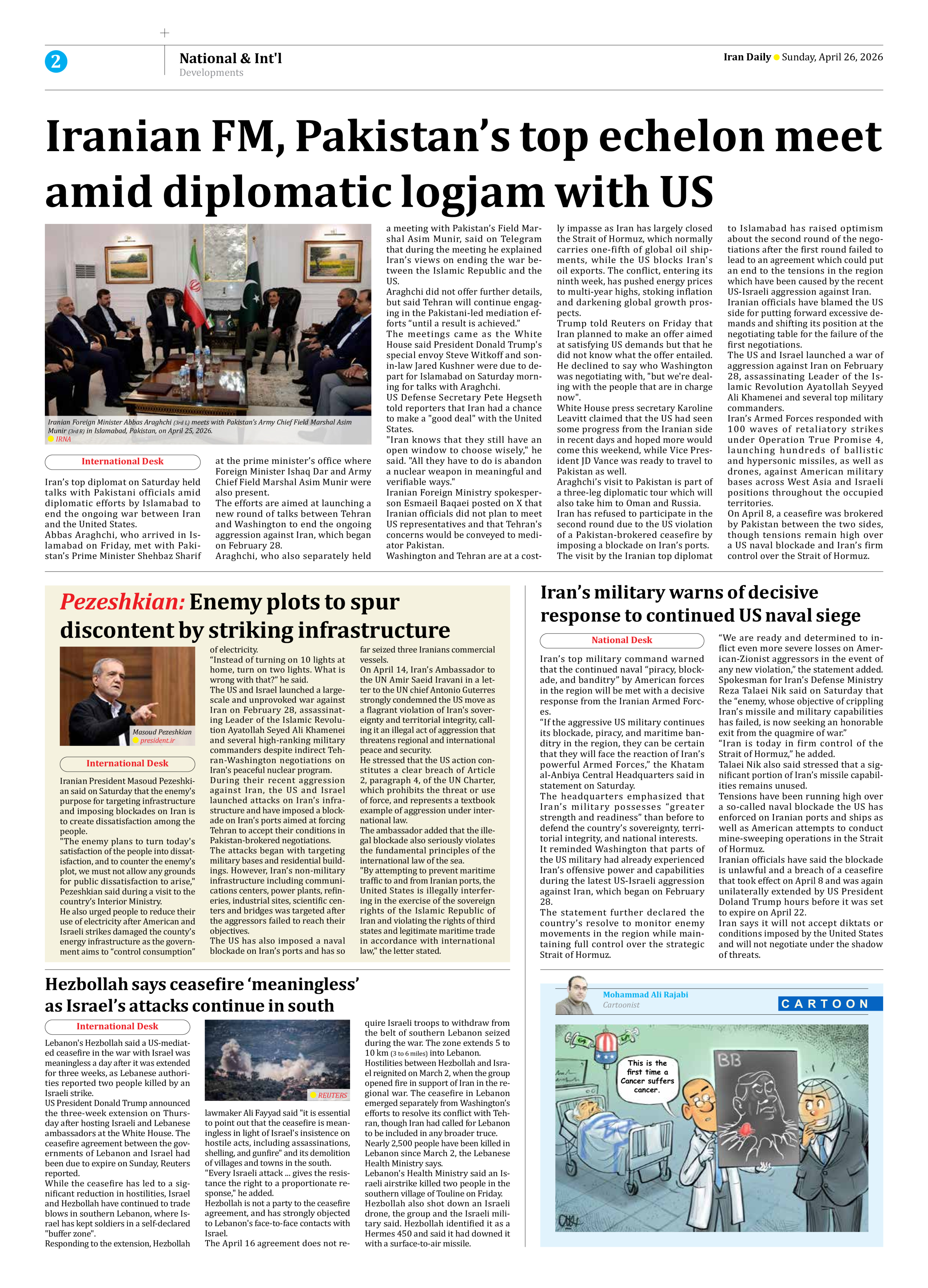
Abbas Araghchi, who arrived in Islamabad on Friday, met with Pakistan’s Prime Minister Shehbaz Sharif at the prime minister’s office where Foreign Minister Ishaq Dar and Army Chief Field Marshal Asim Munir were also present.
The efforts are aimed at launching a new round of talks between Tehran and Washington to end the ongoing aggression against Iran, which began on February 28.
Araghchi, who also separately held a meeting with Pakistan’s Field Marshal Asim Munir, said on Telegram that during the meeting he explained Iran’s views on ending the war between the Islamic Republic and the US.
Araghchi did not offer further details, but said Tehran will continue engaging in the Pakistani-led mediation efforts “until a result is achieved.”
The meetings came as the White House said President Donald Trump's special envoy Steve Witkoff and son-in-law Jared Kushner were due to depart for Islamabad on Saturday morning for talks with Araghchi.
US Defense Secretary Pete Hegseth told reporters that Iran had a chance to make a "good deal" with the United States.
"Iran knows that they still have an open window to choose wisely," he said. "All they have to do is abandon a nuclear weapon in meaningful and verifiable ways."
Iranian Foreign Ministry spokesperson Esmaeil Baqaei posted on X that Iranian officials did not plan to meet US representatives and that Tehran's concerns would be conveyed to mediator Pakistan.
Washington and Tehran are at a costly impasse as Iran has largely closed the Strait of Hormuz, which normally carries one-fifth of global oil shipments, while the US blocks Iran's oil exports. The conflict, entering its ninth week, has pushed energy prices to multi-year highs, stoking inflation and darkening global growth prospects.
Trump told Reuters on Friday that Iran planned to make an offer aimed at satisfying US demands but that he did not know what the offer entailed. He declined to say who Washington was negotiating with, "but we're dealing with the people that are in charge now".
White House press secretary Karoline Leavitt claimed that the US had seen some progress from the Iranian side in recent days and hoped more would come this weekend, while Vice President JD Vance was ready to travel to Pakistan as well.
Araghchi’s visit to Pakistan is part of a three-leg diplomatic tour which will also take him to Oman and Russia.
Iran has refused to participate in the second round due to the US violation of a Pakistan-brokered ceasefire by imposing a blockade on Iran’s ports.
The visit by the Iranian top diplomat to Islamabad has raised optimism about the second round of the negotiations after the first round failed to lead to an agreement which could put an end to the tensions in the region which have been caused by the recent US-Israeli aggression against Iran.
Iranian officials have blamed the US side for putting forward excessive demands and shifting its position at the negotiating table for the failure of the first negotiations.
The US and Israel launched a war of aggression against Iran on February 28, assassinating Leader of the Islamic Revolution Ayatollah Seyyed Ali Khamenei and several top military commanders.
Iran’s Armed Forces responded with 100 waves of retaliatory strikes under Operation True Promise 4, launching hundreds of ballistic and hypersonic missiles, as well as drones, against American military bases across West Asia and Israeli positions throughout the occupied territories.
On April 8, a ceasefire was brokered by Pakistan between the two sides, though tensions remain high over a US naval blockade and Iran’s firm control over the Strait of Hormuz.