





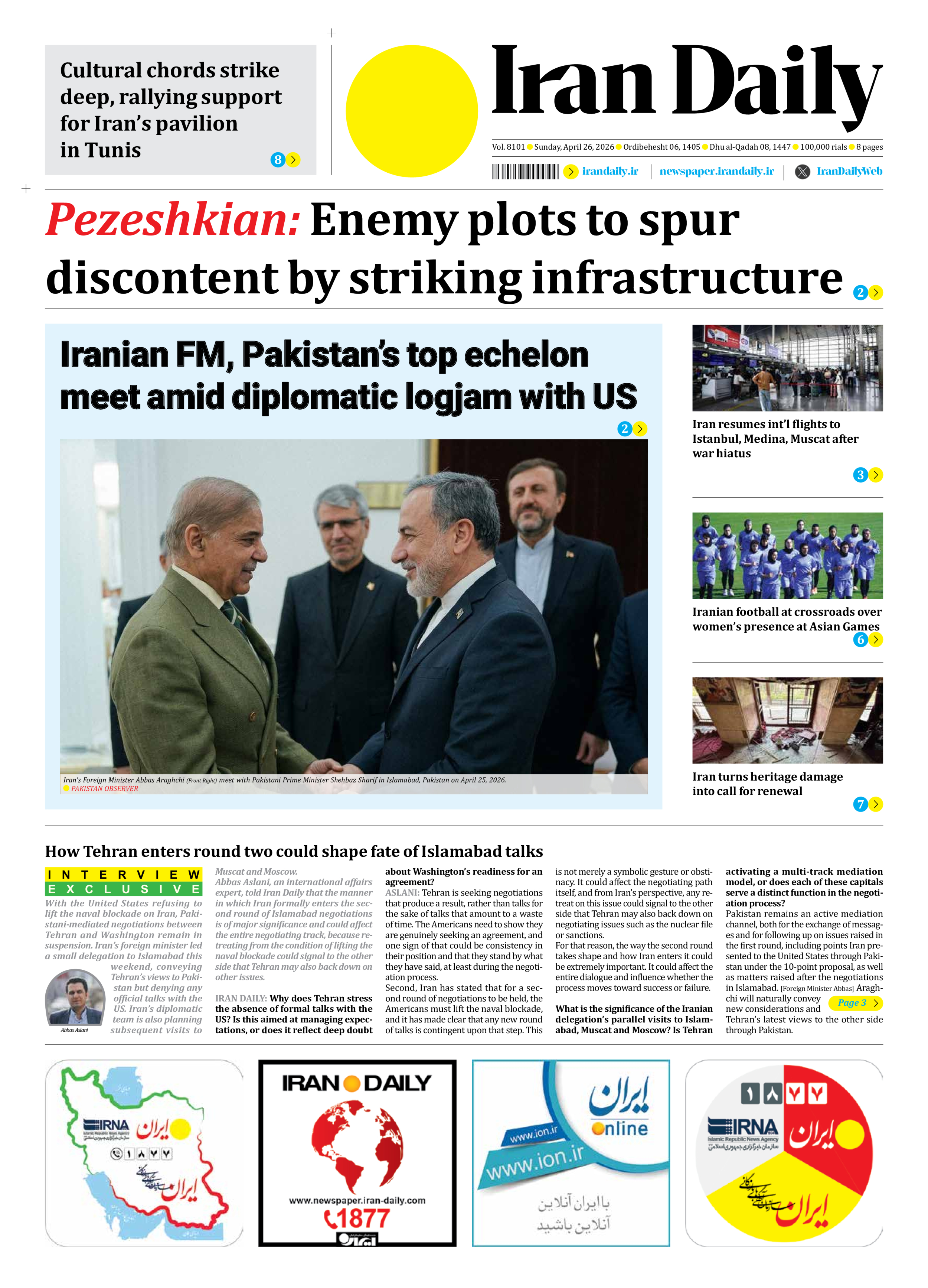


How Tehran enters round two could shape fate of Islamabad talks
With the United States refusing to lift the naval blockade on Iran, Pakistani-mediated negotiations between Tehran and Washington remain in suspension. Iran’s foreign minister led a small delegation to Islamabad this weekend, conveying Tehran’s views to Pakistan but denying any official talks with the US. Iran’s diplomatic team is also planning subsequent visits to Muscat and Moscow.
Abbas Aslani, an international affairs expert, told Iran Daily that the manner in which Iran formally enters the second round of Islamabad negotiations is of major significance and could affect the entire negotiating track, because retreating from the condition of lifting the naval blockade could signal to the other side that Tehran may also back down on other issues.
IRAN DAILY: Why does Tehran stress the absence of formal talks with the US? Is this aimed at managing expectations, or does it reflect deep doubt about Washington’s readiness for an agreement?
ASLANI: Tehran is seeking negotiations that produce a result, rather than talks for the sake of talks that amount to a waste of time. The Americans need to show they are genuinely seeking an agreement, and one sign of that could be consistency in their position and that they stand by what they have said, at least during the negotiation process.
Second, Iran has stated that for a second round of negotiations to be held, the Americans must lift the naval blockade, and it has made clear that any new round of talks is contingent upon that step. This is not merely a symbolic gesture or obstinacy. It could affect the negotiating path itself, and from Iran’s perspective, any retreat on this issue could signal to the other side that Tehran may also back down on negotiating issues such as the nuclear file or sanctions.
For that reason, the way the second round takes shape and how Iran enters it could be extremely important. It could affect the entire dialogue and influence whether the process moves toward success or failure.
What is the significance of the Iranian delegation’s parallel visits to Islamabad, Muscat and Moscow? Is Tehran activating a multi-track mediation model, or does each of these capitals serve a distinct function in the negotiation process?
Pakistan remains an active mediation channel, both for the exchange of messages and for following up on issues raised in the first round, including points Iran presented to the United States through Pakistan under the 10-point proposal, as well as matters raised after the negotiations in Islamabad. [Foreign Minister Abbas] Araghchi will naturally convey new considerations and Tehran’s latest views to the other side through Pakistan.
Page 3