







Araghchi starts three-leg diplomatic tour with Pakistan
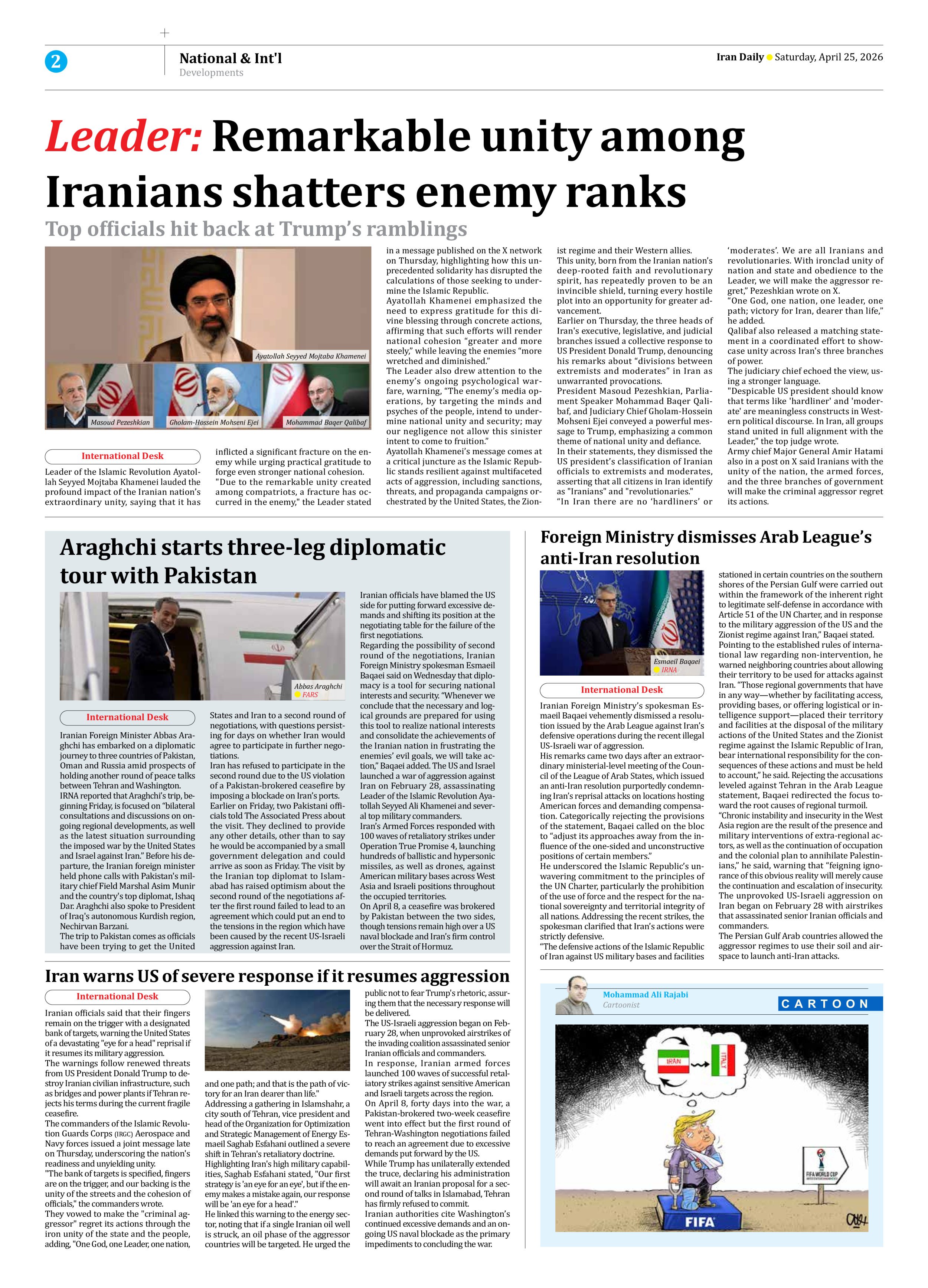
Iranian Foreign Minister Abbas Araghchi has embarked on a diplomatic journey to three countries of Pakistan, Oman and Russia amid prospects of holding another round of peace talks between Tehran and Washington.
IRNA reported that Araghchi’s trip, beginning Friday, is focused on “bilateral consultations and discussions on ongoing regional developments, as well as the latest situation surrounding the imposed war by the United States and Israel against Iran.” Before his departure, the Iranian foreign minister held phone calls with Pakistan's military chief Field Marshal Asim Munir and the country's top diplomat, Ishaq Dar. Araghchi also spoke to President of Iraq's autonomous Kurdish region, Nechirvan Barzani.
The trip to Pakistan comes as officials have been trying to get the United States and Iran to a second round of negotiations, with questions persisting for days on whether Iran would agree to participate in further negotiations.
Iran has refused to participate in the second round due to the US violation of a Pakistan-brokered ceasefire by imposing a blockade on Iran’s ports.
Earlier on Friday, two Pakistani officials told The Associated Press about the visit. They declined to provide any other details, other than to say he would be accompanied by a small government delegation and could arrive as soon as Friday. The visit by the Iranian top diplomat to Islamabad has raised optimism about the second round of the negotiations after the first round failed to lead to an agreement which could put an end to the tensions in the region which have been caused by the recent US-Israeli aggression against Iran.
Iranian officials have blamed the US side for putting forward excessive demands and shifting its position at the negotiating table for the failure of the first negotiations.
Regarding the possibility of second round of the negotiations, Iranian Foreign Ministry spokesman Esmaeil Baqaei said on Wednesday that diplomacy is a tool for securing national interests and security. “Whenever we conclude that the necessary and logical grounds are prepared for using this tool to realize national interests and consolidate the achievements of the Iranian nation in frustrating the enemies’ evil goals, we will take action,” Baqaei added. The US and Israel launched a war of aggression against Iran on February 28, assassinating Leader of the Islamic Revolution Ayatollah Seyyed Ali Khamenei and several top military commanders.
Iran’s Armed Forces responded with 100 waves of retaliatory strikes under Operation True Promise 4, launching hundreds of ballistic and hypersonic missiles, as well as drones, against American military bases across West Asia and Israeli positions throughout the occupied territories.
On April 8, a ceasefire was brokered by Pakistan between the two sides, though tensions remain high over a US naval blockade and Iran’s firm control over the Strait of Hormuz.