







Araghchi raps Europe’s silence over attacks on nuclear sites
Hormuz tangle direct result of US ‘lawlessness, illegal strikes’
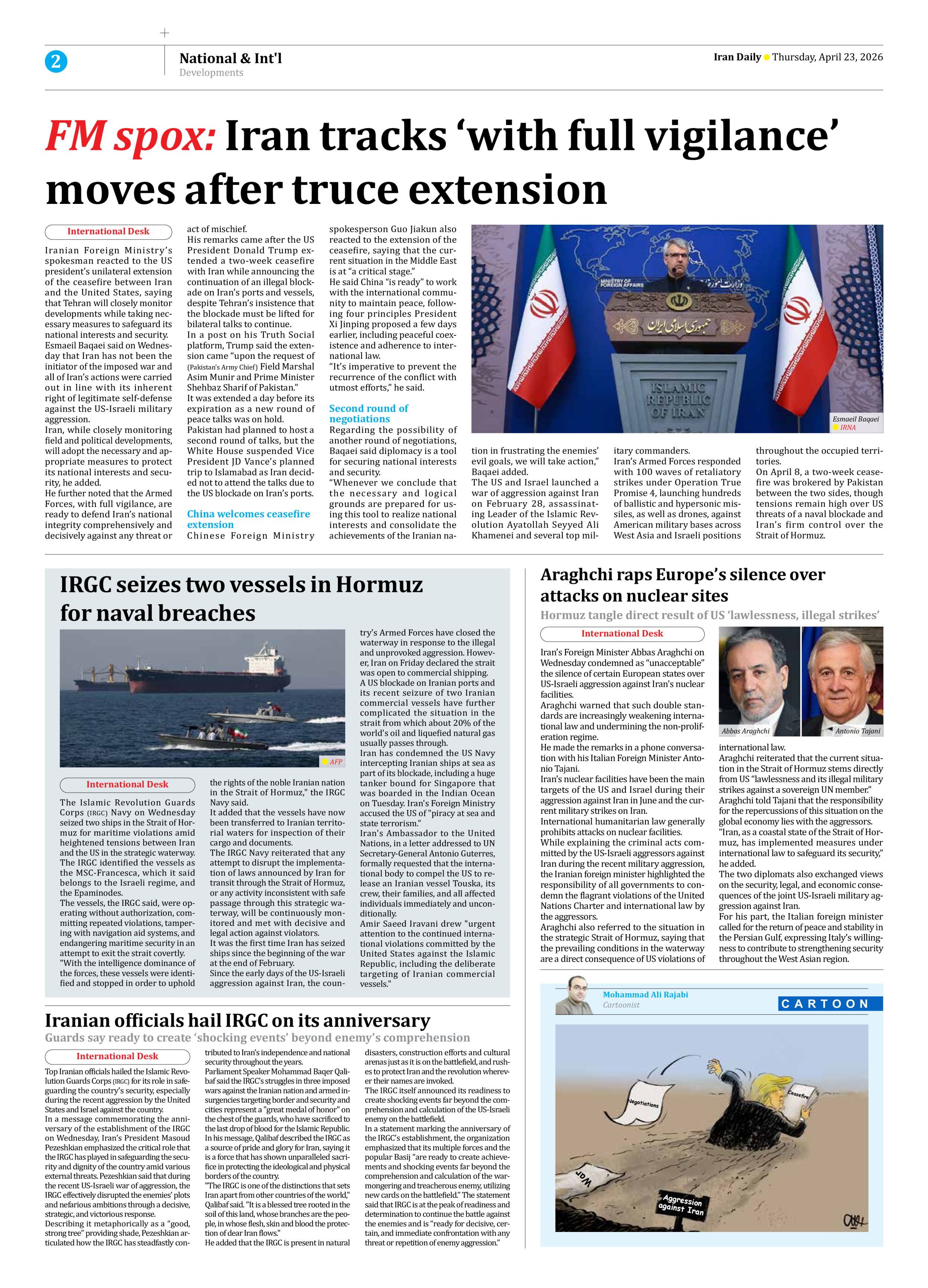
Iran’s Foreign Minister Abbas Araghchi on Wednesday condemned as “unacceptable” the silence of certain European states over US-Israeli aggression against Iran's nuclear facilities.
Araghchi warned that such double standards are increasingly weakening international law and undermining the non-proliferation regime.
He made the remarks in a phone conversation with his Italian Foreign Minister Antonio Tajani.
Iran’s nuclear facilities have been the main targets of the US and Israel during their aggression against Iran in June and the current military strikes on Iran.
International humanitarian law generally prohibits attacks on nuclear facilities.
While explaining the criminal acts committed by the US-Israeli aggressors against Iran during the recent military aggression, the Iranian foreign minister highlighted the responsibility of all governments to condemn the flagrant violations of the United Nations Charter and international law by the aggressors.
Araghchi also referred to the situation in the strategic Strait of Hormuz, saying that the prevailing conditions in the waterway are a direct consequence of US violations of international law.
Araghchi reiterated that the current situation in the Strait of Hormuz stems directly from US “lawlessness and its illegal military strikes against a sovereign UN member.”
Araghchi told Tajani that the responsibility for the repercussions of this situation on the global economy lies with the aggressors.
“Iran, as a coastal state of the Strait of Hormuz, has implemented measures under international law to safeguard its security,” he added.
The two diplomats also exchanged views on the security, legal, and economic consequences of the joint US-Israeli military aggression against Iran.
For his part, the Italian foreign minister called for the return of peace and stability in the Persian Gulf, expressing Italy’s willingness to contribute to strengthening security throughout the West Asian region.