







Copy in clipboard...
Tehran seeks urgent UNESCO shield for heritage sites
Ali Darabi, deputy minister for cultural heritage, wrote to UNESCO Director-General Khaled El-Enany invoking Articles 9 and 10 of the 1999 Second Protocol to The Hague Convention, which safeguards cultural property during armed conflict. The letter, dispatched from Tehran, included precise geographic coordinates for technical review, IRNA reported.
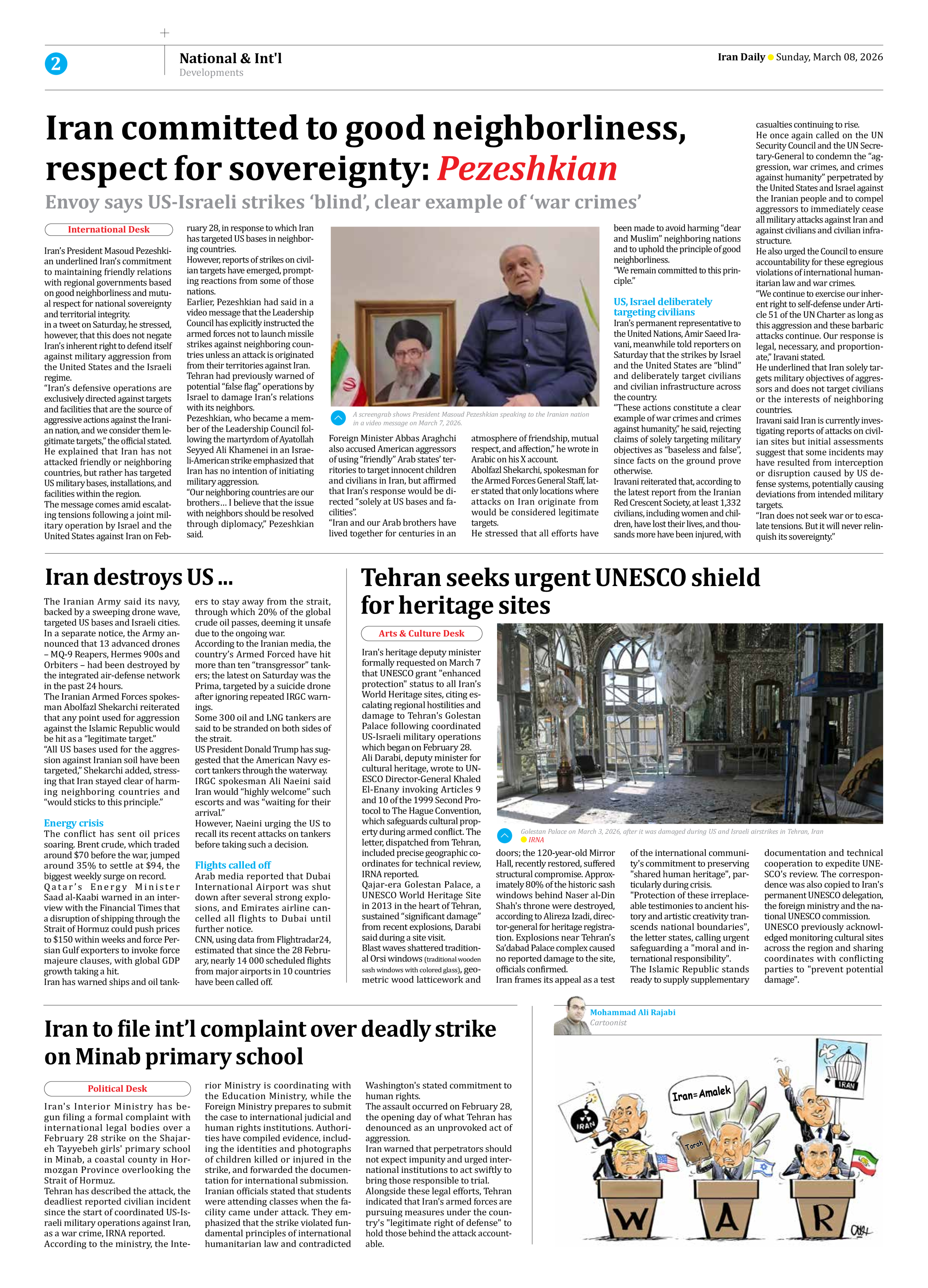
Qajar-era Golestan Palace, a UNESCO World Heritage Site in 2013 in the heart of Tehran, sustained “significant damage” from recent explosions, Darabi said during a site visit.
Blast waves shattered traditional Orsi windows (traditional wooden sash windows with colored glass), geometric wood latticework and doors; the 120-year-old Mirror Hall, recently restored, suffered structural compromise. Approximately 80% of the historic sash windows behind Naser al-Din Shah's throne were destroyed, according to Alireza Izadi, director-general for heritage registration. Explosions near Tehran’s Sa’dabad Palace complex caused no reported damage to the site, officials confirmed.
Iran frames its appeal as a test of the international community's commitment to preserving "shared human heritage", particularly during crisis.
"Protection of these irreplaceable testimonies to ancient history and artistic creativity transcends national boundaries", the letter states, calling urgent safeguarding a "moral and international responsibility".
The Islamic Republic stands ready to supply supplementary documentation and technical cooperation to expedite UNESCO's review. The correspondence was also copied to Iran's permanent UNESCO delegation, the foreign ministry and the national UNESCO commission.
UNESCO previously acknowledged monitoring cultural sites across the region and sharing coordinates with conflicting parties to "prevent potential damage".