





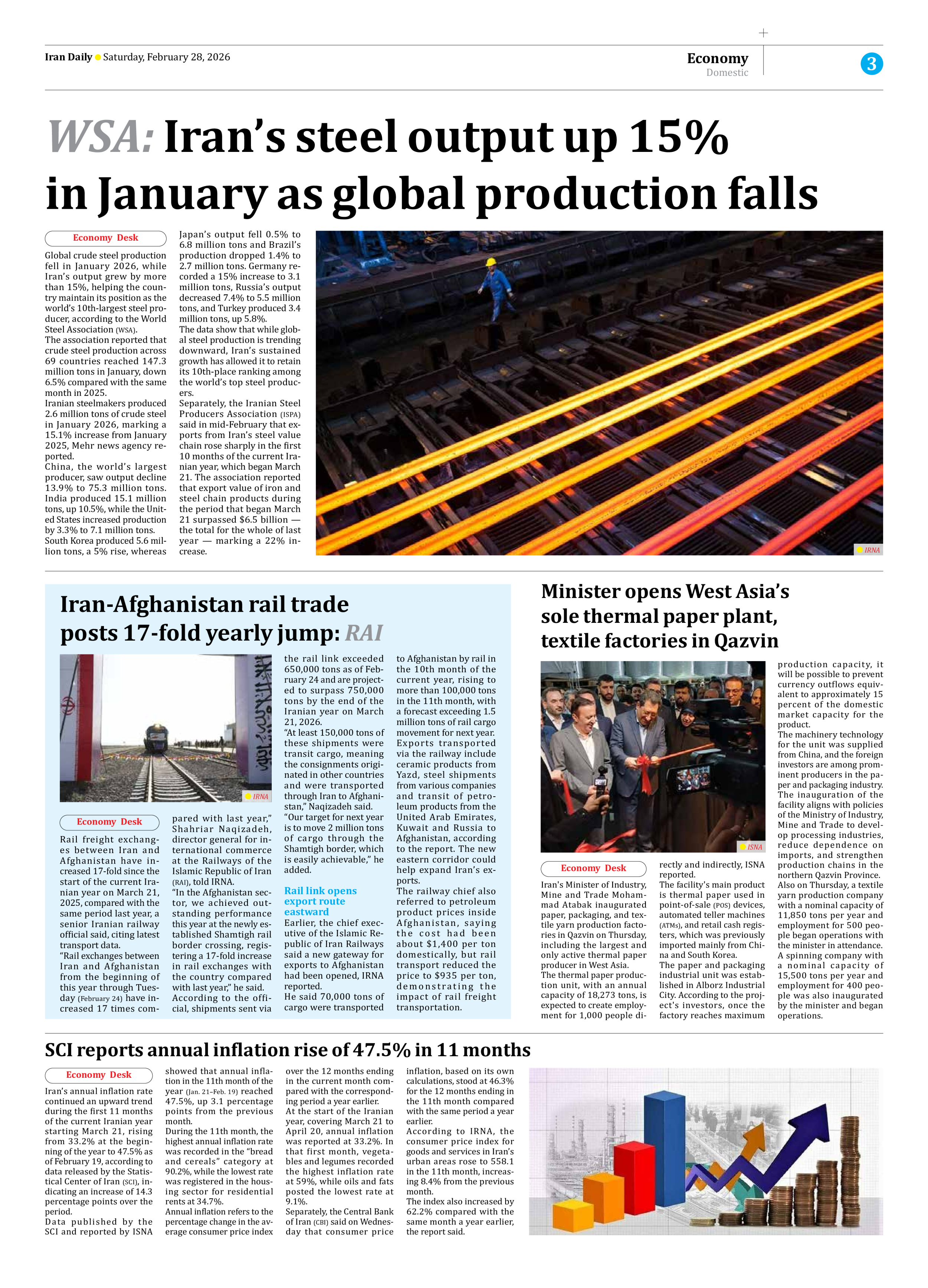


Iran-Afghanistan rail trade posts 17-fold yearly jump: RAI
Rail freight exchanges between Iran and Afghanistan have increased 17-fold since the start of the current Iranian year on March 21, 2025, compared with the same period last year, a senior Iranian railway official said, citing latest transport data.
“Rail exchanges between Iran and Afghanistan from the beginning of this year through Tuesday (February 24) have increased 17 times compared with last year,” Shahriar Naqizadeh, director general for international commerce at the Railways of the Islamic Republic of Iran (RAI), told IRNA.
“In the Afghanistan sector, we achieved outstanding performance this year at the newly established Shamtigh rail border crossing, registering a 17-fold increase in rail exchanges with the country compared with last year,” he said.
According to the official, shipments sent via the rail link exceeded 650,000 tons as of February 24 and are projected to surpass 750,000 tons by the end of the Iranian year on March 21, 2026.
“At least 150,000 tons of these shipments were transit cargo, meaning the consignments originated in other countries and were transported through Iran to Afghanistan,” Naqizadeh said.
“Our target for next year is to move 2 million tons of cargo through the Shamtigh border, which is easily achievable,” he added.
Rail link opens export route eastward
Earlier, the chief executive of the Islamic Republic of Iran Railways said a new gateway for exports to Afghanistan had been opened, IRNA reported.
He said 70,000 tons of cargo were transported to Afghanistan by rail in the 10th month of the current year, rising to more than 100,000 tons in the 11th month, with a forecast exceeding 1.5 million tons of rail cargo movement for next year.
Exports transported via the railway include ceramic products from Yazd, steel shipments from various companies and transit of petroleum products from the United Arab Emirates, Kuwait and Russia to Afghanistan, according to the report. The new eastern corridor could help expand Iran’s exports.
The railway chief also referred to petroleum product prices inside Afghanistan, saying the cost had been about $1,400 per ton domestically, but rail transport reduced the price to $935 per ton, demonstrating the impact of rail freight transportation.