





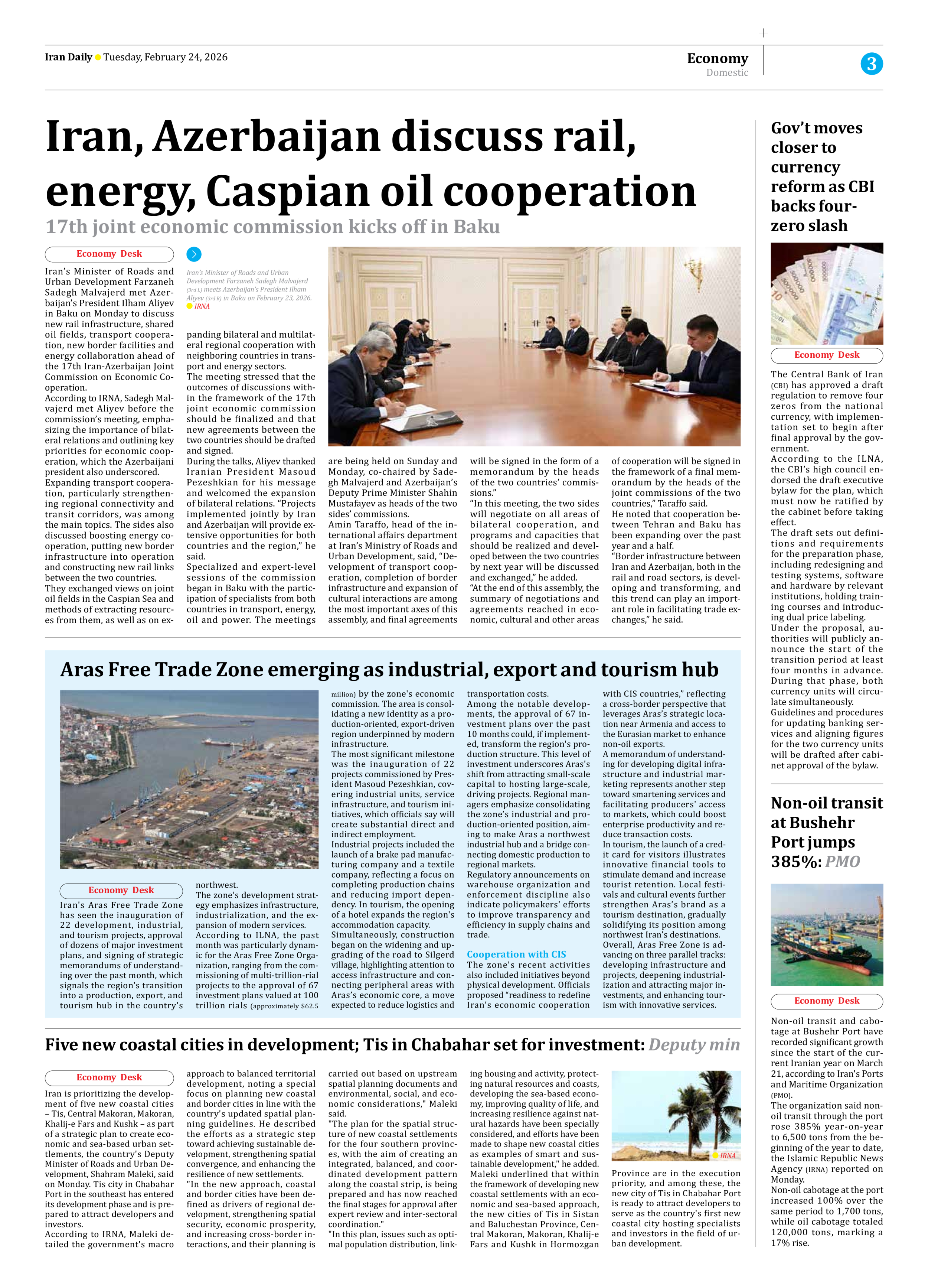


Aras Free Trade Zone emerging as industrial, export and tourism hub
Iran's Aras Free Trade Zone has seen the inauguration of 22 development, industrial, and tourism projects, approval of dozens of major investment plans, and signing of strategic memorandums of understanding over the past month, which signals the region's transition into a production, export, and tourism hub in the country's northwest.
The zone’s development strategy emphasizes infrastructure, industrialization, and the expansion of modern services.
According to ILNA, the past month was particularly dynamic for the Aras Free Zone Organization, ranging from the commissioning of multi-trillion-rial projects to the approval of 67 investment plans valued at 100 trillion rials (approximately $62.5 million) by the zone's economic commission. The area is consolidating a new identity as a production-oriented, export-driven region underpinned by modern infrastructure.
The most significant milestone was the inauguration of 22 projects commissioned by President Masoud Pezeshkian, covering industrial units, service infrastructure, and tourism initiatives, which officials say will create substantial direct and indirect employment.
Industrial projects included the launch of a brake pad manufacturing company and a textile company, reflecting a focus on completing production chains and reducing import dependency. In tourism, the opening of a hotel expands the region's accommodation capacity.
Simultaneously, construction began on the widening and upgrading of the road to Silgerd village, highlighting attention to access infrastructure and connecting peripheral areas with Aras’s economic core, a move expected to reduce logistics and transportation costs.
Among the notable developments, the approval of 67 investment plans over the past 10 months could, if implemented, transform the region's production structure. This level of investment underscores Aras's shift from attracting small-scale capital to hosting large-scale, driving projects. Regional managers emphasize consolidating the zone’s industrial and production-oriented position, aiming to make Aras a northwest industrial hub and a bridge connecting domestic production to regional markets.
Regulatory announcements on warehouse organization and enforcement discipline also indicate policymakers' efforts to improve transparency and efficiency in supply chains and trade.
Cooperation with CIS
The zone’s recent activities also included initiatives beyond physical development. Officials proposed “readiness to redefine Iran's economic cooperation with CIS countries,” reflecting a cross-border perspective that leverages Aras’s strategic location near Armenia and access to the Eurasian market to enhance non-oil exports.
A memorandum of understanding for developing digital infrastructure and industrial marketing represents another step toward smartening services and facilitating producers' access to markets, which could boost enterprise productivity and reduce transaction costs.
In tourism, the launch of a credit card for visitors illustrates innovative financial tools to stimulate demand and increase tourist retention. Local festivals and cultural events further strengthen Aras’s brand as a tourism destination, gradually solidifying its position among northwest Iran’s destinations.
Overall, Aras Free Zone is advancing on three parallel tracks: developing infrastructure and projects, deepening industrialization and attracting major investments, and enhancing tourism with innovative services.