





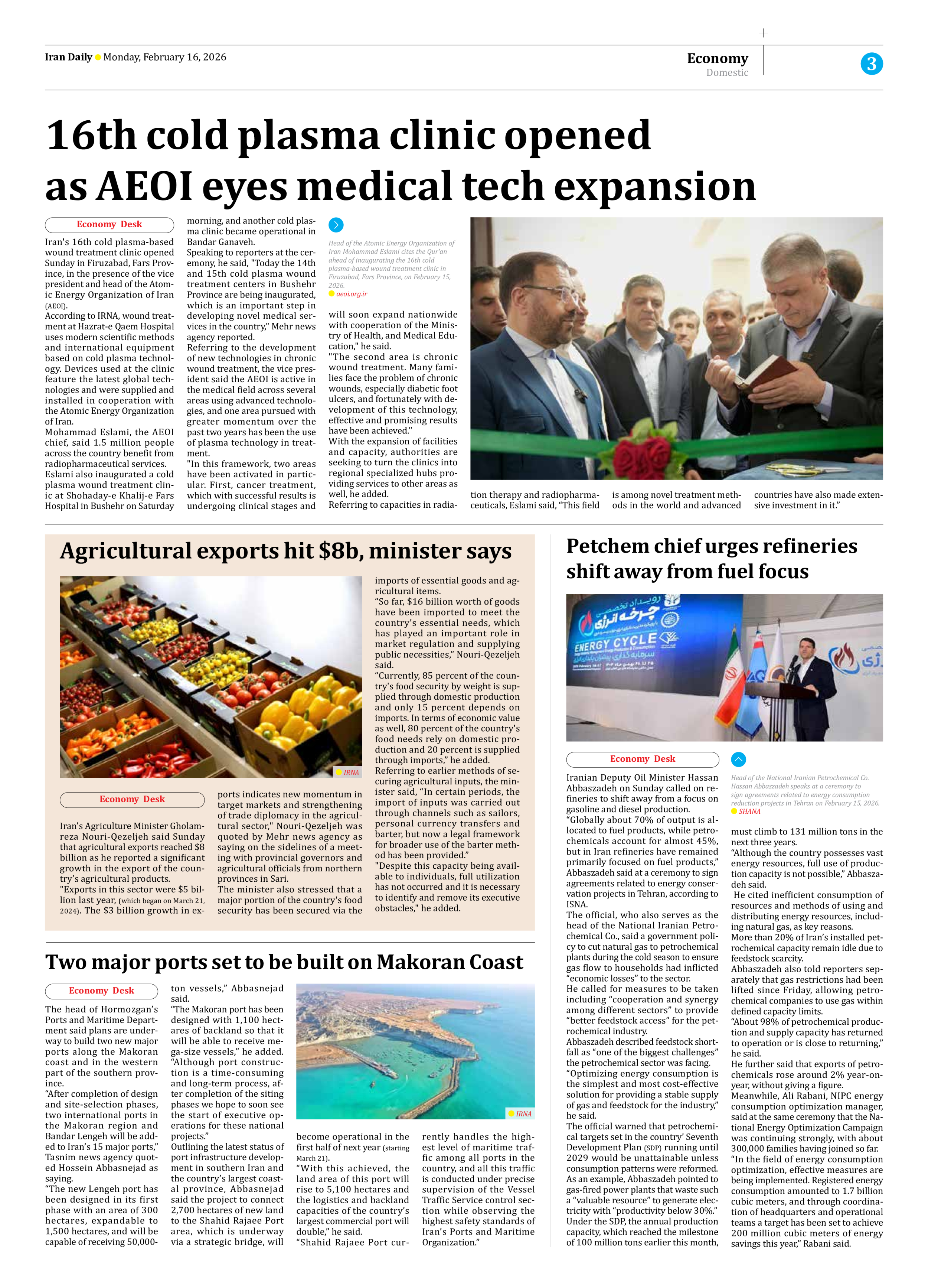


Petchem chief urges refineries shift away from fuel focus
Iranian Deputy Oil Minister Hassan Abbaszadeh on Sunday called on refineries to shift away from a focus on gasoline and diesel production.
“Globally about 70% of output is allocated to fuel products, while petrochemicals account for almost 45%, but in Iran refineries have remained primarily focused on fuel products,” Abbaszadeh said at a ceremony to sign agreements related to energy conservation projects in Tehran, according to ISNA.
The official, who also serves as the head of the National Iranian Petrochemical Co., said a government policy to cut natural gas to petrochemical plants during the cold season to ensure gas flow to households had inflicted “economic losses” to the sector.
He called for measures to be taken including “cooperation and synergy among different sectors” to provide “better feedstock access” for the petrochemical industry.
Abbaszadeh described feedstock shortfall as “one of the biggest challenges” the petrochemical sector was facing.
“Optimizing energy consumption is the simplest and most cost-effective solution for providing a stable supply of gas and feedstock for the industry,” he said.
The official warned that petrochemical targets set in the country’ Seventh Development Plan (SDP) running until 2029 would be unattainable unless consumption patterns were reformed.
As an example, Abbaszadeh pointed to gas-fired power plants that waste such a “valuable resource” to generate electricity with “productivity below 30%.”
Under the SDP, the annual production capacity, which reached the milestone of 100 million tons earlier this month, must climb to 131 million tons in the next three years.
“Although the country possesses vast energy resources, full use of production capacity is not possible,” Abbaszadeh said.
He cited inefficient consumption of resources and methods of using and distributing energy resources, including natural gas, as key reasons.
More than 20% of Iran’s installed petrochemical capacity remain idle due to feedstock scarcity.
Abbaszadeh also told reporters separately that gas restrictions had been lifted since Friday, allowing petrochemical companies to use gas within defined capacity limits.
“About 98% of petrochemical production and supply capacity has returned to operation or is close to returning,” he said.
He further said that exports of petrochemicals rose around 2% year-on-year, without giving a figure.
Meanwhile, Ali Rabani, NIPC energy consumption optimization manager, said at the same ceremony that the National Energy Optimization Campaign was continuing strongly, with about 300,000 families having joined so far.
“In the field of energy consumption optimization, effective measures are being implemented. Registered energy consumption amounted to 1.7 billion cubic meters, and through coordination of headquarters and operational teams a target has been set to achieve 200 million cubic meters of energy savings this year,” Rabani said.