





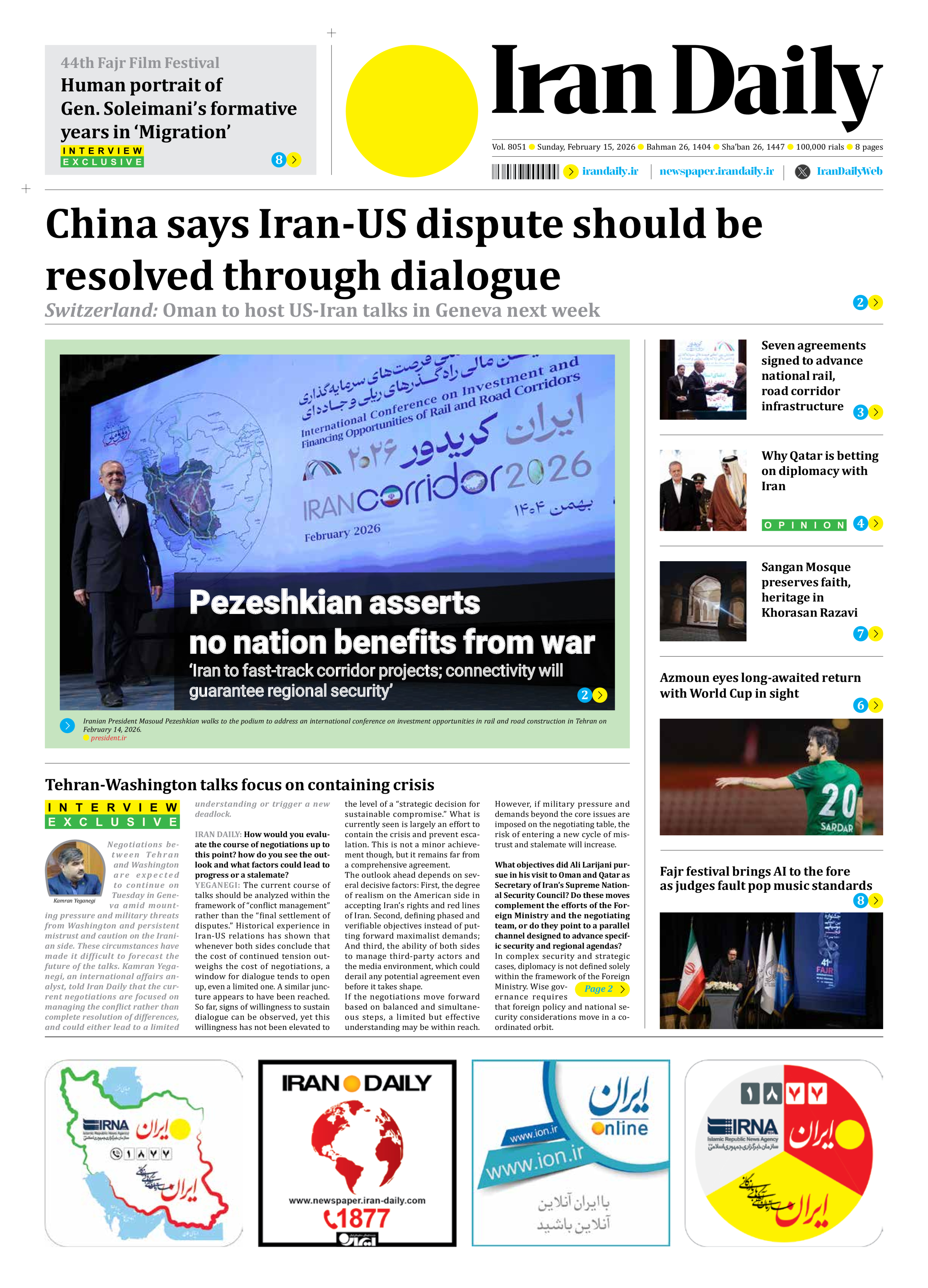


Tehran-Washington talks focus on containing crisis
Negotiations between Tehran and Washington are expected to continue on Tuesday in Geneva amid mounting pressure and military threats from Washington and persistent mistrust and caution on the Iranian side. These circumstances have made it difficult to forecast the future of the talks. Kamran Yeganegi, an international affairs analyst, told Iran Daily that the current negotiations are focused on managing the conflict rather than complete resolution of differences, and could either lead to a limited understanding or trigger a new deadlock.
IRAN DAILY: How would you evaluate the course of negotiations up to this point? how do you see the outlook and what factors could lead to progress or a stalemate?
YEGANEGI: The current course of talks should be analyzed within the framework of “conflict management” rather than the “final settlement of disputes.” Historical experience in Iran-US relations has shown that whenever both sides conclude that the cost of continued tension outweighs the cost of negotiations, a window for dialogue tends to open up, even a limited one. A similar juncture appears to have been reached. So far, signs of willingness to sustain dialogue can be observed, yet this willingness has not been elevated to the level of a “strategic decision for sustainable compromise.” What is currently seen is largely an effort to contain the crisis and prevent escalation. This is not a minor achievement though, but it remains far from a comprehensive agreement.
The outlook ahead depends on several decisive factors: First, the degree of realism on the American side in accepting Iran’s rights and red lines of Iran. Second, defining phased and verifiable objectives instead of putting forward maximalist demands; And third, the ability of both sides to manage third-party actors and the media environment, which could derail any potential agreement even before it takes shape.
If the negotiations move forward based on balanced and simultaneous steps, a limited but effective understanding may be within reach. However, if military pressure and demands beyond the core issues are imposed on the negotiating table, the risk of entering a new cycle of mistrust and stalemate will increase.
What objectives did Ali Larijani pursue in his visit to Oman and Qatar as Secretary of Iran’s Supreme National Security Council? Do these moves complement the efforts of the Foreign Ministry and the negotiating team, or do they point to a parallel channel designed to advance specific security and regional agendas?
In complex security and strategic cases, diplomacy is not defined solely within the framework of the Foreign Ministry. Wise governance requires that foreign policy and national security considerations move in a coordinated orbit.
Page 2