







Golakhor village captivates visitors with nature, tradition
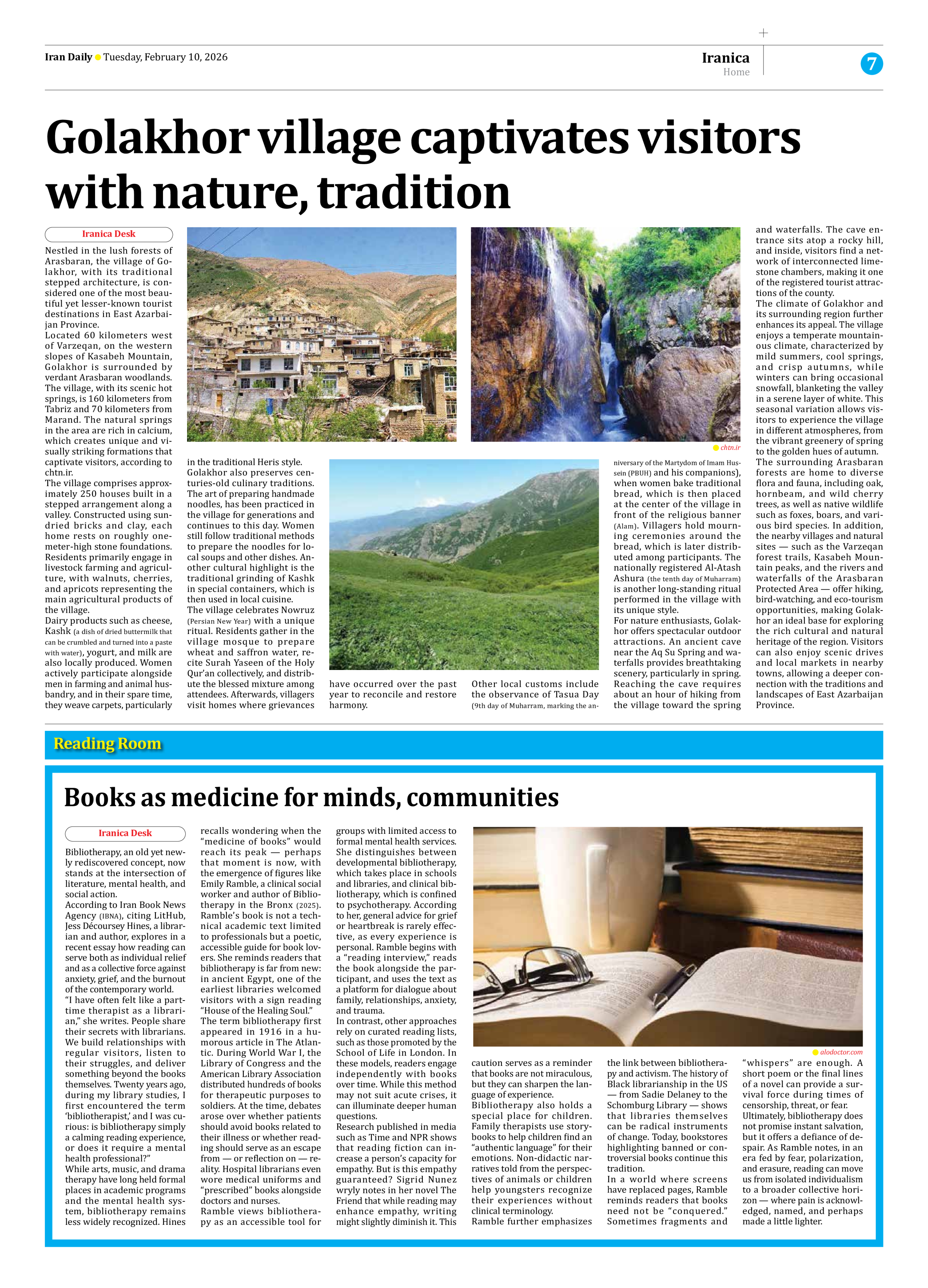
Nestled in the lush forests of Arasbaran, the village of Golakhor, with its traditional stepped architecture, is considered one of the most beautiful yet lesser-known tourist destinations in East Azarbaijan Province.
Located 60 kilometers west of Varzeqan, on the western slopes of Kasabeh Mountain, Golakhor is surrounded by verdant Arasbaran woodlands. The village, with its scenic hot springs, is 160 kilometers from Tabriz and 70 kilometers from Marand. The natural springs in the area are rich in calcium, which creates unique and visually striking formations that captivate visitors, according to chtn.ir.
The village comprises approximately 250 houses built in a stepped arrangement along a valley. Constructed using sun-dried bricks and clay, each home rests on roughly one-meter-high stone foundations. Residents primarily engage in livestock farming and agriculture, with walnuts, cherries, and apricots representing the main agricultural products of the village.
Dairy products such as cheese, Kashk (a dish of dried buttermilk that can be crumbled and turned into a paste with water), yogurt, and milk are also locally produced. Women actively participate alongside men in farming and animal husbandry, and in their spare time, they weave carpets, particularly in the traditional Heris style.
Golakhor also preserves centuries-old culinary traditions. The art of preparing handmade noodles, has been practiced in the village for generations and continues to this day. Women still follow traditional methods to prepare the noodles for local soups and other dishes. Another cultural highlight is the traditional grinding of Kashk in special containers, which is then used in local cuisine.
The village celebrates Nowruz (Persian New Year) with a unique ritual. Residents gather in the village mosque to prepare wheat and saffron water, recite Surah Yaseen of the Holy Qur’an collectively, and distribute the blessed mixture among attendees. Afterwards, villagers visit homes where grievances have occurred over the past year to reconcile and restore harmony.
Other local customs include the observance of Tasua Day (9th day of Muharram, marking the anniversary of the Martydom of Imam Hussein (PBUH) and his companions), when women bake traditional bread, which is then placed at the center of the village in front of the religious banner (Alam). Villagers hold mourning ceremonies around the bread, which is later distributed among participants. The nationally registered Al-Atash Ashura (the tenth day of Muharram) is another long-standing ritual performed in the village with its unique style.
For nature enthusiasts, Golakhor offers spectacular outdoor attractions. An ancient cave near the Aq Su Spring and waterfalls provides breathtaking scenery, particularly in spring. Reaching the cave requires about an hour of hiking from the village toward the spring and waterfalls. The cave entrance sits atop a rocky hill, and inside, visitors find a network of interconnected limestone chambers, making it one of the registered tourist attractions of the county.
The climate of Golakhor and its surrounding region further enhances its appeal. The village enjoys a temperate mountainous climate, characterized by mild summers, cool springs, and crisp autumns, while winters can bring occasional snowfall, blanketing the valley in a serene layer of white. This seasonal variation allows visitors to experience the village in different atmospheres, from the vibrant greenery of spring to the golden hues of autumn.
The surrounding Arasbaran forests are home to diverse flora and fauna, including oak, hornbeam, and wild cherry trees, as well as native wildlife such as foxes, boars, and various bird species. In addition, the nearby villages and natural sites — such as the Varzeqan forest trails, Kasabeh Mountain peaks, and the rivers and waterfalls of the Arasbaran Protected Area — offer hiking, bird-watching, and eco-tourism opportunities, making Golakhor an ideal base for exploring the rich cultural and natural heritage of the region. Visitors can also enjoy scenic drives and local markets in nearby towns, allowing a deeper connection with the traditions and landscapes of East Azarbaijan Province.