





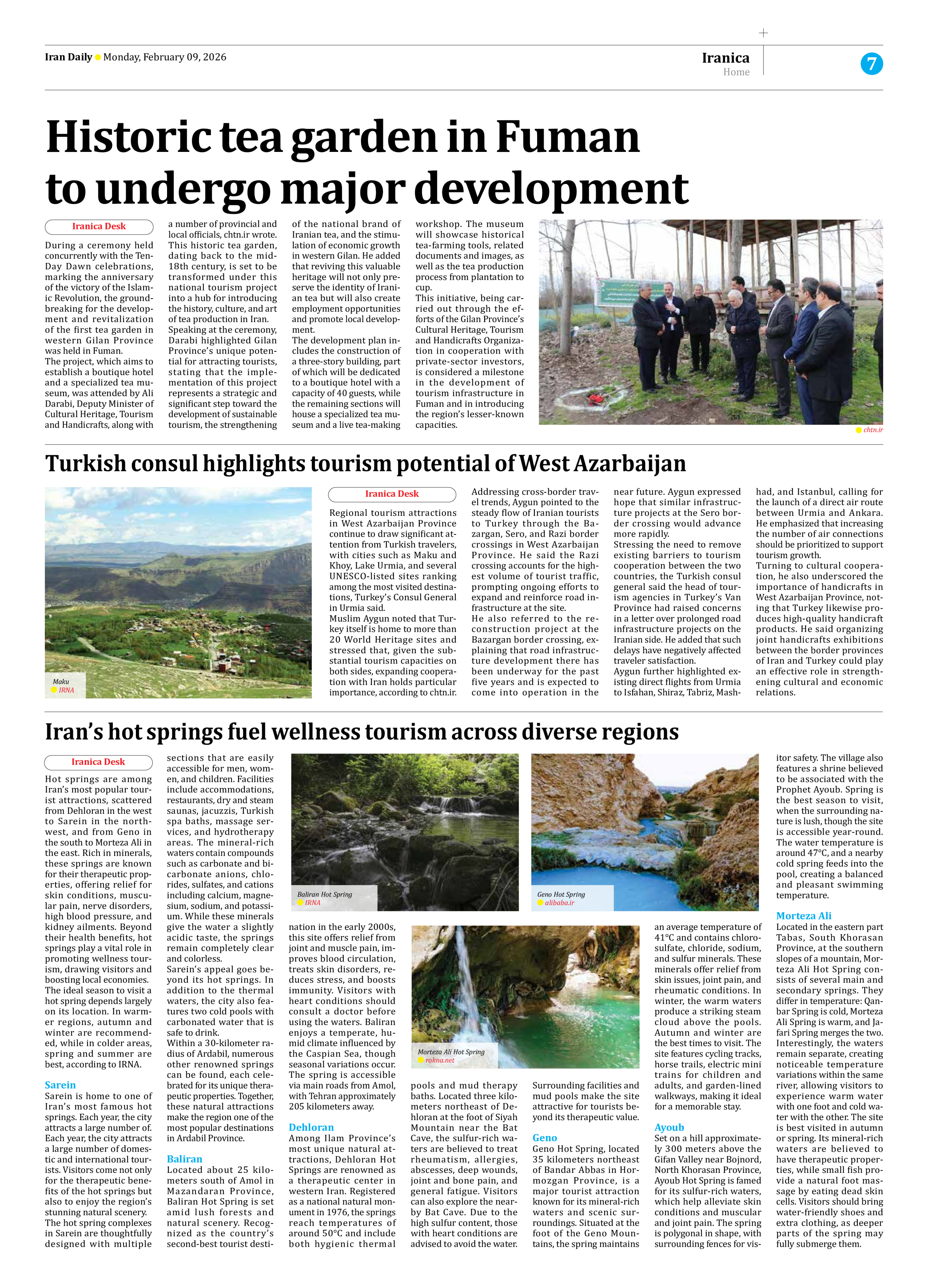


Iran’s hot springs fuel wellness tourism across diverse regions
Hot springs are among Iran’s most popular tourist attractions, scattered from Dehloran in the west to Sarein in the northwest, and from Geno in the south to Morteza Ali in the east. Rich in minerals, these springs are known for their therapeutic properties, offering relief for skin conditions, muscular pain, nerve disorders, high blood pressure, and kidney ailments. Beyond their health benefits, hot springs play a vital role in promoting wellness tourism, drawing visitors and boosting local economies.
The ideal season to visit a hot spring depends largely on its location. In warmer regions, autumn and winter are recommended, while in colder areas, spring and summer are best, according to IRNA.
Sarein
Sarein is home to one of Iran’s most famous hot springs. Each year, the city attracts a large number of. Each year, the city attracts a large number of domestic and international tourists. Visitors come not only for the therapeutic benefits of the hot springs but also to enjoy the region’s stunning natural scenery.
The hot spring complexes in Sarein are thoughtfully designed with multiple sections that are easily accessible for men, women, and children. Facilities include accommodations, restaurants, dry and steam saunas, jacuzzis, Turkish spa baths, massage services, and hydrotherapy areas. The mineral-rich waters contain compounds such as carbonate and bicarbonate anions, chlorides, sulfates, and cations including calcium, magnesium, sodium, and potassium. While these minerals give the water a slightly acidic taste, the springs remain completely clear and colorless.
Sarein’s appeal goes beyond its hot springs. In addition to the thermal waters, the city also features two cold pools with carbonated water that is safe to drink.
Within a 30-kilometer radius of Ardabil, numerous other renowned springs can be found, each celebrated for its unique therapeutic properties. Together, these natural attractions make the region one of the most popular destinations in Ardabil Province.
Baliran
Located about 25 kilometers south of Amol in Mazandaran Province, Baliran Hot Spring is set amid lush forests and natural scenery. Recognized as the country’s second-best tourist destination in the early 2000s, this site offers relief from joint and muscle pain, improves blood circulation, treats skin disorders, reduces stress, and boosts immunity. Visitors with heart conditions should consult a doctor before using the waters. Baliran enjoys a temperate, humid climate influenced by the Caspian Sea, though seasonal variations occur. The spring is accessible via main roads from Amol, with Tehran approximately 205 kilometers away.
Dehloran
Among Ilam Province’s most unique natural attractions, Dehloran Hot Springs are renowned as a therapeutic center in western Iran. Registered as a national natural monument in 1976, the springs reach temperatures of around 50°C and include both hygienic thermal pools and mud therapy baths. Located three kilometers northeast of Dehloran at the foot of Siyah Mountain near the Bat Cave, the sulfur-rich waters are believed to treat rheumatism, allergies, abscesses, deep wounds, joint and bone pain, and general fatigue. Visitors can also explore the nearby Bat Cave. Due to the high sulfur content, those with heart conditions are advised to avoid the water. Surrounding facilities and mud pools make the site attractive for tourists beyond its therapeutic value.
Geno
Geno Hot Spring, located 35 kilometers northeast of Bandar Abbas in Hormozgan Province, is a major tourist attraction known for its mineral-rich waters and scenic surroundings. Situated at the foot of the Geno Mountains, the spring maintains an average temperature of 41°C and contains chlorosulfate, chloride, sodium, and sulfur minerals. These minerals offer relief from skin issues, joint pain, and rheumatic conditions. In winter, the warm waters produce a striking steam cloud above the pools. Autumn and winter are the best times to visit. The site features cycling tracks, horse trails, electric mini trains for children and adults, and garden-lined walkways, making it ideal for a memorable stay.
Ayoub
Set on a hill approximately 300 meters above the Gifan Valley near Bojnord, North Khorasan Province, Ayoub Hot Spring is famed for its sulfur-rich waters, which help alleviate skin conditions and muscular and joint pain. The spring is polygonal in shape, with surrounding fences for visitor safety. The village also features a shrine believed to be associated with the Prophet Ayoub. Spring is the best season to visit, when the surrounding nature is lush, though the site is accessible year-round. The water temperature is around 47°C, and a nearby cold spring feeds into the pool, creating a balanced and pleasant swimming temperature.
Morteza Ali
Located in the eastern part Tabas, South Khorasan Province, at the southern slopes of a mountain, Morteza Ali Hot Spring consists of several main and secondary springs. They differ in temperature: Qanbar Spring is cold, Morteza Ali Spring is warm, and Jafari Spring merges the two.
Interestingly, the waters remain separate, creating noticeable temperature variations within the same river, allowing visitors to experience warm water with one foot and cold water with the other. The site is best visited in autumn or spring. Its mineral-rich waters are believed to have therapeutic properties, while small fish provide a natural foot massage by eating dead skin cells. Visitors should bring water-friendly shoes and extra clothing, as deeper parts of the spring may fully submerge them.