







Ancient Zarch Qanat sustains life in Iran’s central plateau
Located in the heart of Iran’s central plateau, Yazd Province has long struggled with chronic water scarcity. Despite the region’s harsh climate and limited natural water resources, earlier generations succeeded in developing sustainable and innovative water-management systems grounded in indigenous knowledge, creativity, and a deep understanding of the natural environment. Among the most remarkable and enduring examples of this legacy is the Zarch Qanat, which stands as a testament to human ingenuity in adapting to arid conditions.
For centuries, the Zarch Qanat has played a vital and continuous role in supplying drinking water, supporting agricultural activities, and shaping the development of human settlements throughout the region. Extending more than 100 kilometers in length and comprising 2,115 wells, it is recognized as the oldest and longest qanat in the world. Historical evidence indicates that the qanat has been in use for over 3,000 years, underscoring its exceptional durability and importance in Iran’s water heritage, IRNA reported.
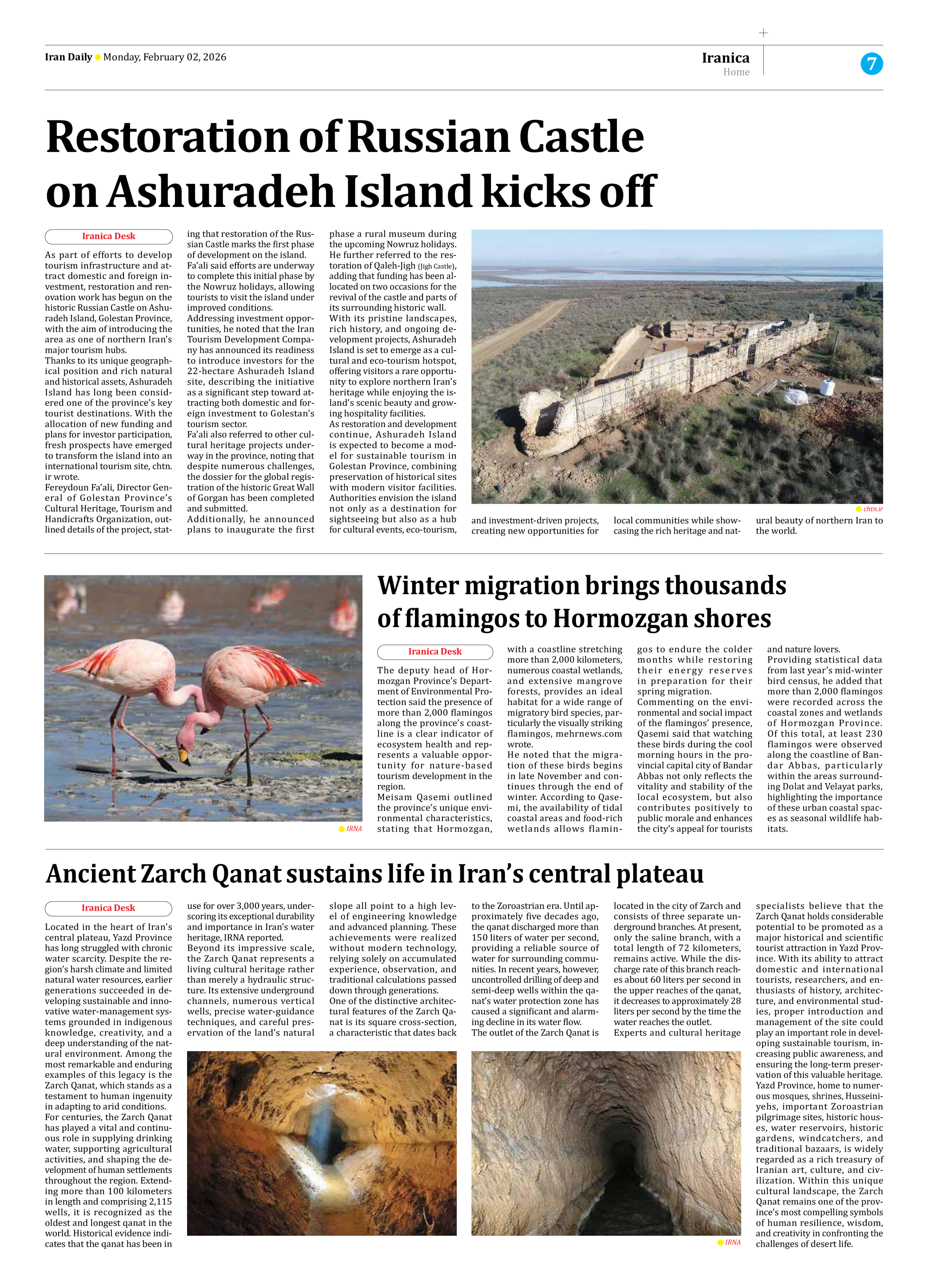
Beyond its impressive scale, the Zarch Qanat represents a living cultural heritage rather than merely a hydraulic structure. Its extensive underground channels, numerous vertical wells, precise water-guidance techniques, and careful preservation of the land’s natural slope all point to a high level of engineering knowledge and advanced planning. These achievements were realized without modern technology, relying solely on accumulated experience, observation, and traditional calculations passed down through generations.
One of the distinctive architectural features of the Zarch Qanat is its square cross-section, a characteristic that dates back to the Zoroastrian era. Until approximately five decades ago, the qanat discharged more than 150 liters of water per second, providing a reliable source of water for surrounding communities. In recent years, however, uncontrolled drilling of deep and semi-deep wells within the qanat’s water protection zone has caused a significant and alarming decline in its water flow.
The outlet of the Zarch Qanat is located in the city of Zarch and consists of three separate underground branches. At present, only the saline branch, with a total length of 72 kilometers, remains active. While the discharge rate of this branch reaches about 60 liters per second in the upper reaches of the qanat, it decreases to approximately 28 liters per second by the time the water reaches the outlet.
Experts and cultural heritage specialists believe that the Zarch Qanat holds considerable potential to be promoted as a major historical and scientific tourist attraction in Yazd Province. With its ability to attract domestic and international tourists, researchers, and enthusiasts of history, architecture, and environmental studies, proper introduction and management of the site could play an important role in developing sustainable tourism, increasing public awareness, and ensuring the long-term preservation of this valuable heritage.
Yazd Province, home to numerous mosques, shrines, Husseiniyehs, important Zoroastrian pilgrimage sites, historic houses, water reservoirs, historic gardens, windcatchers, and traditional bazaars, is widely regarded as a rich treasury of Iranian art, culture, and civilization. Within this unique cultural landscape, the Zarch Qanat remains one of the province’s most compelling symbols of human resilience, wisdom, and creativity in confronting the challenges of desert life.