







First ESP installed at South Azadegan, 35,000-barrel capacity boost expected by June
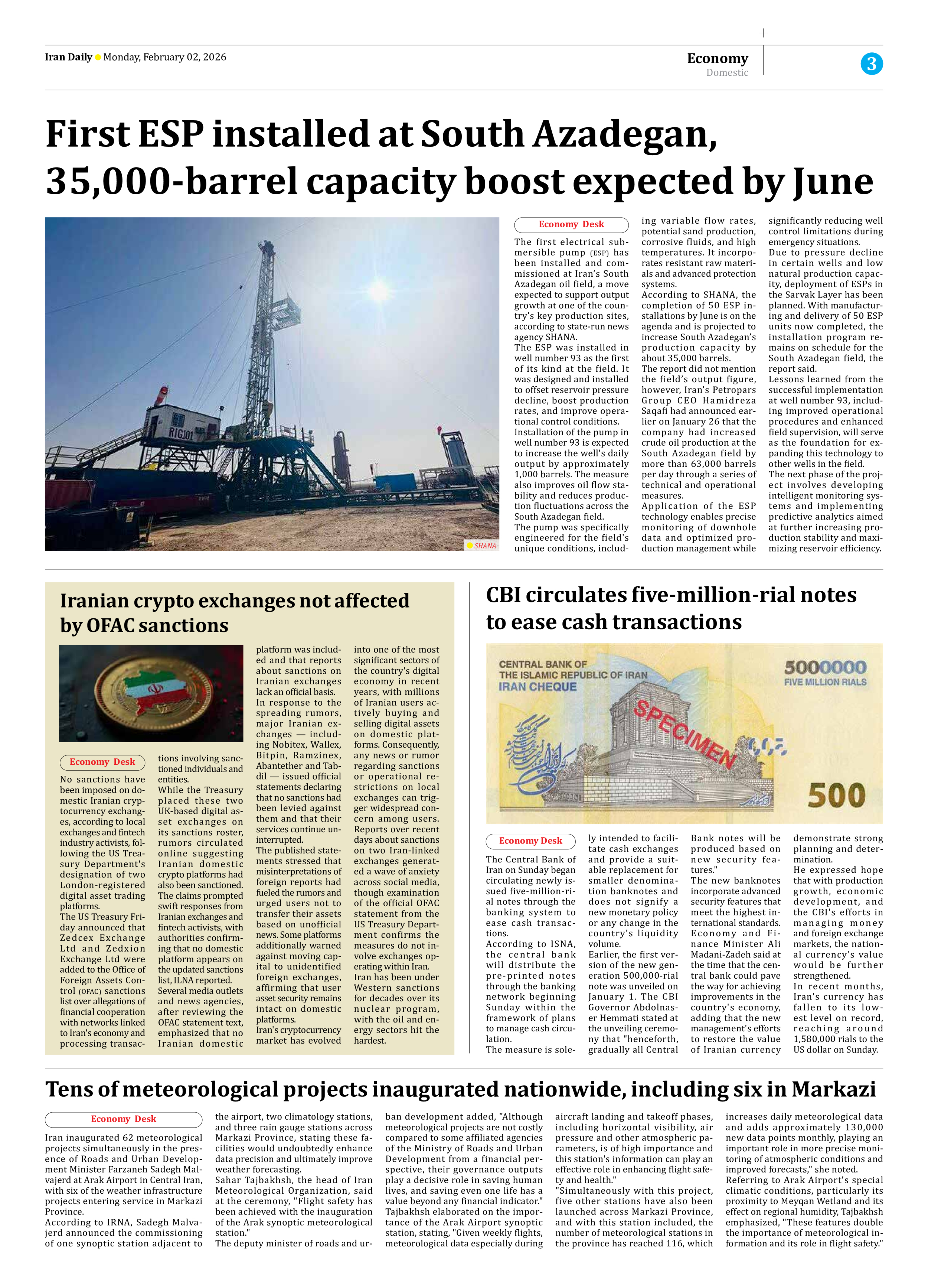
The first electrical submersible pump (ESP) has been installed and commissioned at Iran’s South Azadegan oil field, a move expected to support output growth at one of the country’s key production sites, according to state-run news agency SHANA.
The ESP was installed in well number 93 as the first of its kind at the field. It was designed and installed to offset reservoir pressure decline, boost production rates, and improve operational control conditions.
Installation of the pump in well number 93 is expected to increase the well's daily output by approximately 1,000 barrels. The measure also improves oil flow stability and reduces production fluctuations across the South Azadegan field.
The pump was specifically engineered for the field's unique conditions, including variable flow rates, potential sand production, corrosive fluids, and high temperatures. It incorporates resistant raw materials and advanced protection systems.
According to SHANA, the completion of 50 ESP installations by June is on the agenda and is projected to increase South Azadegan’s production capacity by about 35,000 barrels.
The report did not mention the field’s output figure, however, Iran’s Petropars Group CEO Hamidreza Saqafi had announced earlier on January 26 that the company had increased crude oil production at the South Azadegan field by more than 63,000 barrels per day through a series of technical and operational measures.
Application of the ESP technology enables precise monitoring of downhole data and optimized production management while significantly reducing well control limitations during emergency situations.
Due to pressure decline in certain wells and low natural production capacity, deployment of ESPs in the Sarvak Layer has been planned. With manufacturing and delivery of 50 ESP units now completed, the installation program remains on schedule for the South Azadegan field, the report said.
Lessons learned from the successful implementation at well number 93, including improved operational procedures and enhanced field supervision, will serve as the foundation for expanding this technology to other wells in the field.
The next phase of the project involves developing intelligent monitoring systems and implementing predictive analytics aimed at further increasing production stability and maximizing reservoir efficiency.