







Jask offers rare glimpse into Iran’s coastal heritage
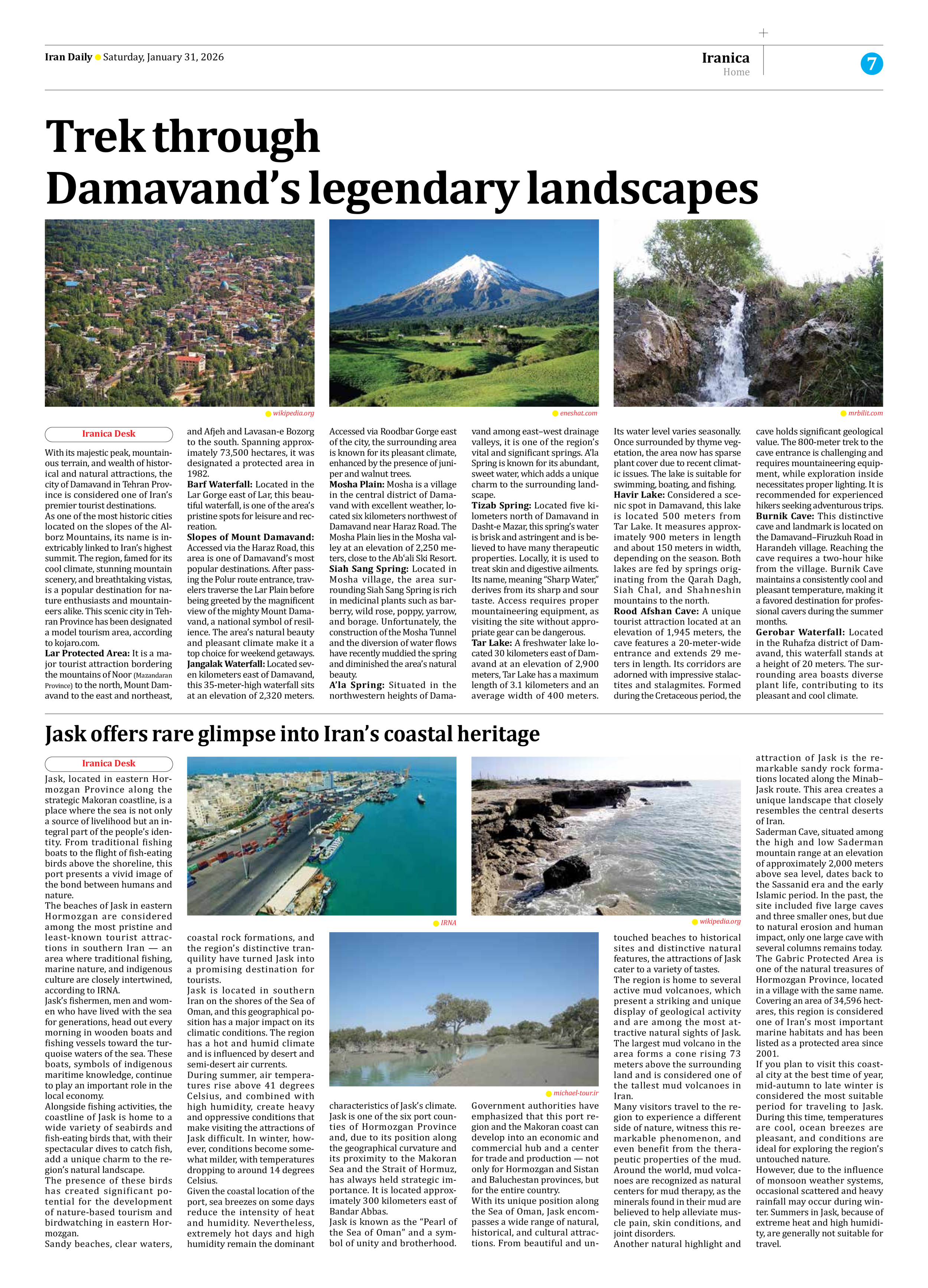
Jask, located in eastern Hormozgan Province along the strategic Makoran coastline, is a place where the sea is not only a source of livelihood but an integral part of the people’s identity. From traditional fishing boats to the flight of fish-eating birds above the shoreline, this port presents a vivid image of the bond between humans and nature.
The beaches of Jask in eastern Hormozgan are considered among the most pristine and least-known tourist attractions in southern Iran — an area where traditional fishing, marine nature, and indigenous culture are closely intertwined, according to IRNA.
Jask’s fishermen, men and women who have lived with the sea for generations, head out every morning in wooden boats and fishing vessels toward the turquoise waters of the sea. These boats, symbols of indigenous maritime knowledge, continue to play an important role in the local economy.
Alongside fishing activities, the coastline of Jask is home to a wide variety of seabirds and fish-eating birds that, with their spectacular dives to catch fish, add a unique charm to the region’s natural landscape.
The presence of these birds has created significant potential for the development of nature-based tourism and birdwatching in eastern Hormozgan.
Sandy beaches, clear waters, coastal rock formations, and the region’s distinctive tranquility have turned Jask into a promising destination for tourists.
Jask is located in southern Iran on the shores of the Sea of Oman, and this geographical position has a major impact on its climatic conditions. The region has a hot and humid climate and is influenced by desert and semi-desert air currents.
During summer, air temperatures rise above 41 degrees Celsius, and combined with high humidity, create heavy and oppressive conditions that make visiting the attractions of Jask difficult. In winter, however, conditions become somewhat milder, with temperatures dropping to around 14 degrees Celsius.
Given the coastal location of the port, sea breezes on some days reduce the intensity of heat and humidity. Nevertheless, extremely hot days and high humidity remain the dominant characteristics of Jask’s climate.
Jask is one of the six port counties of Hormozgan Province and, due to its position along the geographical curvature and its proximity to the Makoran Sea and the Strait of Hormuz, has always held strategic importance. It is located approximately 300 kilometers east of Bandar Abbas.
Jask is known as the “Pearl of the Sea of Oman” and a symbol of unity and brotherhood. Government authorities have emphasized that this port region and the Makoran coast can develop into an economic and commercial hub and a center for trade and production — not only for Hormozgan and Sistan and Baluchestan provinces, but for the entire country.
With its unique position along the Sea of Oman, Jask encompasses a wide range of natural, historical, and cultural attractions. From beautiful and untouched beaches to historical sites and distinctive natural features, the attractions of Jask cater to a variety of tastes.
The region is home to several active mud volcanoes, which present a striking and unique display of geological activity and are among the most attractive natural sights of Jask. The largest mud volcano in the area forms a cone rising 73 meters above the surrounding land and is considered one of the tallest mud volcanoes in Iran.
Many visitors travel to the region to experience a different side of nature, witness this remarkable phenomenon, and even benefit from the therapeutic properties of the mud. Around the world, mud volcanoes are recognized as natural centers for mud therapy, as the minerals found in their mud are believed to help alleviate muscle pain, skin conditions, and joint disorders.
Another natural highlight and attraction of Jask is the remarkable sandy rock formations located along the Minab–Jask route. This area creates a unique landscape that closely resembles the central deserts of Iran.
Saderman Cave, situated among the high and low Saderman mountain range at an elevation of approximately 2,000 meters above sea level, dates back to the Sassanid era and the early Islamic period. In the past, the site included five large caves and three smaller ones, but due to natural erosion and human impact, only one large cave with several columns remains today.
The Gabric Protected Area is one of the natural treasures of Hormozgan Province, located in a village with the same name. Covering an area of 34,596 hectares, this region is considered one of Iran’s most important marine habitats and has been listed as a protected area since 2001.
If you plan to visit this coastal city at the best time of year, mid-autumn to late winter is considered the most suitable period for traveling to Jask. During this time, temperatures are cool, ocean breezes are pleasant, and conditions are ideal for exploring the region’s untouched nature.
However, due to the influence of monsoon weather systems, occasional scattered and heavy rainfall may occur during winter. Summers in Jask, because of extreme heat and high humidity, are generally not suitable for travel.