







Eslami: Tehran to continue nuclear progress despite sanctions
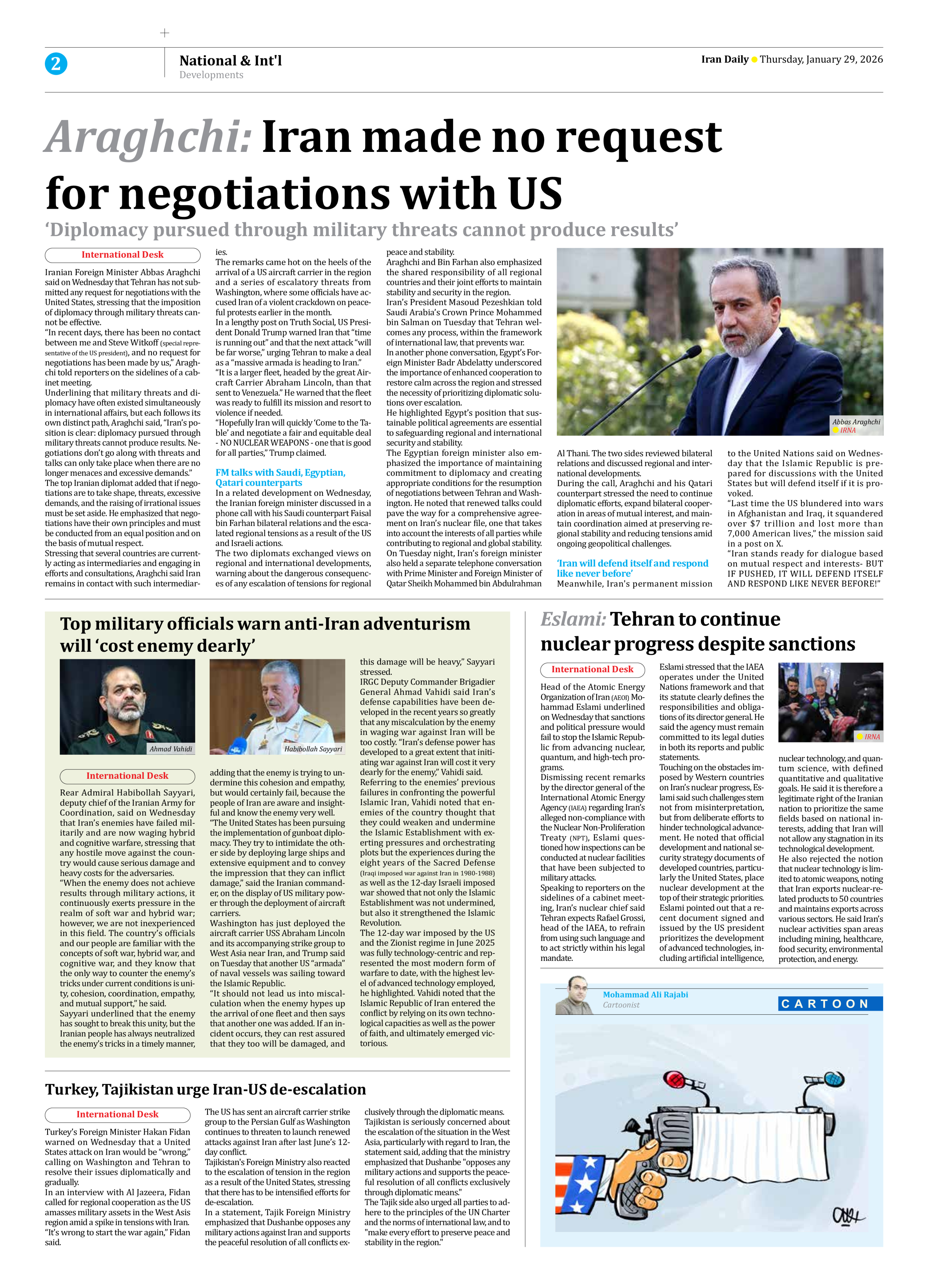
Head of the Atomic Energy Organization of Iran (AEOI) Mohammad Eslami underlined on Wednesday that sanctions and political pressure would fail to stop the Islamic Republic from advancing nuclear, quantum, and high-tech programs.
Dismissing recent remarks by the director general of the International Atomic Energy Agency (IAEA) regarding Iran’s alleged non-compliance with the Nuclear Non-Proliferation Treaty (NPT), Eslami questioned how inspections can be conducted at nuclear facilities that have been subjected to military attacks.
Speaking to reporters on the sidelines of a cabinet meeting, Iran’s nuclear chief said Tehran expects Rafael Grossi, head of the IAEA, to refrain from using such language and to act strictly within his legal mandate.
Eslami stressed that the IAEA operates under the United Nations framework and that its statute clearly defines the responsibilities and obligations of its director general. He said the agency must remain committed to its legal duties in both its reports and public statements.
Touching on the obstacles imposed by Western countries on Iran’s nuclear progress, Eslami said such challenges stem not from misinterpretation, but from deliberate efforts to hinder technological advancement. He noted that official development and national security strategy documents of developed countries, particularly the United States, place nuclear development at the top of their strategic priorities.
Eslami pointed out that a recent document signed and issued by the US president prioritizes the development of advanced technologies, including artificial intelligence, nuclear technology, and quantum science, with defined quantitative and qualitative goals. He said it is therefore a legitimate right of the Iranian nation to prioritize the same fields based on national interests, adding that Iran will not allow any stagnation in its technological development.
He also rejected the notion that nuclear technology is limited to atomic weapons, noting that Iran exports nuclear-related products to 50 countries and maintains exports across various sectors. He said Iran’s nuclear activities span areas including mining, healthcare, food security, environmental protection, and energy.