







Intangible embrace of winter in Yazd
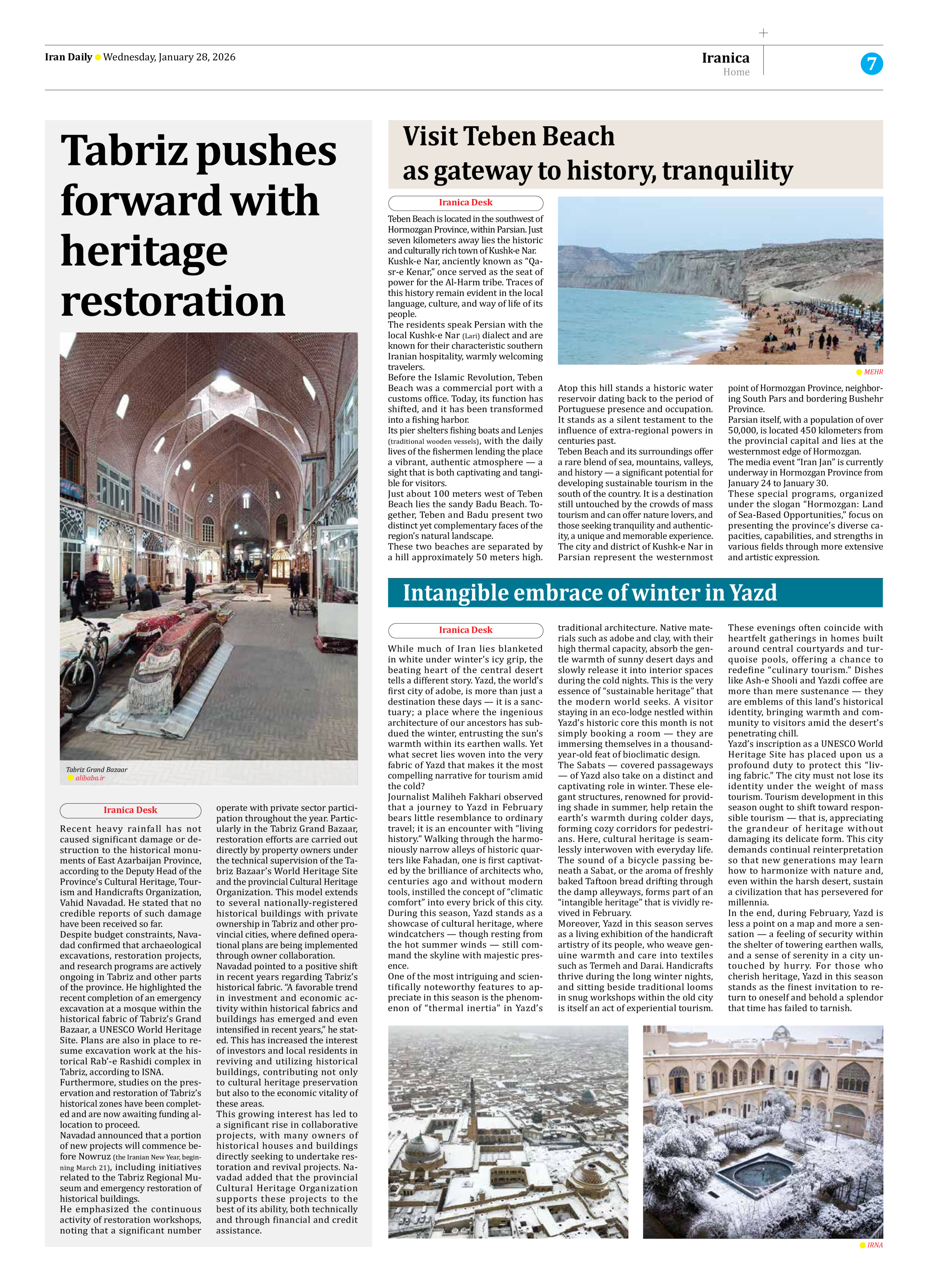
While much of Iran lies blanketed in white under winter’s icy grip, the beating heart of the central desert tells a different story. Yazd, the world’s first city of adobe, is more than just a destination these days — it is a sanctuary; a place where the ingenious architecture of our ancestors has subdued the winter, entrusting the sun’s warmth within its earthen walls. Yet what secret lies woven into the very fabric of Yazd that makes it the most compelling narrative for tourism amid the cold?
Journalist Maliheh Fakhari observed that a journey to Yazd in February bears little resemblance to ordinary travel; it is an encounter with “living history.” Walking through the harmoniously narrow alleys of historic quarters like Fahadan, one is first captivated by the brilliance of architects who, centuries ago and without modern tools, instilled the concept of “climatic comfort” into every brick of this city. During this season, Yazd stands as a showcase of cultural heritage, where windcatchers — though resting from the hot summer winds — still command the skyline with majestic presence.
One of the most intriguing and scientifically noteworthy features to appreciate in this season is the phenomenon of “thermal inertia” in Yazd’s traditional architecture. Native materials such as adobe and clay, with their high thermal capacity, absorb the gentle warmth of sunny desert days and slowly release it into interior spaces during the cold nights. This is the very essence of “sustainable heritage” that the modern world seeks. A visitor staying in an eco-lodge nestled within Yazd’s historic core this month is not simply booking a room — they are immersing themselves in a thousand-year-old feat of bioclimatic design.
The Sabats — covered passageways — of Yazd also take on a distinct and captivating role in winter. These elegant structures, renowned for providing shade in summer, help retain the earth’s warmth during colder days, forming cozy corridors for pedestrians. Here, cultural heritage is seamlessly interwoven with everyday life. The sound of a bicycle passing beneath a Sabat, or the aroma of freshly baked Taftoon bread drifting through the damp alleyways, forms part of an “intangible heritage” that is vividly revived in February.
Moreover, Yazd in this season serves as a living exhibition of the handicraft artistry of its people, who weave genuine warmth and care into textiles such as Termeh and Darai. Handicrafts thrive during the long winter nights, and sitting beside traditional looms in snug workshops within the old city is itself an act of experiential tourism.
These evenings often coincide with heartfelt gatherings in homes built around central courtyards and turquoise pools, offering a chance to redefine “culinary tourism.” Dishes like Ash-e Shooli and Yazdi coffee are more than mere sustenance — they are emblems of this land’s historical identity, bringing warmth and community to visitors amid the desert’s penetrating chill.
Yazd’s inscription as a UNESCO World Heritage Site has placed upon us a profound duty to protect this “living fabric.” The city must not lose its identity under the weight of mass tourism. Tourism development in this season ought to shift toward responsible tourism — that is, appreciating the grandeur of heritage without damaging its delicate form. This city demands continual reinterpretation so that new generations may learn how to harmonize with nature and, even within the harsh desert, sustain a civilization that has persevered for millennia.
In the end, during February, Yazd is less a point on a map and more a sensation — a feeling of security within the shelter of towering earthen walls, and a sense of serenity in a city untouched by hurry. For those who cherish heritage, Yazd in this season stands as the finest invitation to return to oneself and behold a splendor that time has failed to tarnish.