







Gov’t seeks educational reform, aiming to foster conscious learning
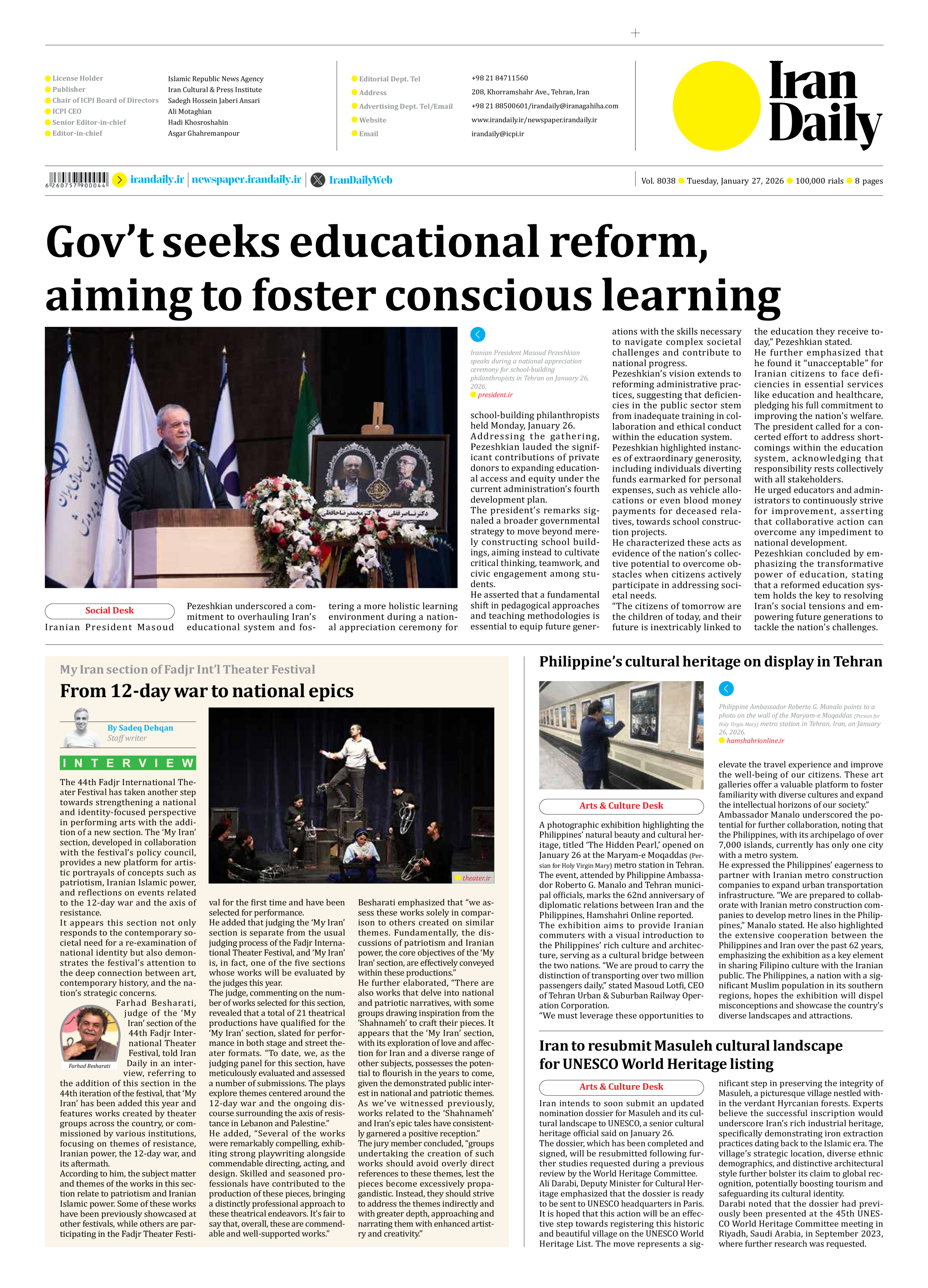
Iranian President Masoud Pezeshkian underscored a commitment to overhauling Iran’s educational system and fostering a more holistic learning environment during a national appreciation ceremony for school-building philanthropists held Monday, January 26.
Addressing the gathering, Pezeshkian lauded the significant contributions of private donors to expanding educational access and equity under the current administration’s fourth development plan.
The president’s remarks signaled a broader governmental strategy to move beyond merely constructing school buildings, aiming instead to cultivate critical thinking, teamwork, and civic engagement among students.
He asserted that a fundamental shift in pedagogical approaches and teaching methodologies is essential to equip future generations with the skills necessary to navigate complex societal challenges and contribute to national progress.
Pezeshkian’s vision extends to reforming administrative practices, suggesting that deficiencies in the public sector stem from inadequate training in collaboration and ethical conduct within the education system.
Pezeshkian highlighted instances of extraordinary generosity, including individuals diverting funds earmarked for personal expenses, such as vehicle allocations or even blood money payments for deceased relatives, towards school construction projects.
He characterized these acts as evidence of the nation’s collective potential to overcome obstacles when citizens actively participate in addressing societal needs.
“The citizens of tomorrow are the children of today, and their future is inextricably linked to the education they receive today,” Pezeshkian stated.
He further emphasized that he found it “unacceptable” for Iranian citizens to face deficiencies in essential services like education and healthcare, pledging his full commitment to improving the nation’s welfare.
The president called for a concerted effort to address shortcomings within the education system, acknowledging that responsibility rests collectively with all stakeholders.
He urged educators and administrators to continuously strive for improvement, asserting that collaborative action can overcome any impediment to national development.
Pezeshkian concluded by emphasizing the transformative power of education, stating that a reformed education system holds the key to resolving Iran’s social tensions and empowering future generations to tackle the nation’s challenges.