





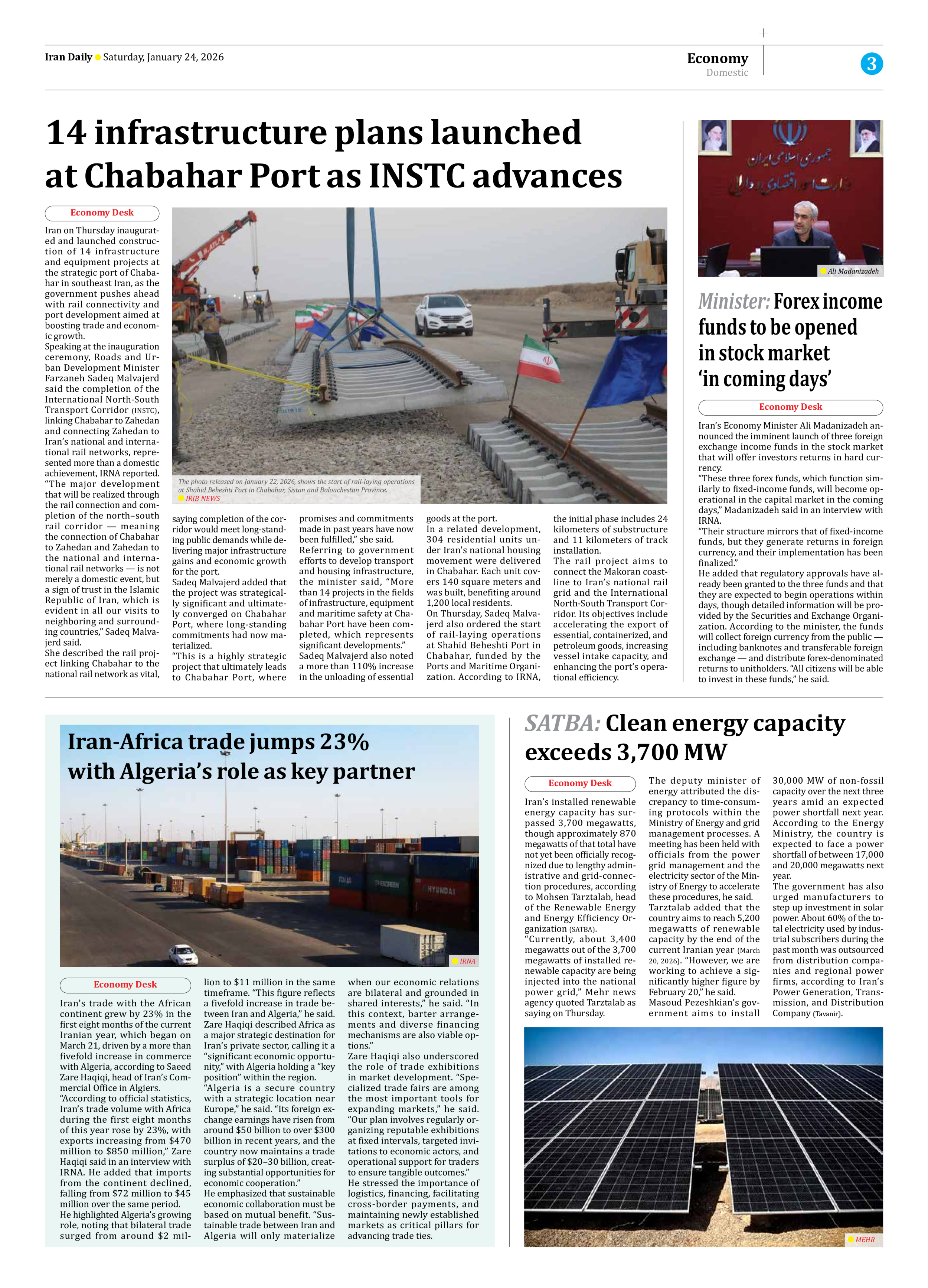


Iran-Africa trade jumps 23% with Algeria’s role as key partner
Iran’s trade with the African continent grew by 23% in the first eight months of the current Iranian year, which began on March 21, driven by a more than fivefold increase in commerce with Algeria, according to Saeed Zare Haqiqi, head of Iran’s Commercial Office in Algiers.
“According to official statistics, Iran’s trade volume with Africa during the first eight months of this year rose by 23%, with exports increasing from $470 million to $850 million,” Zare Haqiqi said in an interview with IRNA. He added that imports from the continent declined, falling from $72 million to $45 million over the same period.
He highlighted Algeria’s growing role, noting that bilateral trade surged from around $2 million to $11 million in the same timeframe. “This figure reflects a fivefold increase in trade between Iran and Algeria,” he said.
Zare Haqiqi described Africa as a major strategic destination for Iran’s private sector, calling it a “significant economic opportunity,” with Algeria holding a “key position” within the region.
“Algeria is a secure country with a strategic location near Europe,” he said. “Its foreign exchange earnings have risen from around $50 billion to over $300 billion in recent years, and the country now maintains a trade surplus of $20–30 billion, creating substantial opportunities for economic cooperation.”
He emphasized that sustainable economic collaboration must be based on mutual benefit. “Sustainable trade between Iran and Algeria will only materialize when our economic relations are bilateral and grounded in shared interests,” he said. “In this context, barter arrangements and diverse financing mechanisms are also viable options.”
Zare Haqiqi also underscored the role of trade exhibitions in market development. “Specialized trade fairs are among the most important tools for expanding markets,” he said. “Our plan involves regularly organizing reputable exhibitions at fixed intervals, targeted invitations to economic actors, and operational support for traders to ensure tangible outcomes.”
He stressed the importance of logistics, financing, facilitating cross-border payments, and maintaining newly established markets as critical pillars for advancing trade ties.