







Four natural wonders of Kermanshah gain national heritage status
The national registration of natural landmarks — encompassing ancient trees, lagoons, springs, and rare botanical species — is playing a vital role in preserving the environment and natural resources of Kermanshah Province.
Moslem Karami, an expert at the Kermanshah Cultural Heritage, Tourism, and Handicrafts Organization, announced that 53 natural heritage sites from the province have been officially added to the national list to date, according chtn.ir.
Highlighting a recent session of the Registration Council at the Ministry of Cultural Heritage, Tourism, and Handicrafts, Karami confirmed the national registration of four additional natural sites. Among these are the ancient Ash trees of Sarab-e Shineh in Sar Firuzabad village, which are estimated to be approximately 450 years old.
Furthermore, an ancient Pistacia atlantica (Mt. Atlas mastic tree) located in the northern reaches of the scenic Satyari tourism village has been officially recognized. This 650-year-old tree remains in remarkably healthy condition. Following a proposal by environmental advocates and subsequent evaluations by heritage experts, it was deemed qualified for inclusion in the National Natural Heritage List.
The list now also includes a massive ancient Plane tree in the Darband village of Sahneh. Estimated to be 400 years old, this robust and valuable tree was registered following a formal proposal by the Sahneh Municipality.
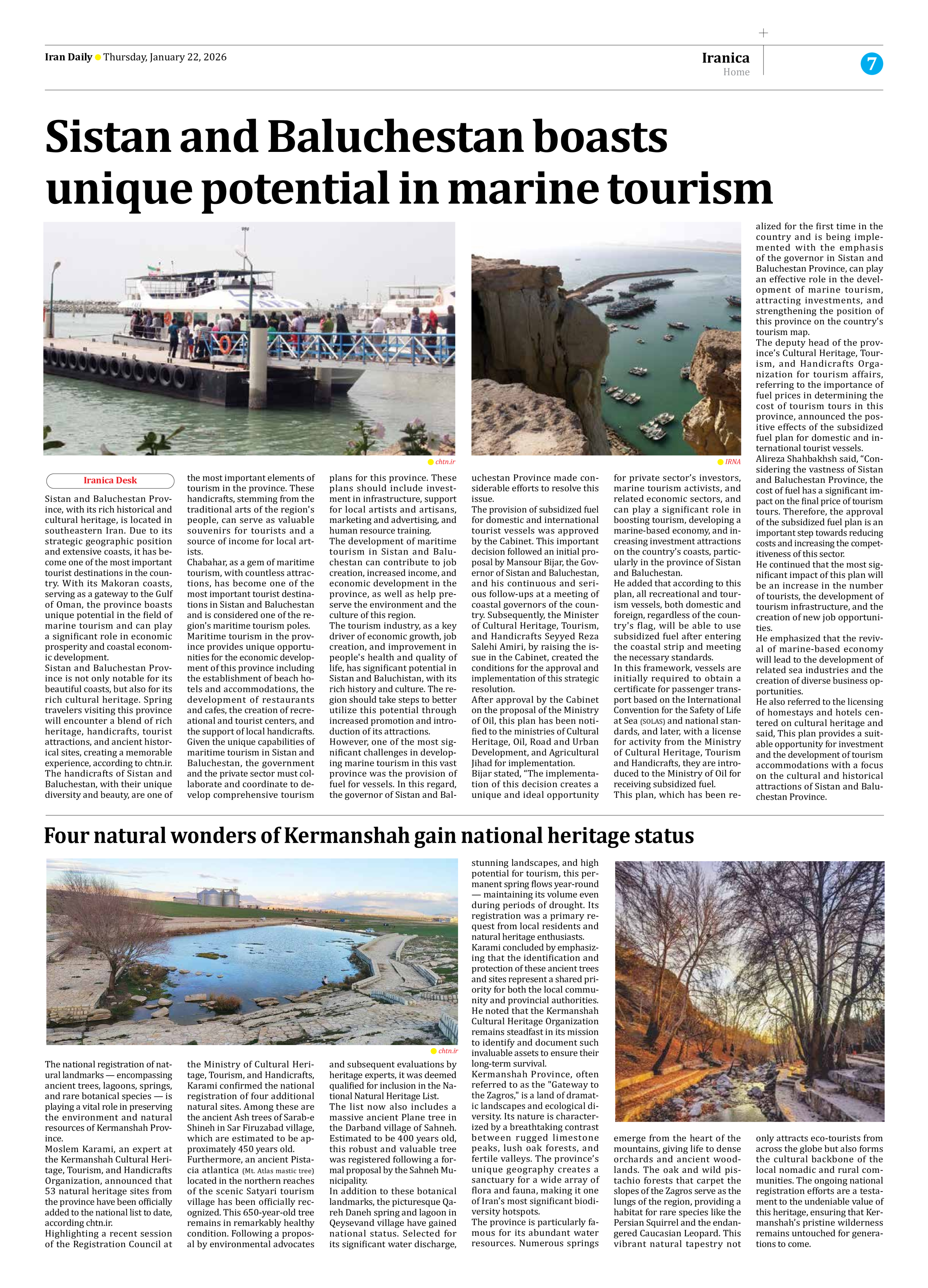
In addition to these botanical landmarks, the picturesque Qareh Daneh spring and lagoon in Qeysevand village have gained national status. Selected for its significant water discharge, stunning landscapes, and high potential for tourism, this permanent spring flows year-round — maintaining its volume even during periods of drought. Its registration was a primary request from local residents and natural heritage enthusiasts.
Karami concluded by emphasizing that the identification and protection of these ancient trees and sites represent a shared priority for both the local community and provincial authorities. He noted that the Kermanshah Cultural Heritage Organization remains steadfast in its mission to identify and document such invaluable assets to ensure their long-term survival.
Kermanshah Province, often referred to as the "Gateway to the Zagros," is a land of dramatic landscapes and ecological diversity. Its nature is characterized by a breathtaking contrast between rugged limestone peaks, lush oak forests, and fertile valleys. The province’s unique geography creates a sanctuary for a wide array of flora and fauna, making it one of Iran’s most significant biodiversity hotspots.
The province is particularly famous for its abundant water resources. Numerous springs emerge from the heart of the mountains, giving life to dense orchards and ancient woodlands. The oak and wild pistachio forests that carpet the slopes of the Zagros serve as the lungs of the region, providing a habitat for rare species like the Persian Squirrel and the endangered Caucasian Leopard. This vibrant natural tapestry not only attracts eco-tourists from across the globe but also forms the cultural backbone of the local nomadic and rural communities. The ongoing national registration efforts are a testament to the undeniable value of this heritage, ensuring that Kermanshah’s pristine wilderness remains untouched for generations to come.