







Copy in clipboard...
Iran’s dam inflows decline amid persistent drought concerns
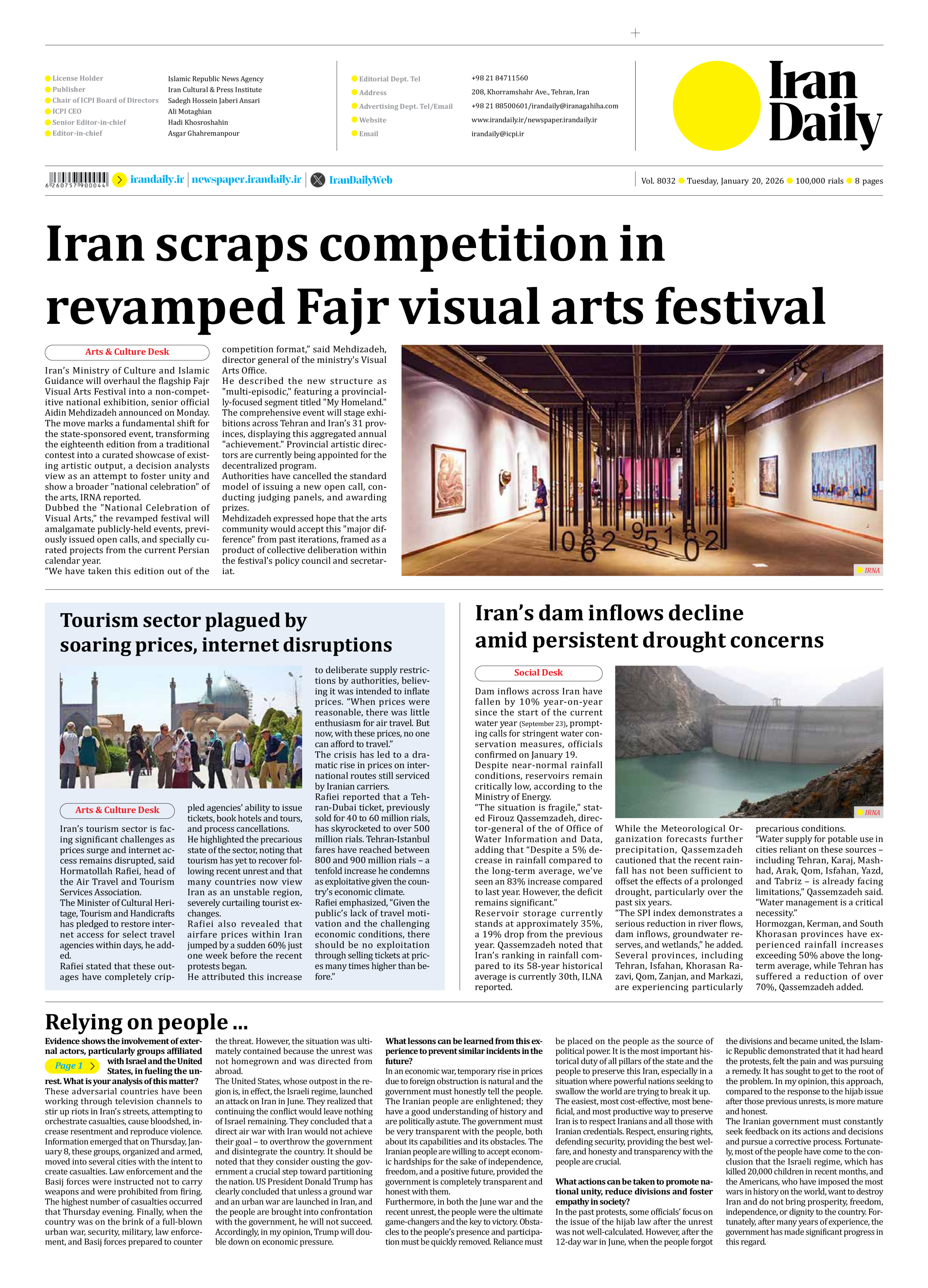
Despite near-normal rainfall conditions, reservoirs remain critically low, according to the Ministry of Energy.
“The situation is fragile,” stated Firouz Qassemzadeh, director-general of the of Office of Water Information and Data, adding that “Despite a 5% decrease in rainfall compared to the long-term average, we’ve seen an 83% increase compared to last year. However, the deficit remains significant.”
Reservoir storage currently stands at approximately 35%, a 19% drop from the previous year. Qassemzadeh noted that Iran’s ranking in rainfall compared to its 58-year historical average is currently 30th, ILNA reported.
While the Meteorological Organization forecasts further precipitation, Qassemzadeh cautioned that the recent rainfall has not been sufficient to offset the effects of a prolonged drought, particularly over the past six years.
“The SPI index demonstrates a serious reduction in river flows, dam inflows, groundwater reserves, and wetlands,” he added.
Several provinces, including Tehran, Isfahan, Khorasan Razavi, Qom, Zanjan, and Markazi, are experiencing particularly precarious conditions.
“Water supply for potable use in cities reliant on these sources – including Tehran, Karaj, Mashhad, Arak, Qom, Isfahan, Yazd, and Tabriz – is already facing limitations,” Qassemzadeh said. “Water management is a critical necessity.”
Hormozgan, Kerman, and South Khorasan provinces have experienced rainfall increases exceeding 50% above the long-term average, while Tehran has suffered a reduction of over 70%, Qassemzadeh added.