







Rangooniha Mosque; unique structure with extraordinary architecture
Oil, refinery, and people brought prosperity to Abadan in Khuzestan Province. The city hosts a number of unique attractions one of which is a mosque with unusual architecture called Rangooniha Mosque, built by Muslim immigrants from Rangoon of India, now called Yangon. Thanks to its eye-catching and exceptional decorations, it is often considered as a destination for tourists travelling to Khuzestan Province, especially those from India.
The story of this mosque began when the first English group arrived in Abadan to establish a refinery. They were employees of the Rangoon Refinery in Burma (Myanmar). This group brought a number of assistants to Abadan, who were mainly of Rangooni origin and Sunni Muslims. Therefore, after their arrival, they set out to establish a mosque on the banks of the Arvand River in the late Qajar period, around 1912 CE, according to Mehr News Agency.
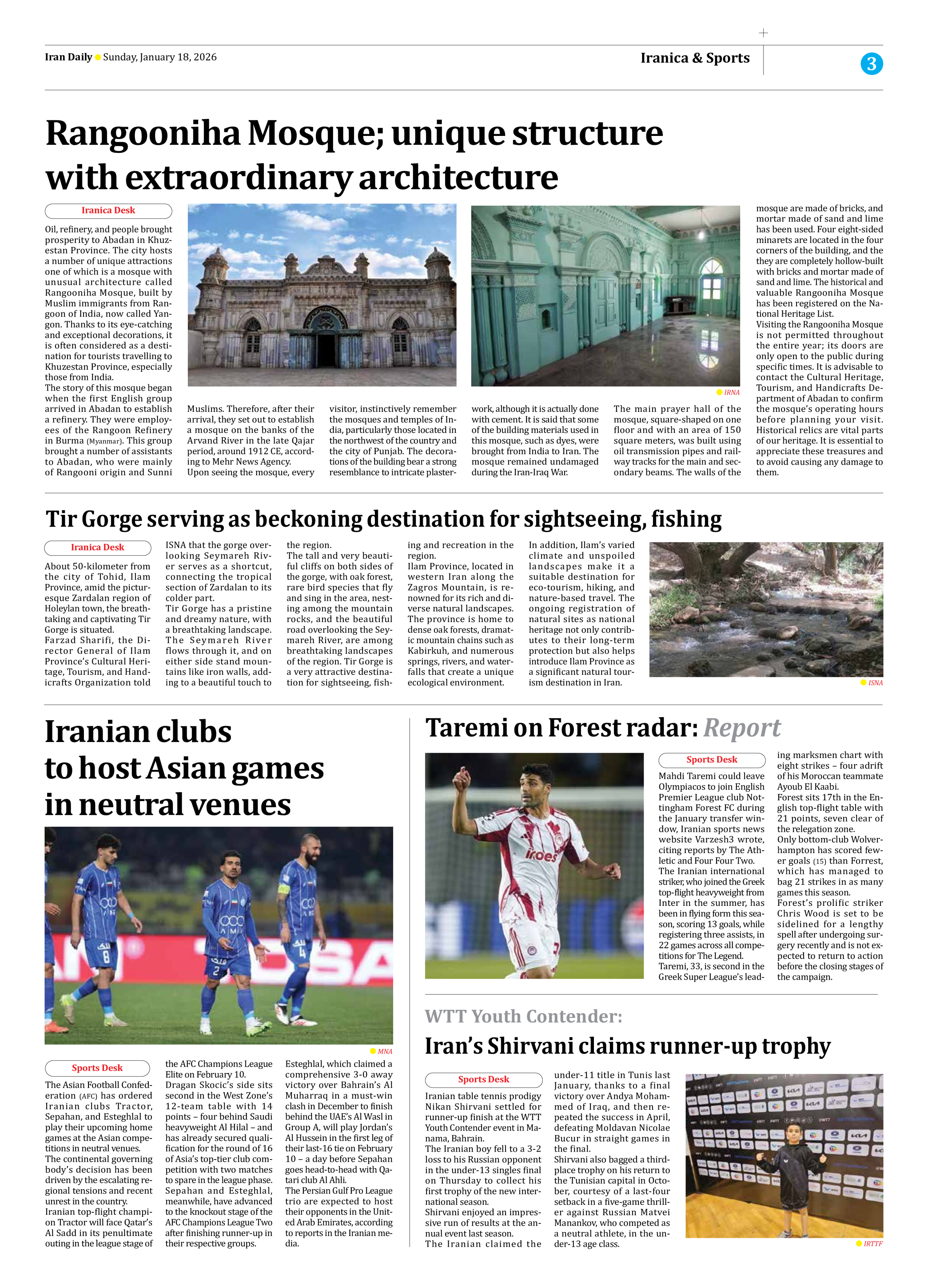
Upon seeing the mosque, every visitor, instinctively remember the mosques and temples of India, particularly those located in the northwest of the country and the city of Punjab. The decorations of the building bear a strong resemblance to intricate plasterwork, although it is actually done with cement. It is said that some of the building materials used in this mosque, such as dyes, were brought from India to Iran. The mosque remained undamaged during the Iran-Iraq War.
The main prayer hall of the mosque, square-shaped on one floor and with an area of 150 square meters, was built using oil transmission pipes and railway tracks for the main and secondary beams. The walls of the mosque are made of bricks, and mortar made of sand and lime has been used. Four eight-sided minarets are located in the four corners of the building, and the they are completely hollow-built with bricks and mortar made of sand and lime. The historical and valuable Rangooniha Mosque has been registered on the National Heritage List.
Visiting the Rangooniha Mosque is not permitted throughout the entire year; its doors are only open to the public during specific times. It is advisable to contact the Cultural Heritage, Tourism, and Handicrafts Department of Abadan to confirm the mosque’s operating hours before planning your visit.
Historical relics are vital parts of our heritage. It is essential to appreciate these treasures and to avoid causing any damage to them.