





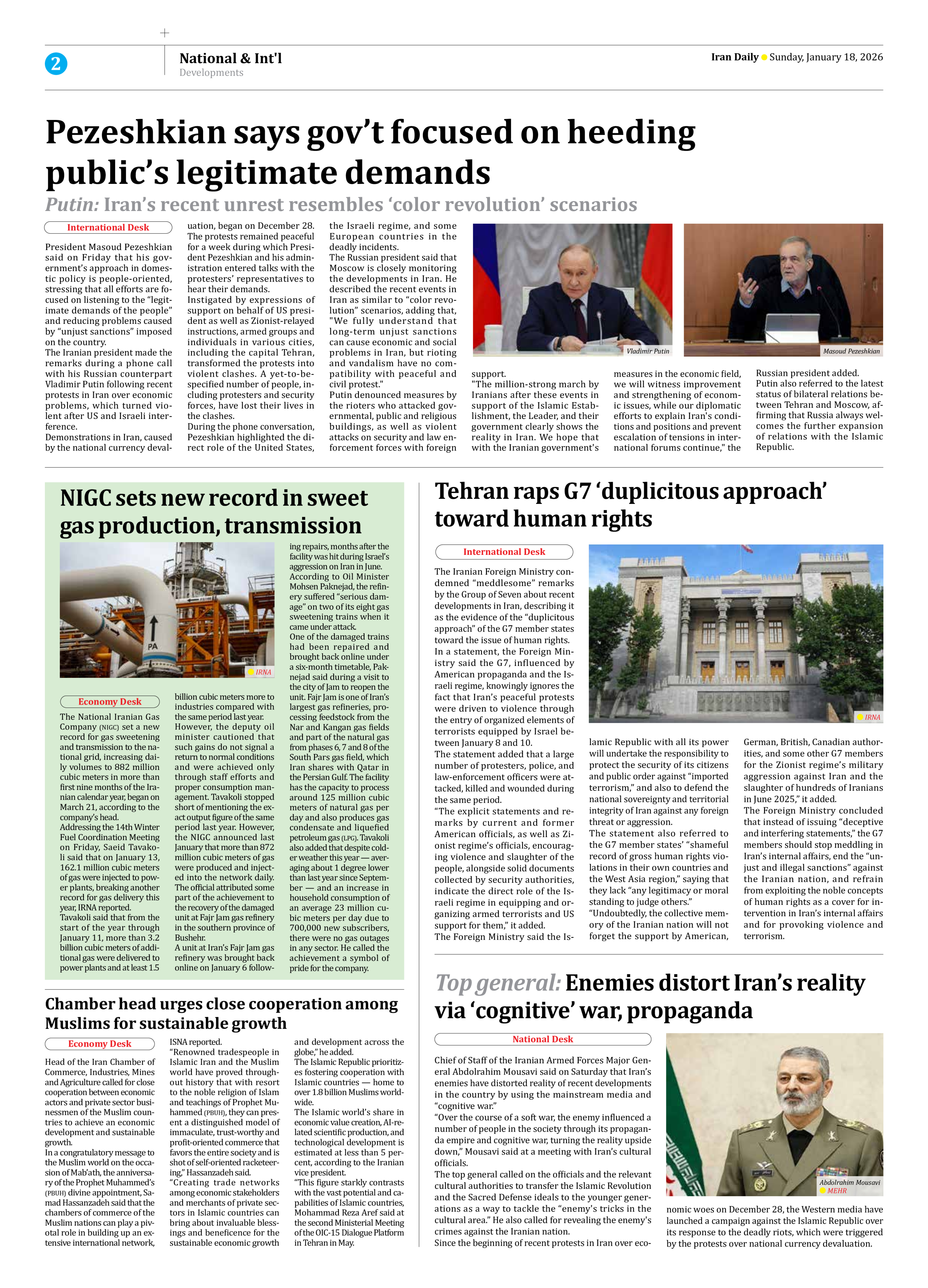


NIGC sets new record in sweet gas production, transmission
The National Iranian Gas Company (NIGC) set a new record for gas sweetening and transmission to the national grid, increasing daily volumes to 882 million cubic meters in more than first nine months of the Iranian calendar year, began on March 21, according to the company’s head.
Addressing the 14th Winter Fuel Coordination Meeting on Friday, Saeid Tavakoli said that on January 13, 162.1 million cubic meters of gas were injected to power plants, breaking another record for gas delivery this year, IRNA reported.
Tavakoli said that from the start of the year through January 11, more than 3.2 billion cubic meters of additional gas were delivered to power plants and at least 1.5 billion cubic meters more to industries compared with the same period last year.
However, the deputy oil minister cautioned that such gains do not signal a return to normal conditions and were achieved only through staff efforts and proper consumption management. Tavakoli stopped short of mentioning the exact output figure of the same period last year. However, the NIGC announced last January that more than 872 million cubic meters of gas were produced and injected into the network daily. The official attributed some part of the achievement to the recovery of the damaged unit at Fajr Jam gas refinery in the southern province of Bushehr.
A unit at Iran’s Fajr Jam gas refinery was brought back online on January 6 following repairs, months after the facility was hit during Israel’s aggression on Iran in June.
According to Oil Minister Mohsen Paknejad, the refinery suffered “serious damage” on two of its eight gas sweetening trains when it came under attack.
One of the damaged trains had been repaired and brought back online under a six-month timetable, Paknejad said during a visit to the city of Jam to reopen the unit. Fajr Jam is one of Iran’s largest gas refineries, processing feedstock from the Nar and Kangan gas fields and part of the natural gas from phases 6, 7 and 8 of the South Pars gas field, which Iran shares with Qatar in the Persian Gulf. The facility has the capacity to process around 125 million cubic meters of natural gas per day and also produces gas condensate and liquefied petroleum gas (LPG). Tavakoli also added that despite colder weather this year — averaging about 1 degree lower than last year since September — and an increase in household consumption of an average 23 million cubic meters per day due to 700,000 new subscribers, there were no gas outages in any sector. He called the achievement a symbol of pride for the company.