







Copy in clipboard...
Iran rolls out incentives to lure tourism investment at Tehran construction expo
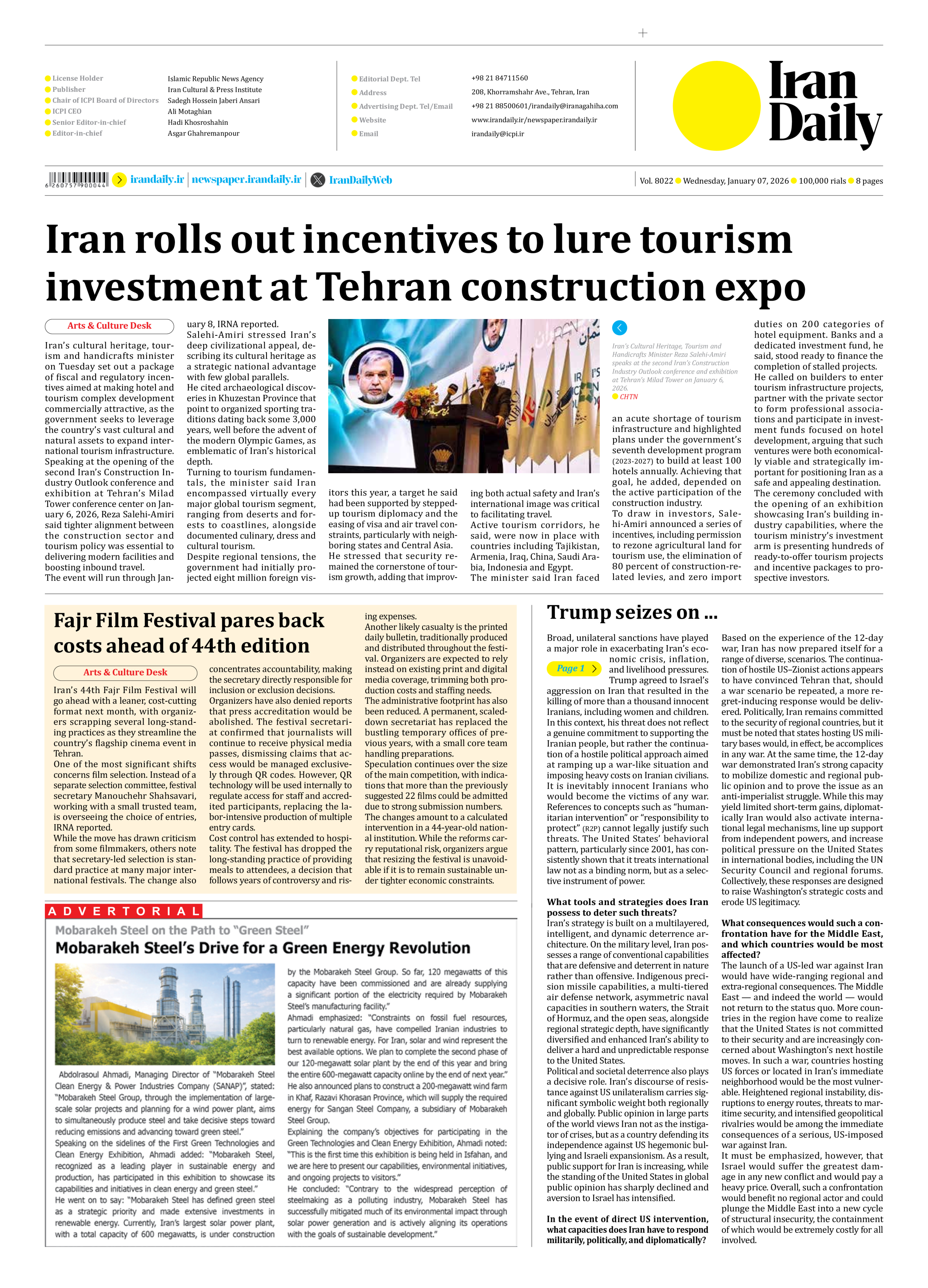
Speaking at the opening of the second Iran’s Construction Industry Outlook conference and exhibition at Tehran’s Milad Tower conference center on January 6, 2026, Reza Salehi-Amiri said tighter alignment between the construction sector and tourism policy was essential to delivering modern facilities and boosting inbound travel.
The event will run through January 8, IRNA reported.
Salehi-Amiri stressed Iran’s deep civilizational appeal, describing its cultural heritage as a strategic national advantage with few global parallels.
He cited archaeological discoveries in Khuzestan Province that point to organized sporting traditions dating back some 3,000 years, well before the advent of the modern Olympic Games, as emblematic of Iran’s historical depth.
Turning to tourism fundamentals, the minister said Iran encompassed virtually every major global tourism segment, ranging from deserts and forests to coastlines, alongside documented culinary, dress and cultural tourism.
Despite regional tensions, the government had initially projected eight million foreign visitors this year, a target he said had been supported by stepped-up tourism diplomacy and the easing of visa and air travel constraints, particularly with neighboring states and Central Asia.
He stressed that security remained the cornerstone of tourism growth, adding that improving both actual safety and Iran’s international image was critical to facilitating travel.
Active tourism corridors, he said, were now in place with countries including Tajikistan, Armenia, Iraq, China, Saudi Arabia, Indonesia and Egypt.
The minister said Iran faced an acute shortage of tourism infrastructure and highlighted plans under the government’s seventh development program (2023-2027) to build at least 100 hotels annually. Achieving that goal, he added, depended on the active participation of the construction industry.
To draw in investors, Salehi-Amiri announced a series of incentives, including permission to rezone agricultural land for tourism use, the elimination of 80 percent of construction-related levies, and zero import duties on 200 categories of hotel equipment. Banks and a dedicated investment fund, he said, stood ready to finance the completion of stalled projects.
He called on builders to enter tourism infrastructure projects, partner with the private sector to form professional associations and participate in investment funds focused on hotel development, arguing that such ventures were both economically viable and strategically important for positioning Iran as a safe and appealing destination.
The ceremony concluded with the opening of an exhibition showcasing Iran’s building industry capabilities, where the tourism ministry’s investment arm is presenting hundreds of ready-to-offer tourism projects and incentive packages to prospective investors.