





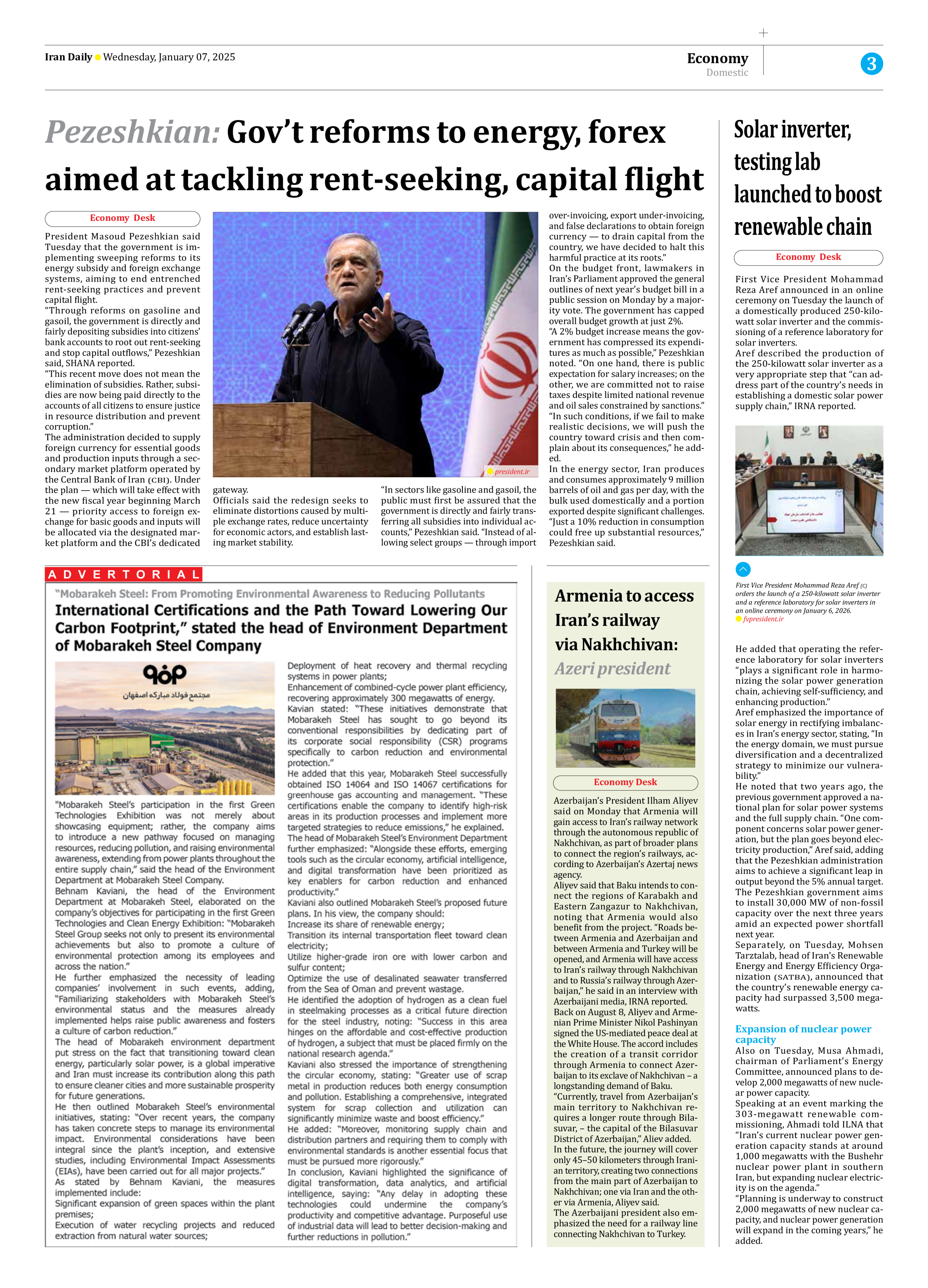


Pezeshkian: Gov’t reforms to energy, forex aimed at tackling rent-seeking, capital flight
President Masoud Pezeshkian said Tuesday that the government is implementing sweeping reforms to its energy subsidy and foreign exchange systems, aiming to end entrenched rent-seeking practices and prevent capital flight.
“Through reforms on gasoline and gasoil, the government is directly and fairly depositing subsidies into citizens’ bank accounts to root out rent-seeking and stop capital outflows,” Pezeshkian said, SHANA reported.
“This recent move does not mean the elimination of subsidies. Rather, subsidies are now being paid directly to the accounts of all citizens to ensure justice in resource distribution and prevent corruption.”
The administration decided to supply foreign currency for essential goods and production inputs through a secondary market platform operated by the Central Bank of Iran (CBI). Under the plan — which will take effect with the new fiscal year beginning March 21 — priority access to foreign exchange for basic goods and inputs will be allocated via the designated market platform and the CBI’s dedicated gateway.
Officials said the redesign seeks to eliminate distortions caused by multiple exchange rates, reduce uncertainty for economic actors, and establish lasting market stability.
“In sectors like gasoline and gasoil, the public must first be assured that the government is directly and fairly transferring all subsidies into individual accounts,” Pezeshkian said. “Instead of allowing select groups — through import over-invoicing, export under-invoicing, and false declarations to obtain foreign currency — to drain capital from the country, we have decided to halt this harmful practice at its roots.”
On the budget front, lawmakers in Iran’s Parliament approved the general outlines of next year’s budget bill in a public session on Monday by a majority vote. The government has capped overall budget growth at just 2%.
“A 2% budget increase means the government has compressed its expenditures as much as possible,” Pezeshkian noted. “On one hand, there is public expectation for salary increases; on the other, we are committed not to raise taxes despite limited national revenue and oil sales constrained by sanctions.”
“In such conditions, if we fail to make realistic decisions, we will push the country toward crisis and then complain about its consequences,” he added.
In the energy sector, Iran produces and consumes approximately 9 million barrels of oil and gas per day, with the bulk used domestically and a portion exported despite significant challenges. “Just a 10% reduction in consumption could free up substantial resources,” Pezeshkian said.