







Transforming tourism into family experiences
In recent years, the tourism industry in Iran has experienced significant growth, and the country’s cities and natural regions have been attracting more attention from tourists than ever before. However, despite this growth, one of the major gaps in the country’s tourism sector is the lack of attention to family-oriented groups, according to Ali Akbar Bani-Asadi, a tourism expert.
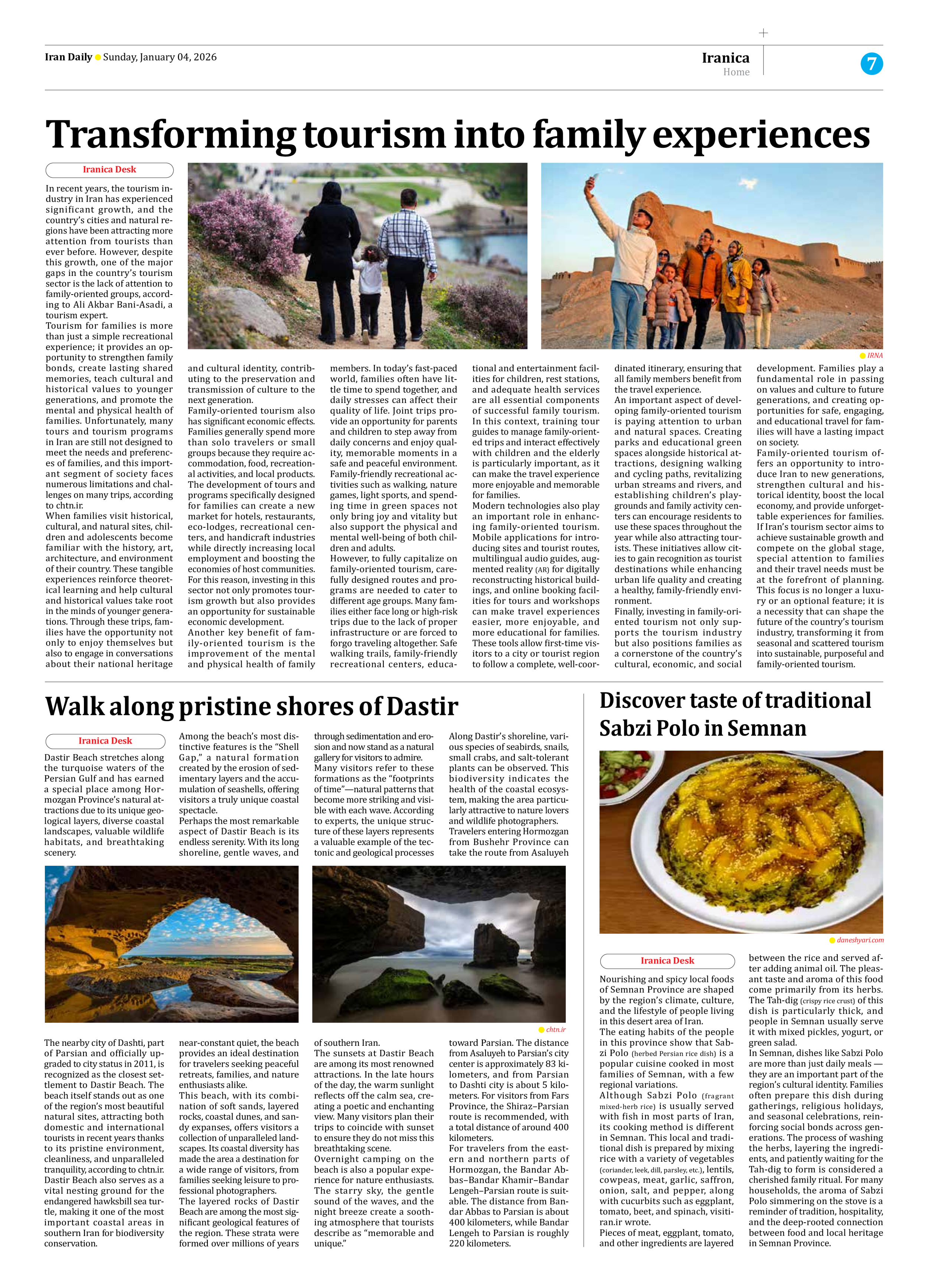
Tourism for families is more than just a simple recreational experience; it provides an opportunity to strengthen family bonds, create lasting shared memories, teach cultural and historical values to younger generations, and promote the mental and physical health of families. Unfortunately, many tours and tourism programs in Iran are still not designed to meet the needs and preferences of families, and this important segment of society faces numerous limitations and challenges on many trips, according to chtn.ir.
When families visit historical, cultural, and natural sites, children and adolescents become familiar with the history, art, architecture, and environment of their country. These tangible experiences reinforce theoretical learning and help cultural and historical values take root in the minds of younger generations. Through these trips, families have the opportunity not only to enjoy themselves but also to engage in conversations about their national heritage and cultural identity, contributing to the preservation and transmission of culture to the next generation.
Family-oriented tourism also has significant economic effects. Families generally spend more than solo travelers or small groups because they require accommodation, food, recreational activities, and local products. The development of tours and programs specifically designed for families can create a new market for hotels, restaurants, eco-lodges, recreational centers, and handicraft industries while directly increasing local employment and boosting the economies of host communities. For this reason, investing in this sector not only promotes tourism growth but also provides an opportunity for sustainable economic development.
Another key benefit of family-oriented tourism is the improvement of the mental and physical health of family members. In today’s fast-paced world, families often have little time to spend together, and daily stresses can affect their quality of life. Joint trips provide an opportunity for parents and children to step away from daily concerns and enjoy quality, memorable moments in a safe and peaceful environment. Family-friendly recreational activities such as walking, nature games, light sports, and spending time in green spaces not only bring joy and vitality but also support the physical and mental well-being of both children and adults.
However, to fully capitalize on family-oriented tourism, carefully designed routes and programs are needed to cater to different age groups. Many families either face long or high-risk trips due to the lack of proper infrastructure or are forced to forgo traveling altogether. Safe walking trails, family-friendly recreational centers, educational and entertainment facilities for children, rest stations, and adequate health services are all essential components of successful family tourism. In this context, training tour guides to manage family-oriented trips and interact effectively with children and the elderly is particularly important, as it can make the travel experience more enjoyable and memorable for families.
Modern technologies also play an important role in enhancing family-oriented tourism. Mobile applications for introducing sites and tourist routes, multilingual audio guides, augmented reality (AR) for digitally reconstructing historical buildings, and online booking facilities for tours and workshops can make travel experiences easier, more enjoyable, and more educational for families. These tools allow first-time visitors to a city or tourist region to follow a complete, well-coordinated itinerary, ensuring that all family members benefit from the travel experience.
An important aspect of developing family-oriented tourism is paying attention to urban and natural spaces. Creating parks and educational green spaces alongside historical attractions, designing walking and cycling paths, revitalizing urban streams and rivers, and establishing children’s playgrounds and family activity centers can encourage residents to use these spaces throughout the year while also attracting tourists. These initiatives allow cities to gain recognition as tourist destinations while enhancing urban life quality and creating a healthy, family-friendly environment.
Finally, investing in family-oriented tourism not only supports the tourism industry but also positions families as a cornerstone of the country’s cultural, economic, and social development. Families play a fundamental role in passing on values and culture to future generations, and creating opportunities for safe, engaging, and educational travel for families will have a lasting impact on society.
Family-oriented tourism offers an opportunity to introduce Iran to new generations, strengthen cultural and historical identity, boost the local economy, and provide unforgettable experiences for families. If Iran’s tourism sector aims to achieve sustainable growth and compete on the global stage, special attention to families and their travel needs must be at the forefront of planning. This focus is no longer a luxury or an optional feature; it is a necessity that can shape the future of the country’s tourism industry, transforming it from seasonal and scattered tourism into sustainable, purposeful and family-oriented tourism.