







Iran, Japan sign economic cooperation pact, eye post-sanctions surge
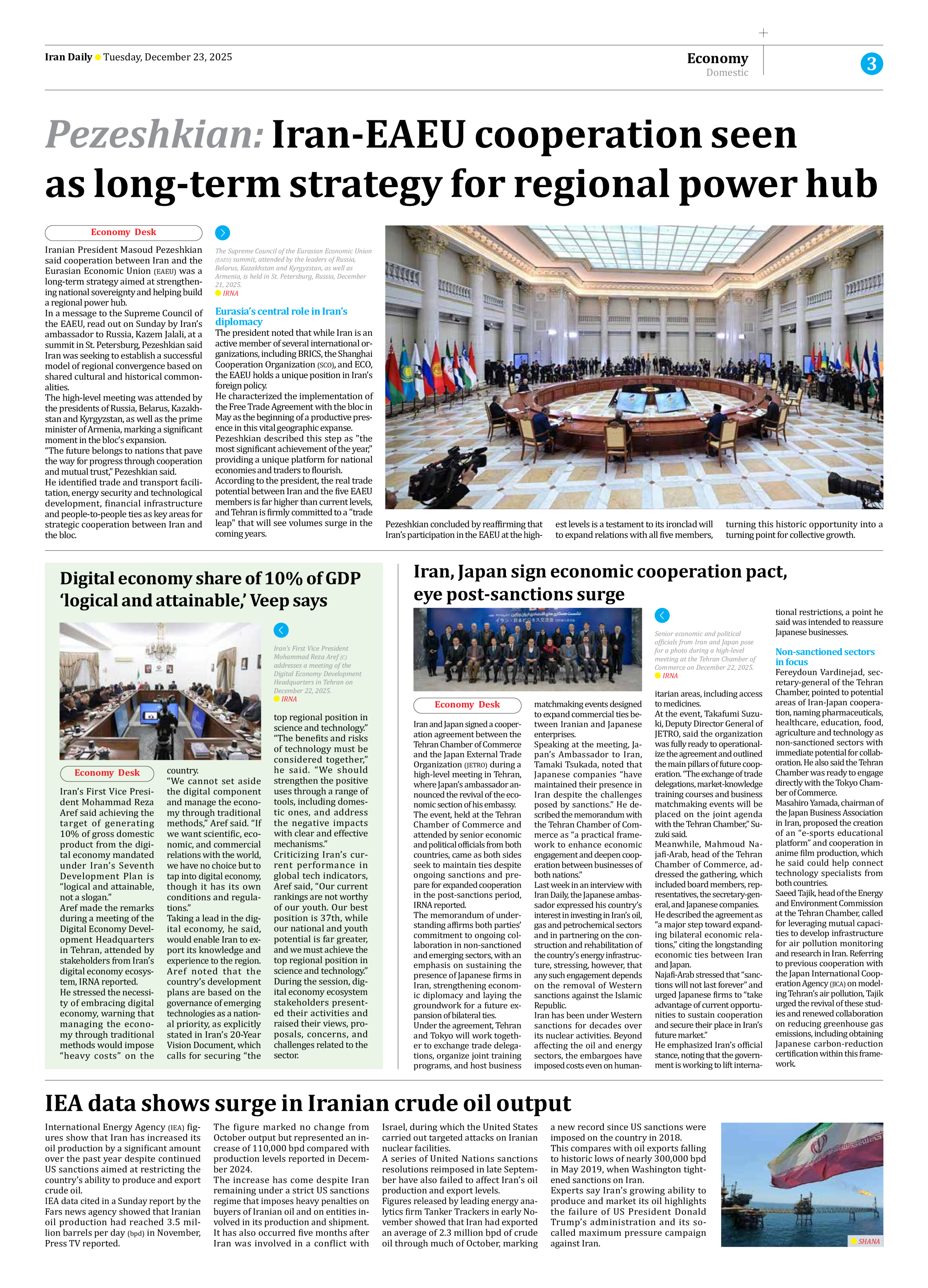
Iran and Japan signed a cooperation agreement between the Tehran Chamber of Commerce and the Japan External Trade Organization (JETRO) during a high-level meeting in Tehran, where Japan’s ambassador announced the revival of the economic section of his embassy.
The event, held at the Tehran Chamber of Commerce and attended by senior economic and political officials from both countries, came as both sides seek to maintain ties despite ongoing sanctions and prepare for expanded cooperation in the post-sanctions period, IRNA reported.
The memorandum of understanding affirms both parties’ commitment to ongoing collaboration in non-sanctioned and emerging sectors, with an emphasis on sustaining the presence of Japanese firms in Iran, strengthening economic diplomacy and laying the groundwork for a future expansion of bilateral ties.
Under the agreement, Tehran and Tokyo will work together to exchange trade delegations, organize joint training programs, and host business matchmaking events designed to expand commercial ties between Iranian and Japanese enterprises.
Speaking at the meeting, Japan’s Ambassador to Iran, Tamaki Tsukada, noted that Japanese companies “have maintained their presence in Iran despite the challenges posed by sanctions.” He described the memorandum with the Tehran Chamber of Commerce as “a practical framework to enhance economic engagement and deepen cooperation between businesses of both nations.”
Last week in an interview with Iran Daily, the Japanese ambassador expressed his country’s interest in investing in Iran’s oil, gas and petrochemical sectors and in partnering on the construction and rehabilitation of the country’s energy infrastructure, stressing, however, that any such engagement depends on the removal of Western sanctions against the Islamic Republic.
Iran has been under Western sanctions for decades over its nuclear activities. Beyond affecting the oil and energy sectors, the embargoes have imposed costs even on humanitarian areas, including access to medicines.
At the event, Takafumi Suzuki, Deputy Director General of JETRO, said the organization was fully ready to operationalize the agreement and outlined the main pillars of future cooperation. “The exchange of trade delegations, market-knowledge training courses and business matchmaking events will be placed on the joint agenda with the Tehran Chamber,” Suzuki said.
Meanwhile, Mahmoud Najafi‑Arab, head of the Tehran Chamber of Commerce, addressed the gathering, which included board members, representatives, the secretary‑general, and Japanese companies.
He described the agreement as “a major step toward expanding bilateral economic relations,” citing the longstanding economic ties between Iran and Japan.
Najafi-Arab stressed that “sanctions will not last forever” and urged Japanese firms to “take advantage of current opportunities to sustain cooperation and secure their place in Iran’s future market.”
He emphasized Iran’s official stance, noting that the government is working to lift international restrictions, a point he said was intended to reassure Japanese businesses.
Non-sanctioned sectors in focus
Fereydoun Vardinejad, secretary-general of the Tehran Chamber, pointed to potential areas of Iran-Japan cooperation, naming pharmaceuticals, healthcare, education, food, agriculture and technology as non-sanctioned sectors with immediate potential for collaboration. He also said the Tehran Chamber was ready to engage directly with the Tokyo Chamber of Commerce.
Masahiro Yamada, chairman of the Japan Business Association in Iran, proposed the creation of an “e-sports educational platform” and cooperation in anime film production, which he said could help connect technology specialists from both countries.
Saeed Tajik, head of the Energy and Environment Commission at the Tehran Chamber, called for leveraging mutual capacities to develop infrastructure for air pollution monitoring and research in Iran. Referring to previous cooperation with the Japan International Cooperation Agency (JICA) on modeling Tehran’s air pollution, Tajik urged the revival of these studies and renewed collaboration on reducing greenhouse gas emissions, including obtaining Japanese carbon-reduction certification within this framework.