





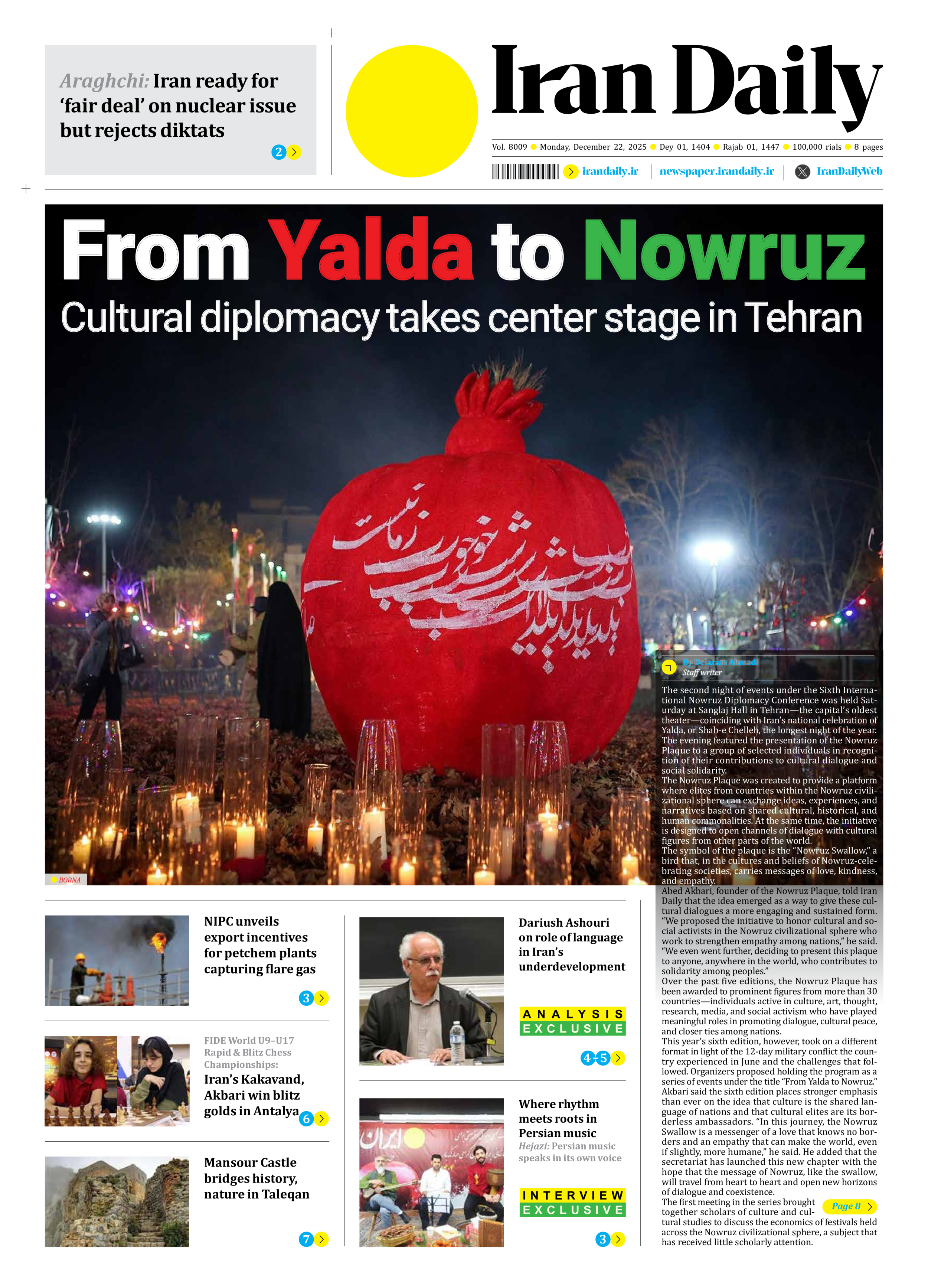


From Yalda to Nowruz
Cultural diplomacy takes center stage in Tehran
By Delaram Ahmadi
Staff writer
The second night of events under the Sixth International Nowruz Diplomacy Conference was held Saturday at Sanglaj Hall in Tehran—the capital’s oldest theater—coinciding with Iran’s national celebration of Yalda, or Shab-e Chelleh, the longest night of the year.
The evening featured the presentation of the Nowruz Plaque to a group of selected individuals in recognition of their contributions to cultural dialogue and social solidarity.
The Nowruz Plaque was created to provide a platform where elites from countries within the Nowruz civilizational sphere can exchange ideas, experiences, and narratives based on shared cultural, historical, and human commonalities. At the same time, the initiative is designed to open channels of dialogue with cultural figures from other parts of the world.
The symbol of the plaque is the “Nowruz Swallow,” a bird that, in the cultures and beliefs of Nowruz-celebrating societies, carries messages of love, kindness, and empathy.
Abed Akbari, founder of the Nowruz Plaque, told Iran Daily that the idea emerged as a way to give these cultural dialogues a more engaging and sustained form. “We proposed the initiative to honor cultural and social activists in the Nowruz civilizational sphere who work to strengthen empathy among nations,” he said. “We even went further, deciding to present this plaque to anyone, anywhere in the world, who contributes to solidarity among peoples.”
Over the past five editions, the Nowruz Plaque has been awarded to prominent figures from more than 30 countries—individuals active in culture, art, thought, research, media, and social activism who have played meaningful roles in promoting dialogue, cultural peace, and closer ties among nations.
This year’s sixth edition, however, took on a different format in light of the 12-day military conflict the country experienced in June and the challenges that followed. Organizers proposed holding the program as a series of events under the title “From Yalda to Nowruz.”
Akbari said the sixth edition places stronger emphasis than ever on the idea that culture is the shared language of nations and that cultural elites are its borderless ambassadors. “In this journey, the Nowruz Swallow is a messenger of a love that knows no borders and an empathy that can make the world, even if slightly, more humane,” he said. He added that the secretariat has launched this new chapter with the hope that the message of Nowruz, like the swallow, will travel from heart to heart and open new horizons of dialogue and coexistence.
The first meeting in the series brought together scholars of culture and cultural studies to discuss the economics of festivals held across the Nowruz civilizational sphere, a subject that has received little scholarly attention.
Page 8