







17th Int’l Festival of Tribal Culture wraps up
Golestan ethnic event bridges Central Asia, sparks tourism growth
Iran highlighted deep-rooted cultural affinities with Central Asian neighbors at the 17th International Festival of Tribal Culture in the northern province of Golestan, as senior officials said strong public turnout indicates rising cultural tourism and growing regional engagement.
Ali Darabi, deputy cultural heritage minister, said Iran shares longstanding cultural and artistic common ground with countries including Kazakhstan, Tajikistan, Uzbekistan, Kyrgyzstan and Turkmenistan, IRNA reported.
Culture and art, he said, often succeed in building bridges where formal politics reach a “dead end”, making festivals an effective instrument for dialogue, peace and social cohesion.
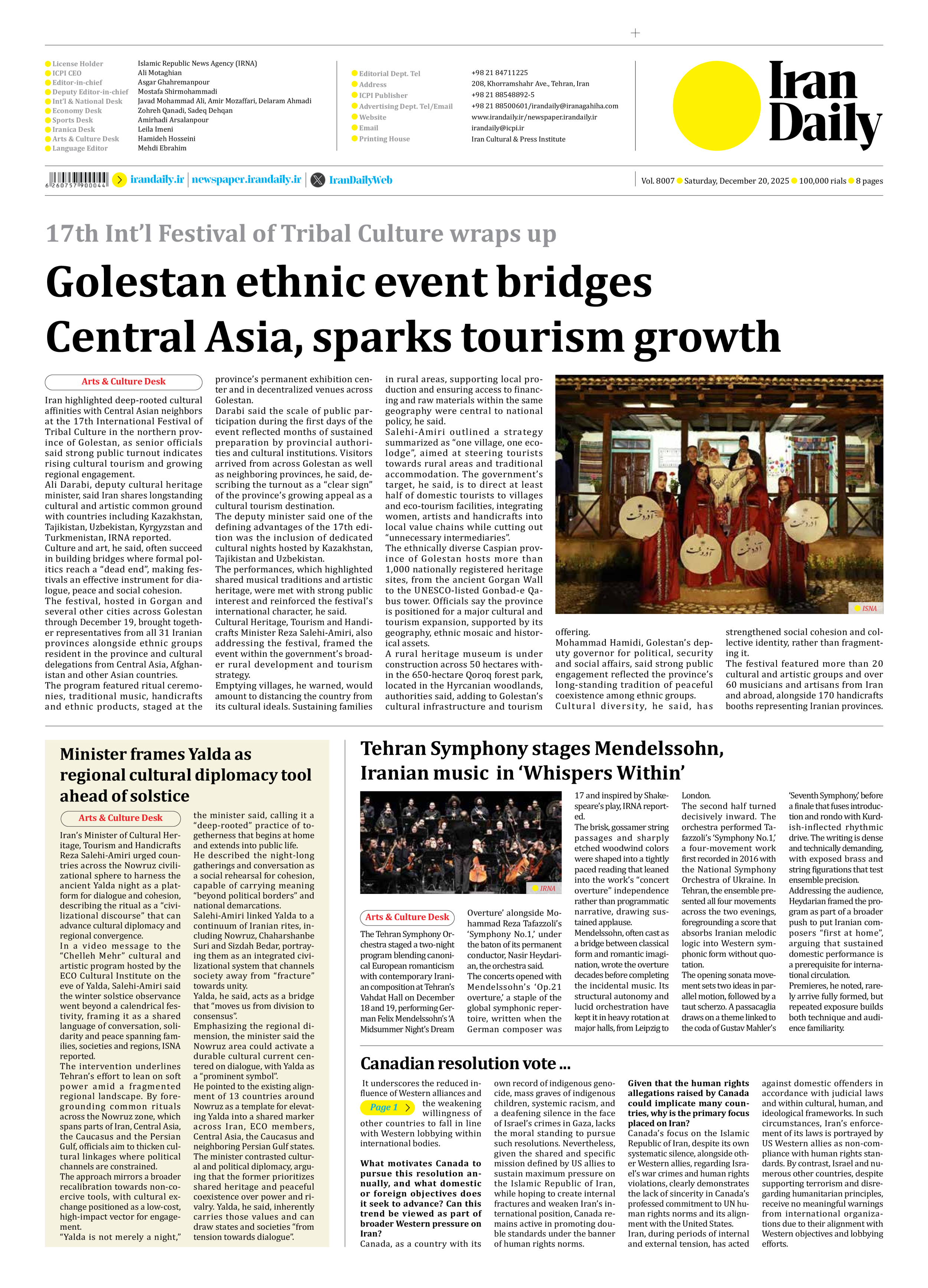
The festival, hosted in Gorgan and several other cities across Golestan through December 19, brought together representatives from all 31 Iranian provinces alongside ethnic groups resident in the province and cultural delegations from Central Asia, Afghanistan and other Asian countries.
The program featured ritual ceremonies, traditional music, handicrafts and ethnic products, staged at the province’s permanent exhibition center and in decentralized venues across Golestan.
Darabi said the scale of public participation during the first days of the event reflected months of sustained preparation by provincial authorities and cultural institutions. Visitors arrived from across Golestan as well as neighboring provinces, he said, describing the turnout as a “clear sign” of the province’s growing appeal as a cultural tourism destination.
The deputy minister said one of the defining advantages of the 17th edition was the inclusion of dedicated cultural nights hosted by Kazakhstan, Tajikistan and Uzbekistan.
The performances, which highlighted shared musical traditions and artistic heritage, were met with strong public interest and reinforced the festival’s international character, he said.
Cultural Heritage, Tourism and Handicrafts Minister Reza Salehi-Amiri, also addressing the festival, framed the event within the government’s broader rural development and tourism strategy.
Emptying villages, he warned, would amount to distancing the country from its cultural ideals. Sustaining families in rural areas, supporting local production and ensuring access to financing and raw materials within the same geography were central to national policy, he said.
Salehi-Amiri outlined a strategy summarized as “one village, one eco-lodge”, aimed at steering tourists towards rural areas and traditional accommodation. The government’s target, he said, is to direct at least half of domestic tourists to villages and eco-tourism facilities, integrating women, artists and handicrafts into local value chains while cutting out “unnecessary intermediaries”.
The ethnically diverse Caspian province of Golestan hosts more than 1,000 nationally registered heritage sites, from the ancient Gorgan Wall to the UNESCO-listed Gonbad-e Qabus tower. Officials say the province is positioned for a major cultural and tourism expansion, supported by its geography, ethnic mosaic and historical assets.
A rural heritage museum is under construction across 50 hectares within the 650-hectare Qoroq forest park, located in the Hyrcanian woodlands, authorities said, adding to Golestan’s cultural infrastructure and tourism offering.
Mohammad Hamidi, Golestan’s deputy governor for political, security and social affairs, said strong public engagement reflected the province’s long-standing tradition of peaceful coexistence among ethnic groups.
Cultural diversity, he said, has strengthened social cohesion and collective identity, rather than fragmenting it.
The festival featured more than 20 cultural and artistic groups and over 60 musicians and artisans from Iran and abroad, alongside 170 handicrafts booths representing Iranian provinces.