







Former Iran coach Bana takes charge of Azerbaijan GR team
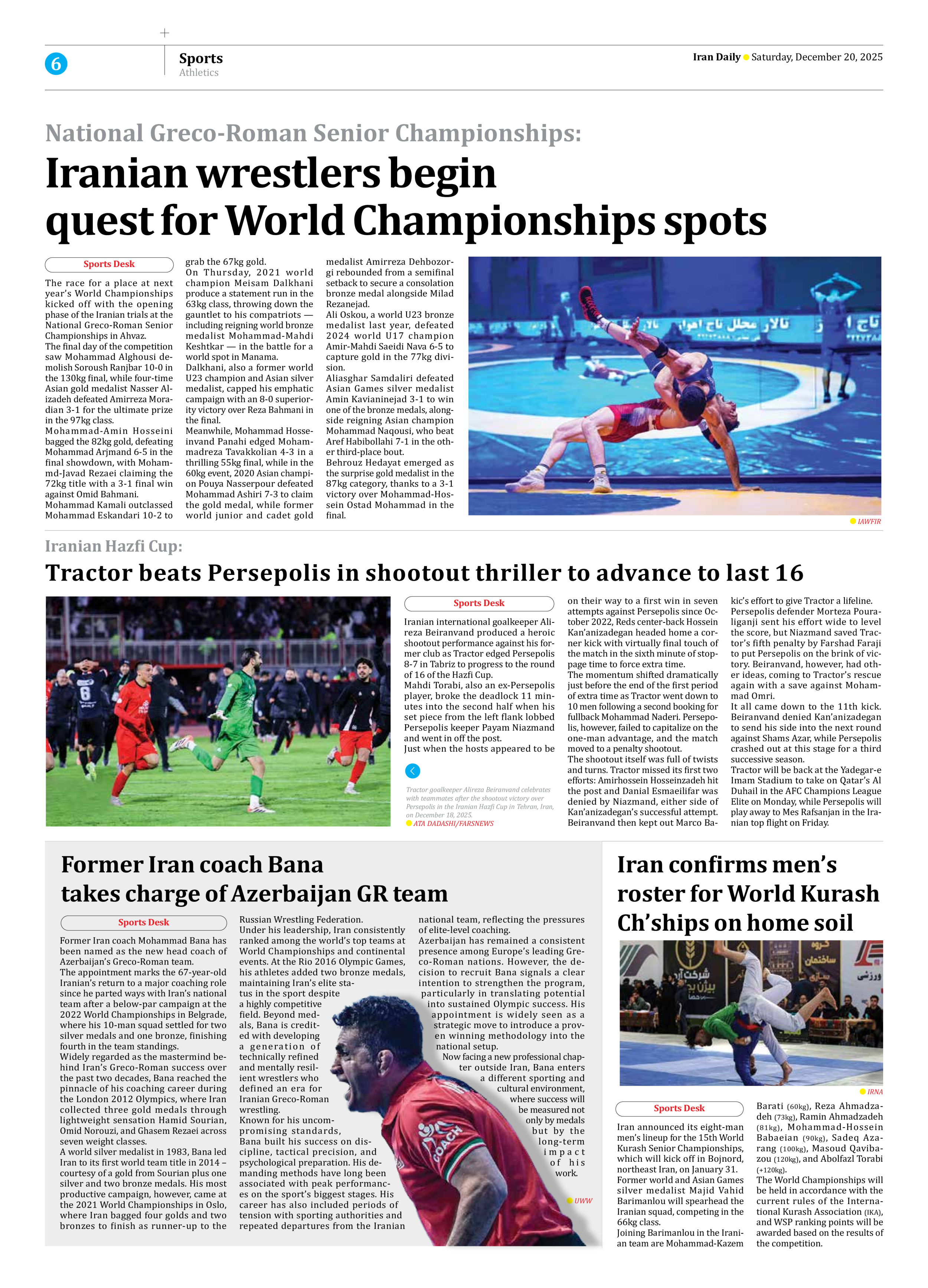
Former Iran coach Mohammad Bana has been named as the new head coach of Azerbaijan’s Greco-Roman team.
The appointment marks the 67-year-old Iranian’s return to a major coaching role since he parted ways with Iran’s national team after a below-par campaign at the 2022 World Championships in Belgrade, where his 10-man squad settled for two silver medals and one bronze, finishing fourth in the team standings.
Widely regarded as the mastermind behind Iran’s Greco-Roman success over the past two decades, Bana reached the pinnacle of his coaching career during the London 2012 Olympics, where Iran collected three gold medals through lightweight sensation Hamid Sourian, Omid Norouzi, and Ghasem Rezaei across seven weight classes.
A world silver medalist in 1983, Bana led Iran to its first world team title in 2014 – courtesy of a gold from Sourian plus one silver and two bronze medals. His most productive campaign, however, came at the 2021 World Championships in Oslo, where Iran bagged four golds and two bronzes to finish as runner-up to the Russian Wrestling Federation.
Under his leadership, Iran consistently ranked among the world’s top teams at World Championships and continental events. At the Rio 2016 Olympic Games, his athletes added two bronze medals, maintaining Iran’s elite status in the sport despite a highly competitive field. Beyond medals, Bana is credited with developing a generation of technically refined and mentally resilient wrestlers who defined an era for Iranian Greco-Roman wrestling.
Known for his uncompromising standards, Bana built his success on discipline, tactical precision, and psychological preparation. His demanding methods have long been associated with peak performances on the sport’s biggest stages. His career has also included periods of tension with sporting authorities and repeated departures from the Iranian national team, reflecting the pressures of elite-level coaching.
Azerbaijan has remained a consistent presence among Europe’s leading Greco-Roman nations. However, the decision to recruit Bana signals a clear intention to strengthen the program, particularly in translating potential into sustained Olympic success. His appointment is widely seen as a strategic move to introduce a proven winning methodology into the national setup.
Now facing a new professional chapter outside Iran, Bana enters a different sporting and cultural environment, where success will be measured not only by medals but by the long-term impact of his work.