







Copy in clipboard...
Israeli violations against Syria pose ‘direct threat’ to West Asia security: Iran
Speaking at a UN Security Council meeting on Syria on Thursday, Amir Saeid Iravani said the Israeli regime has, over the past year, intensified its unlawful use of force, expanded its military footprint, and sought to consolidate its occupation of Syrian land, Press TV reported.
“Israel’s actions are neither defensive nor incidental; they are part of a deliberate strategy to entrench occupation, fragment Syria, and weaken its national cohesion by exploiting ethnic and sectarian differences and promoting separatist agendas,” he added. “Such conduct constitutes a direct threat to regional peace and security.”
Iravani also condemned last month’s Israeli attack on the town of Beit Jinn in the Damascus countryside, which killed 13 people and injured 25 others, as a grave war crime under international law.
The criminal assault and the local resistance to Israeli attacks, he said, underscore the "destabilizing consequences of prolonged occupation and repeated acts of aggression."
The Iranian envoy further called on the Security Council to take concrete measures to compel the regime to respect Syria’s sovereignty and territorial integrity.
“Continued inaction, selective silence, or the political shielding of Israel by a permanent member of this Council serves only to normalize and legitimize its (Israeli) occupation and acts of aggression and renders the Council’s resolutions ineffective and unenforceable,” he said, referring to the US support for Israeli occupation and violations of international law.
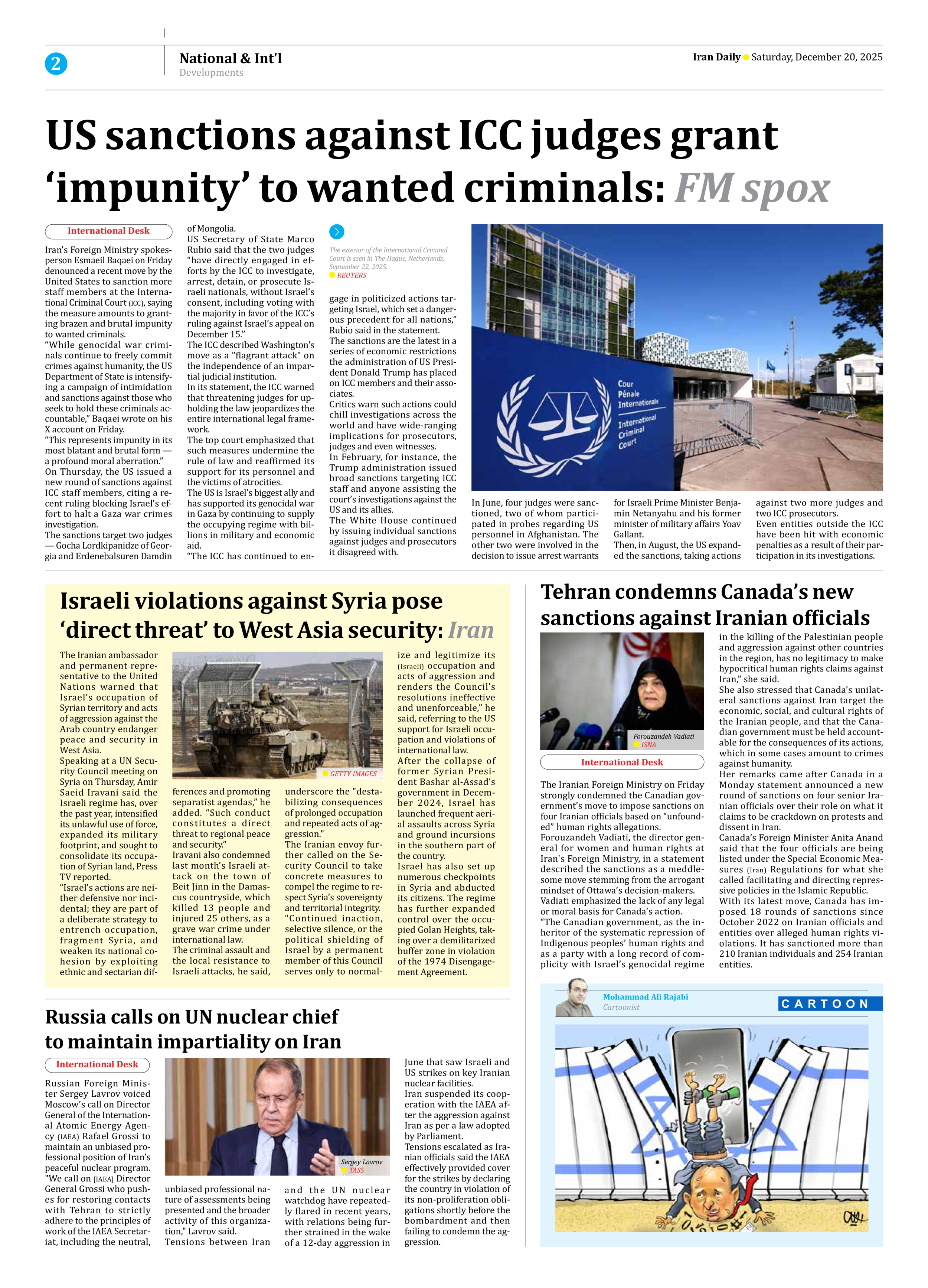
After the collapse of former Syrian President Bashar al-Assad’s government in December 2024, Israel has launched frequent aerial assaults across Syria and ground incursions in the southern part of the country.
Israel has also set up numerous checkpoints in Syria and abducted its citizens. The regime has further expanded control over the occupied Golan Heights, taking over a demilitarized buffer zone in violation of the 1974 Disengagement Agreement.