







Walk through history, nature in Maryan village of Gilan Province
Humans have always sought natural areas with clean air and freedom from noise to find rest, especially given the pressures of living in crowded and polluted urban environments. They long for traditional spaces that divert the mind from concrete and towering buildings, instead presenting forests and meadows that captivate every visitor’s sight.
Finding such places with these qualities in Iran is far from an impossible dream. This vast country, boasting a four-season natural climate, simply requires a bit of determination to fulfill your desire for tranquility. Among these destinations, which many city dwellers yearn for, is Maryan village, IRNA wrote.
The name Maryan literally means a place built beside the road. This village is located near Talesh and lies approximately 143 kilometers from Rasht, the provincial capital of Gilan Province.
Situated at an elevation of 1,080 meters above sea level, Maryan is embraced by picturesque landscapes of pastures, forests, and mountains. Within this dreamlike village, the harmonious blend of quince, apple, and pear trees combined with the soothing melodies of the shepherd’s reed flute and the gentle ringing of sheep’s bells briefly transports visitors to a land of dreams, reminiscent of scenes seen only in films.
Maryan village is considered one of the attractive tourist spots, featuring a mild climate in summer and cold weather in winter. The local economy primarily revolves around gardening, farming, handicrafts, and animal husbandry. Key agricultural products from this area include wheat, potatoes, alfalfa, beans, tobacco, apricots, apples, quinces, and pears.
The villagers traditionally wear Taleshi attire and communicate using the Taleshi and Azari languages. The local cuisine offers a variety of traditional dishes, such as stews like Shorba and Qormeh, as well as diverse soups including sour Ash and Ash Reshteh.
Beyond its mountainous heights, enchanting forests, and the flowing Gorgan Rud river, Maryan village also boasts ancient historical sites.
One of these is Maryan Cemetery, whose existence attests to the area’s long-standing history and the presence of various Taleshi ethnic communities spanning centuries. Research indicates that this cemetery is among the largest prehistoric burial grounds in Iran. Constructed in the style of pre-Islamic ancestors, excavations here have uncovered bodies accompanied by essential burial items.
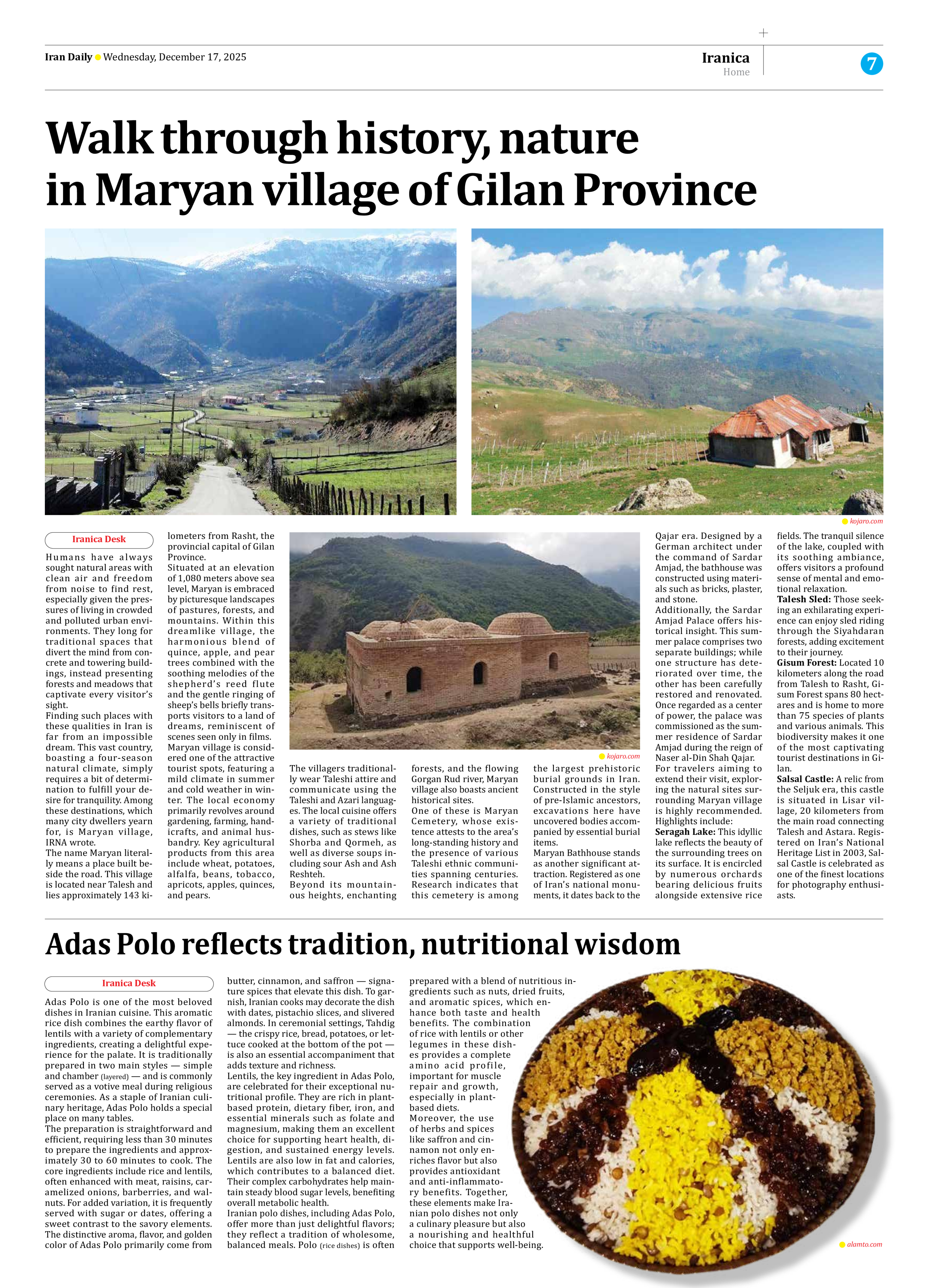
Maryan Bathhouse stands as another significant attraction. Registered as one of Iran’s national monuments, it dates back to the Qajar era. Designed by a German architect under the command of Sardar Amjad, the bathhouse was constructed using materials such as bricks, plaster, and stone.
Additionally, the Sardar Amjad Palace offers historical insight. This summer palace comprises two separate buildings; while one structure has deteriorated over time, the other has been carefully restored and renovated. Once regarded as a center of power, the palace was commissioned as the summer residence of Sardar Amjad during the reign of Naser al-Din Shah Qajar.
For travelers aiming to extend their visit, exploring the natural sites surrounding Maryan village is highly recommended. Highlights include:
Seragah Lake: This idyllic lake reflects the beauty of the surrounding trees on its surface. It is encircled by numerous orchards bearing delicious fruits alongside extensive rice fields. The tranquil silence of the lake, coupled with its soothing ambiance, offers visitors a profound sense of mental and emotional relaxation.
Talesh Sled: Those seeking an exhilarating experience can enjoy sled riding through the Siyahdaran forests, adding excitement to their journey.
Gisum Forest: Located 10 kilometers along the road from Talesh to Rasht, Gisum Forest spans 80 hectares and is home to more than 75 species of plants and various animals. This biodiversity makes it one of the most captivating tourist destinations in Gilan.
Salsal Castle: A relic from the Seljuk era, this castle is situated in Lisar village, 20 kilometers from the main road connecting Talesh and Astara. Registered on Iran’s National Heritage List in 2003, Salsal Castle is celebrated as one of the finest locations for photography enthusiasts.