







Afghanistan secures UNESCO recognition for Behzad’s miniature painting style
At the 20th Session of the Intergovernmental Committee for the Safeguarding of Intangible Cultural Heritage, held at the Red Fort in New Delhi, Afghanistan successfully inscribed Behzad’s style of miniature painting on UNESCO’s Representative List of the Intangible Cultural Heritage of Humanity.
Afghanistan had submitted the nomination in 2021, highlighting the legacy of Kamal al-Din Behzad (1455–1535), the celebrated Persian painter born in Herat, then the capital of the Timurid Empire and a major cultural center of Iran.
Iran had previously achieved multinational recognition for Persian miniature painting in 2020, jointly inscribed with Turkey, Azerbaijan, and Uzbekistan during the 15th Session of the Committee.
Iranian officials have noted that while Afghanistan may highlight the Herat school of miniature painting, Behzad’s legacy is deeply tied to Iran’s cultural heritage. Alireza Izadi, the director general of Iran’s Office for the Registration of Historical Works, had earlier stated that such nominations should involve dialogue and mutual consent, citing the precedent of the joint registration of the musical instrument rebab with Afghanistan.
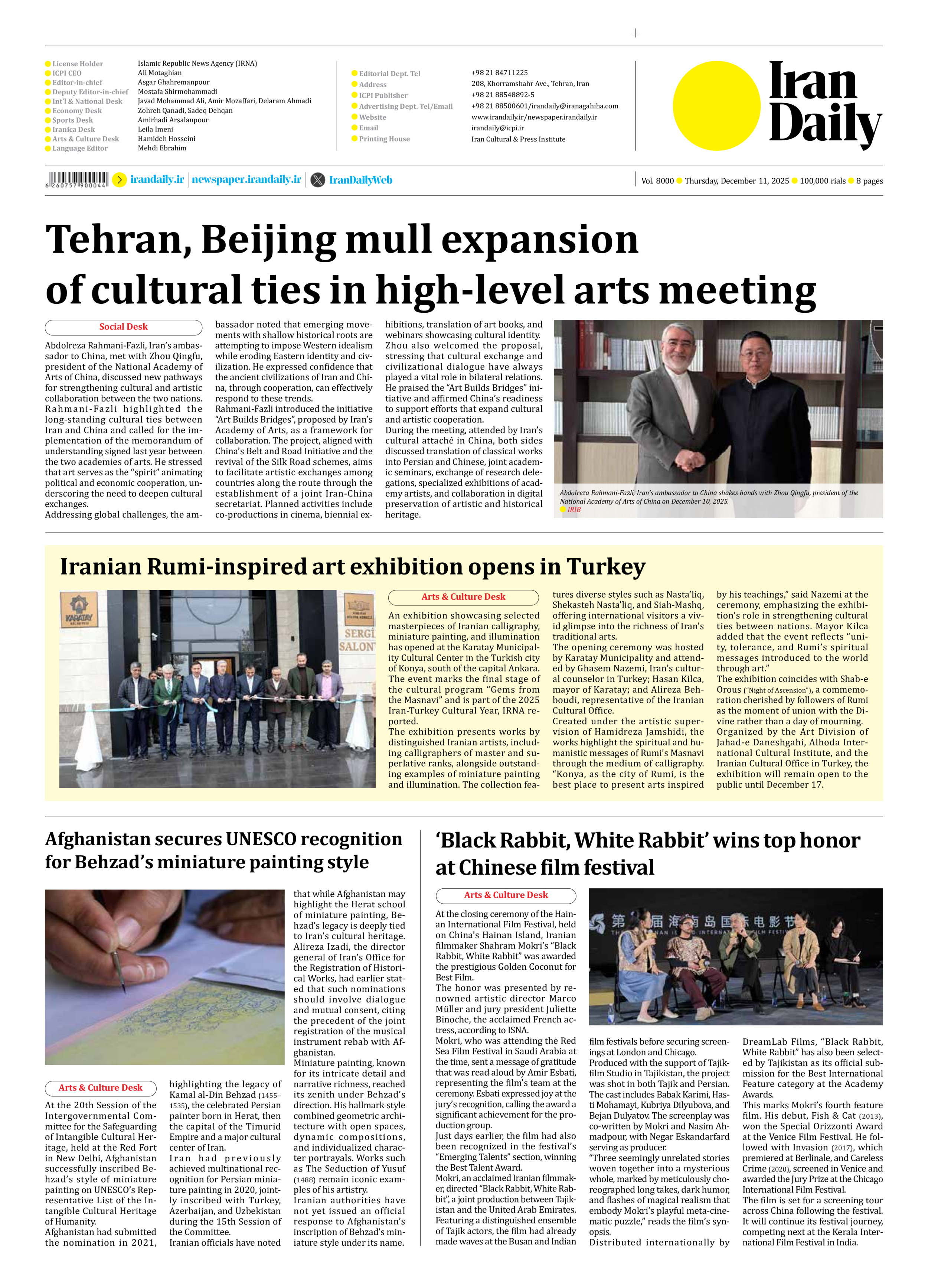
Miniature painting, known for its intricate detail and narrative richness, reached its zenith under Behzad’s direction. His hallmark style combined geometric architecture with open spaces, dynamic compositions, and individualized character portrayals. Works such as The Seduction of Yusuf (1488) remain iconic examples of his artistry.
Iranian authorities have not yet issued an official response to Afghanistan’s inscription of Behzad’s miniature style under its name.