





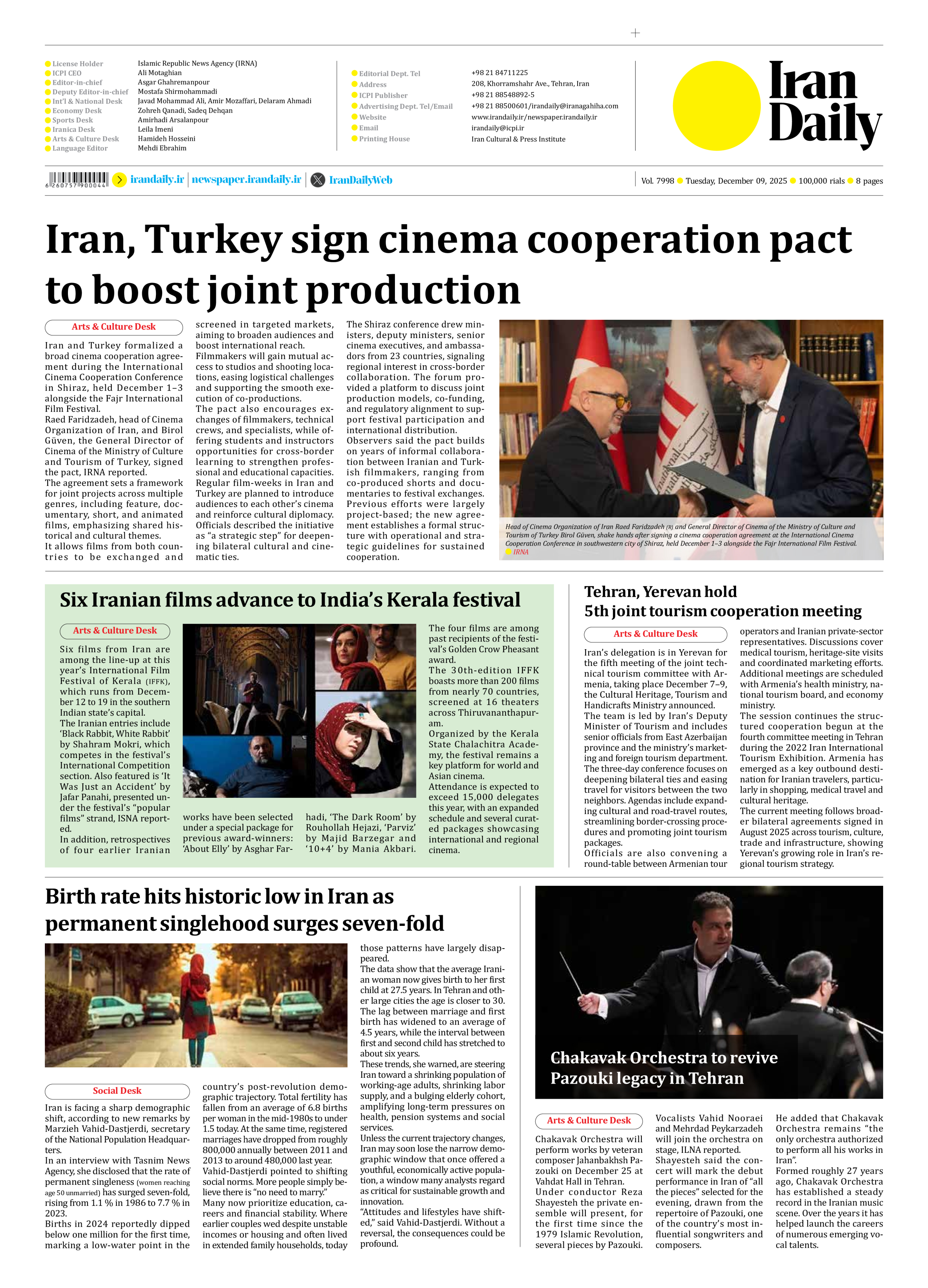


Birth rate hits historic low in Iran as permanent singlehood surges seven‑fold
Iran is facing a sharp demographic shift, according to new remarks by Marzieh Vahid‑Dastjerdi, secretary of the National Population Headquarters.
In an interview with Tasnim News Agency, she disclosed that the rate of permanent singleness (women reaching age 50 unmarried) has surged seven‑fold, rising from 1.1 % in 1986 to 7.7 % in 2023.
Births in 2024 reportedly dipped below one million for the first time, marking a low‑water point in the country’s post‑revolution demographic trajectory. Total fertility has fallen from an average of 6.8 births per woman in the mid‑1980s to under 1.5 today. At the same time, registered marriages have dropped from roughly 800,000 annually between 2011 and 2013 to around 480,000 last year.
Vahid‑Dastjerdi pointed to shifting social norms. More people simply believe there is “no need to marry.”
Many now prioritize education, careers and financial stability. Where earlier couples wed despite unstable incomes or housing and often lived in extended family households, today those patterns have largely disappeared.
The data show that the average Iranian woman now gives birth to her first child at 27.5 years. In Tehran and other large cities the age is closer to 30. The lag between marriage and first birth has widened to an average of 4.5 years, while the interval between first and second child has stretched to about six years.
These trends, she warned, are steering Iran toward a shrinking population of working‑age adults, shrinking labor supply, and a bulging elderly cohort, amplifying long‑term pressures on health, pension systems and social services.
Unless the current trajectory changes, Iran may soon lose the narrow demographic window that once offered a youthful, economically active population, a window many analysts regard as critical for sustainable growth and innovation.
“Attitudes and lifestyles have shifted,” said Vahid‑Dastjerdi. Without a reversal, the consequences could be profound.