







Copy in clipboard...
Egypt calls for renewed diplomatic engagement between Iran, IAEA
Abdelatty, Araghchi discuss Iran’s nuclear program
Egypt’s foreign minister in a phone call with chief of the UN nuclear agency on Saturday called for renewed diplomatic engagement between Iran and the agency aimed at reaching a comprehensive agreement that secures the interests of all parties and bolsters regional security.
Badr Abdelatty stressed the need to continue efforts to reduce tensions, build confidence and maintain conditions that support continuing cooperation between Iran and the International Atomic Energy Agency (IAEA).
Abdelatty also held a phone conversation with his Iranian counterpart Abbas Araghchi, during which the two sides discussed a range of issues including Iran’s nuclear program, bilateral ties as well as developments in the region.
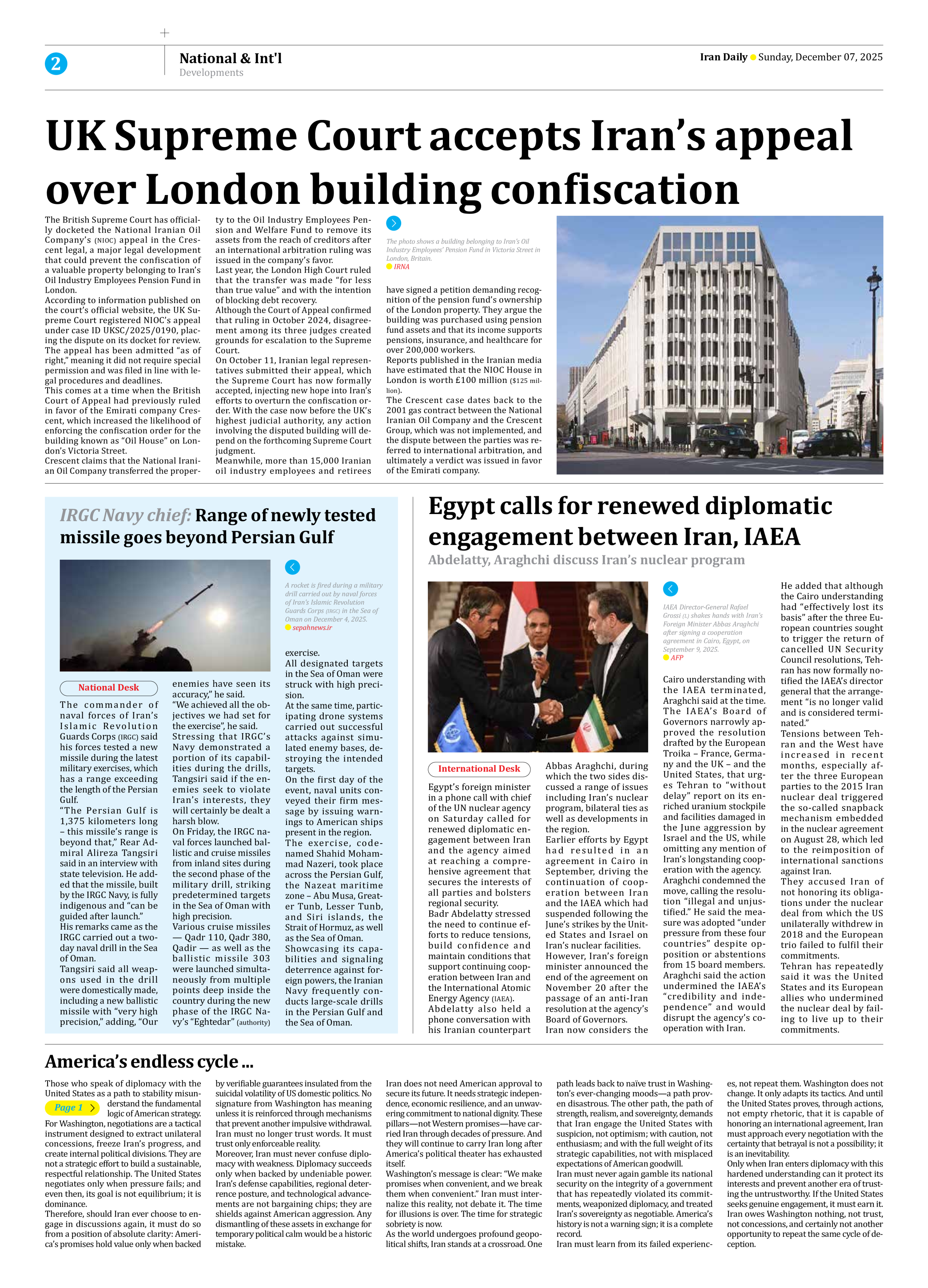
Earlier efforts by Egypt had resulted in an agreement in Cairo in September, driving the continuation of cooperation between Iran and the IAEA which had suspended following the June’s strikes by the United States and Israel on Iran’s nuclear facilities.
However, Iran’s foreign minister announced the end of the agreement on November 20 after the passage of an anti-Iran resolution at the agency’s Board of Governors.
Iran now considers the Cairo understanding with the IAEA terminated, Araghchi said at the time.
The IAEA’s Board of Governors narrowly approved the resolution drafted by the European Troika – France, Germany and the UK – and the United States, that urges Tehran to “without delay” report on its enriched uranium stockpile and facilities damaged in the June aggression by Israel and the US, while omitting any mention of Iran’s longstanding cooperation with the agency.
Araghchi condemned the move, calling the resolution “illegal and unjustified.” He said the measure was adopted “under pressure from these four countries” despite opposition or abstentions from 15 board members.
Araghchi said the action undermined the IAEA’s “credibility and independence” and would disrupt the agency’s cooperation with Iran.
He added that although the Cairo understanding had “effectively lost its basis” after the three European countries sought to trigger the return of cancelled UN Security Council resolutions, Tehran has now formally notified the IAEA’s director general that the arrangement “is no longer valid and is considered terminated.”
Tensions between Tehran and the West have increased in recent months, especially after the three European parties to the 2015 Iran nuclear deal triggered the so-called snapback mechanism embedded in the nuclear agreement on August 28, which led to the reimposition of international sanctions against Iran.
They accused Iran of not honoring its obligations under the nuclear deal from which the US unilaterally withdrew in 2018 and the European trio failed to fulfil their commitments.
Tehran has repeatedly said it was the United States and its European allies who undermined the nuclear deal by failing to live up to their commitments.