







Minister: $3b ‘emergency plan’ to add 250,000 bpd crude output on track for early 2027
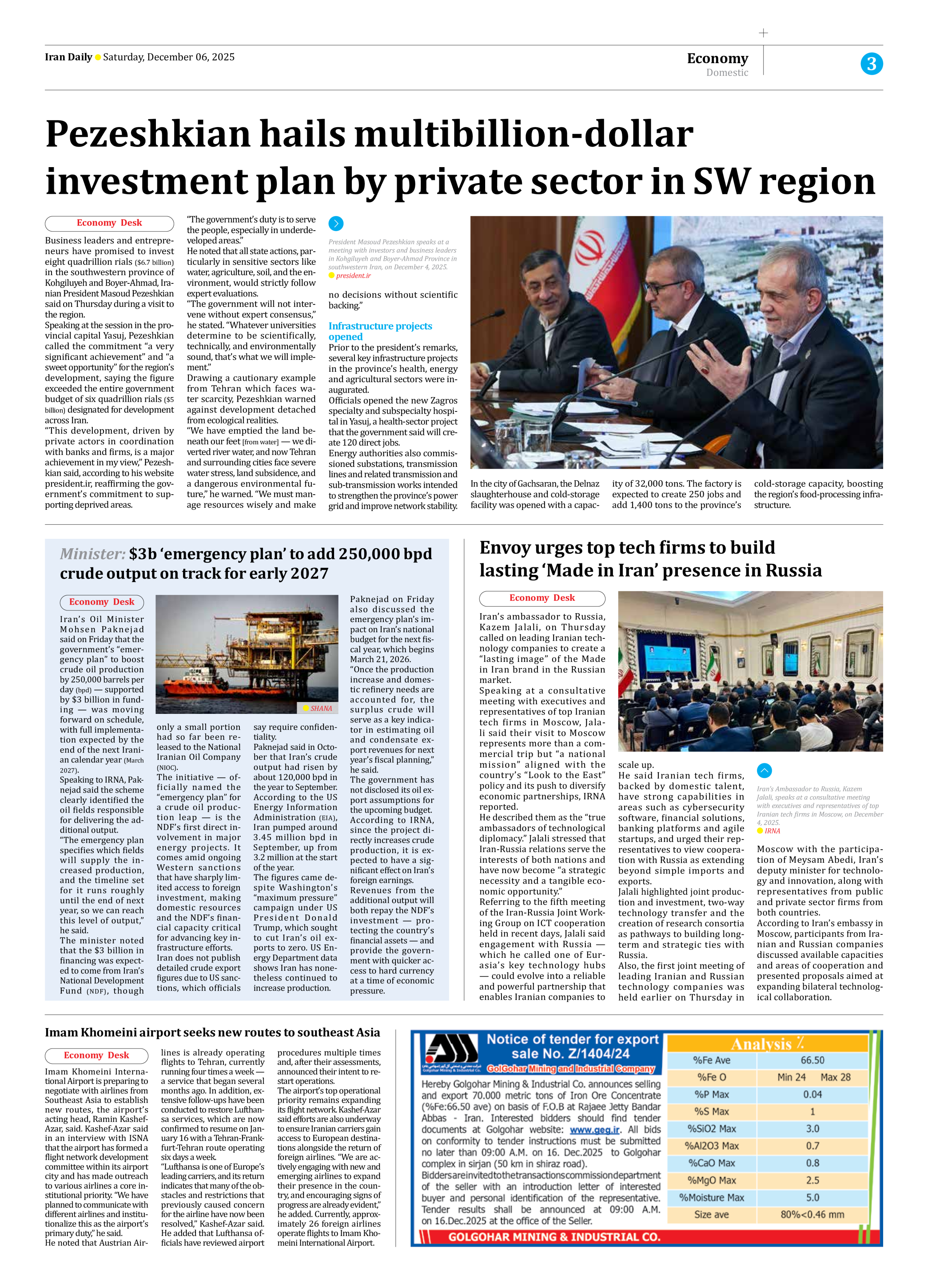
Iran’s Oil Minister Mohsen Paknejad said on Friday that the government’s “emergency plan” to boost crude oil production by 250,000 barrels per day (bpd) — supported by $3 billion in funding — was moving forward on schedule, with full implementation expected by the end of the next Iranian calendar year (March 2027).
Speaking to IRNA, Paknejad said the scheme clearly identified the oil fields responsible for delivering the additional output.
“The emergency plan specifies which fields will supply the increased production, and the timeline set for it runs roughly until the end of next year, so we can reach this level of output,” he said.
The minister noted that the $3 billion in financing was expected to come from Iran’s National Development Fund (NDF), though only a small portion had so far been released to the National Iranian Oil Company (NIOC).
The initiative — officially named the “emergency plan” for a crude oil production leap — is the NDF’s first direct involvement in major energy projects. It comes amid ongoing Western sanctions that have sharply limited access to foreign investment, making domestic resources and the NDF’s financial capacity critical for advancing key infrastructure efforts.
Iran does not publish detailed crude export figures due to US sanctions, which officials say require confidentiality.
Paknejad said in October that Iran’s crude output had risen by about 120,000 bpd in the year to September.
According to the US Energy Information Administration (EIA), Iran pumped around 3.45 million bpd in September, up from 3.2 million at the start of the year.
The figures came despite Washington’s “maximum pressure” campaign under US President Donald Trump, which sought to cut Iran’s oil exports to zero. US Energy Department data shows Iran has nonetheless continued to increase production.
Paknejad on Friday also discussed the emergency plan’s impact on Iran’s national budget for the next fiscal year, which begins March 21, 2026.
“Once the production increase and domestic refinery needs are accounted for, the surplus crude will serve as a key indicator in estimating oil and condensate export revenues for next year’s fiscal planning,” he said.
The government has not disclosed its oil export assumptions for the upcoming budget.
According to IRNA, since the project directly increases crude production, it is expected to have a significant effect on Iran’s foreign earnings.
Revenues from the additional output will both repay the NDF’s investment — protecting the country’s financial assets — and provide the government with quicker access to hard currency at a time of economic pressure.