







Sarein battles fluctuating tourism, rapid development
Sarein, a city in Ardabil Province long recognized as a major tourist destination, now finds itself caught between seasonal surges in visitors and relentless construction — most of it aimed at seasonal accommodations.
Akbar Mohammadi, a tourism entrepreneur and investor in Sarein, told Mehr News Agency that the city currently hosts over 230 active lodging facilities, including hotels, hotel-apartments, guesthouses, and suites — a capacity far exceeding the city’s size and actual demand during peak travel periods. Despite this abundance, many of these units are only occupied during specific times of the year, remaining empty for months at a stretch.
Regarding the city’s hydrotherapy complexes, Mohammadi explained that they are the main driver of Sarein’s tourism industry. “The city has several active complexes, and many visitors come solely for these facilities. Yet even their popularity is highly seasonal: summers and holidays are extremely busy, while autumn and winter see much lower attendance,” he noted.
The tourism expert emphasized the imbalance in visitor flow, “During summer, Nowruz (Iranian New Year) holidays, and special holidays, the city’s population multiplies several times over. But in the second half of the year, a large portion of accommodations remain vacant. This severe fluctuation undermines the sustainability of Sarein’s tourism development.”
He added that despite the city already having more than 230 lodging centers, local tourism authorities and urban planners continue to propose further expansion, with new construction projects underway. “A significant part of the current capacity stays empty for most of the year,” he stressed.
Mohammadi also raised concerns about pressure to expand the city’s boundaries. “There are ongoing discussions about allocating more land for construction. If this process continues without careful study or consideration of actual tourist demand, it could cause serious economic and environmental consequences,” he warned.
On the need for a revised development approach, he said, “Tourism growth is not just about building more hotels. Authorities must focus on managing demand, distributing travel throughout the year, developing off-season activities, and improving service quality. Without this shift, Sarein risks facing an oversupply of accommodations and wasted investment.”
Regarding the potential impact of uncontrolled construction on Sarein’s hydrotherapy complexes, Mohammadi explained that the city sits atop sensitive geothermal structures. “Any deep drilling, unplanned construction, or increased load near the springs could disrupt the balance of underground water pressures. This is a serious concern,” he said.
“If urban expansion continues without study,” he continued, “the springs’ discharge may decrease, water courses may shift, or even water quality could be affected. Some springs rely on extremely delicate and stable flows, and even minor disruptions in subterranean layers could damage them.”
Mohammadi noted that the risks extend beyond geology. “More construction means more population, wastewater, water consumption, and waste. If infrastructure doesn’t develop alongside this growth, the environmental pressure around the spa complexes will increase, lowering the quality of the tourist experience as well.”
He added, “For a city like Sarein, the springs are the most valuable asset. If construction takes place without proper geological assessment and respect for the springs’ protected zones, it could cause irreparable damage. Today, more than ever, building regulations in sensitive areas must be strictly enforced. Sarein needs development, but it must be a type of development that preserves the sanctity of its springs. If these resources are harmed, not only will the thermal spa industry suffer, but the city’s entire tourism sector will be negatively affected.”
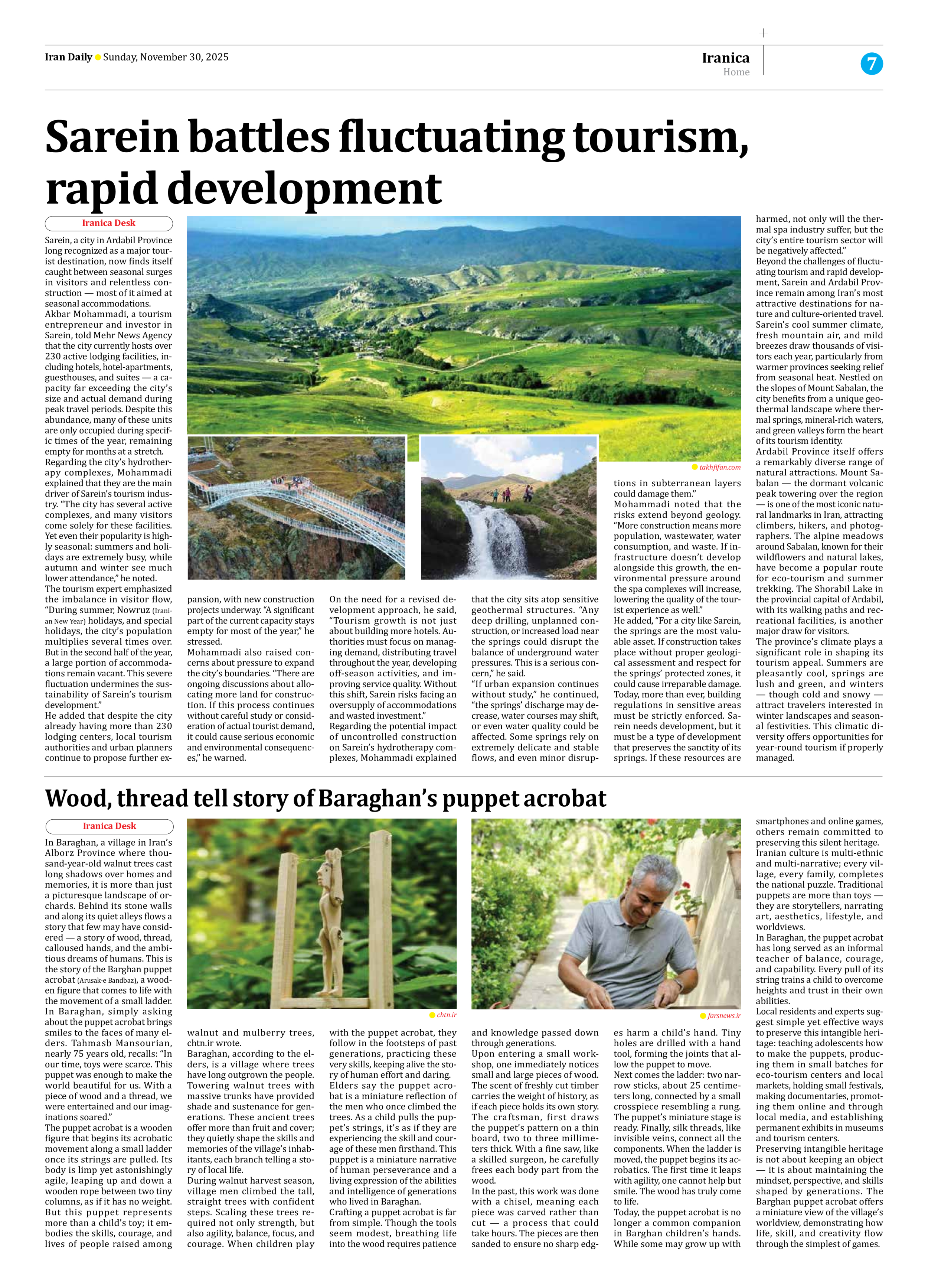
Beyond the challenges of fluctuating tourism and rapid development, Sarein and Ardabil Province remain among Iran’s most attractive destinations for nature and culture-oriented travel. Sarein’s cool summer climate, fresh mountain air, and mild breezes draw thousands of visitors each year, particularly from warmer provinces seeking relief from seasonal heat. Nestled on the slopes of Mount Sabalan, the city benefits from a unique geothermal landscape where thermal springs, mineral-rich waters, and green valleys form the heart of its tourism identity.
Ardabil Province itself offers a remarkably diverse range of natural attractions. Mount Sabalan — the dormant volcanic peak towering over the region — is one of the most iconic natural landmarks in Iran, attracting climbers, hikers, and photographers. The alpine meadows around Sabalan, known for their wildflowers and natural lakes, have become a popular route for eco-tourism and summer trekking. The Shorabil Lake in the provincial capital of Ardabil, with its walking paths and recreational facilities, is another major draw for visitors.
The province’s climate plays a significant role in shaping its tourism appeal. Summers are pleasantly cool, springs are lush and green, and winters — though cold and snowy — attract travelers interested in winter landscapes and seasonal festivities. This climatic diversity offers opportunities for year-round tourism if properly managed.