







Kerman is timeless heart of Iran’s carpet heritage
Today, the name of Kerman — one of Iran’s major and historic provinces — is inseparably linked with the art of carpet weaving. As one of the oldest cities in the country, Kerman has long upheld its status as a leading center of this craft. The history of Kerman carpets stretches back many centuries, even predating the Safavid dynasty. One of the oldest surviving examples is a carpet fragment preserved in a museum in Mashhad, estimated to be over 500 years old. Like the products of many other regions, Kerman carpets have evolved significantly over time.
This craft reached a remarkable level of prosperity during the Safavid era. However, by the Qajar period, carpet production witnessed a dramatic decline. By the late 19th century, only six workshops remained active in the region, operating no more than thirty looms. After this period of stagnation, the industry experienced a revival. Numerous workshops were established once again, primarily to meet the growing demand for exports to Europe and the United States. By the early 20th century, hundreds of workshops and thousands of looms were operating throughout Kerman, visitiran.ir wrote.
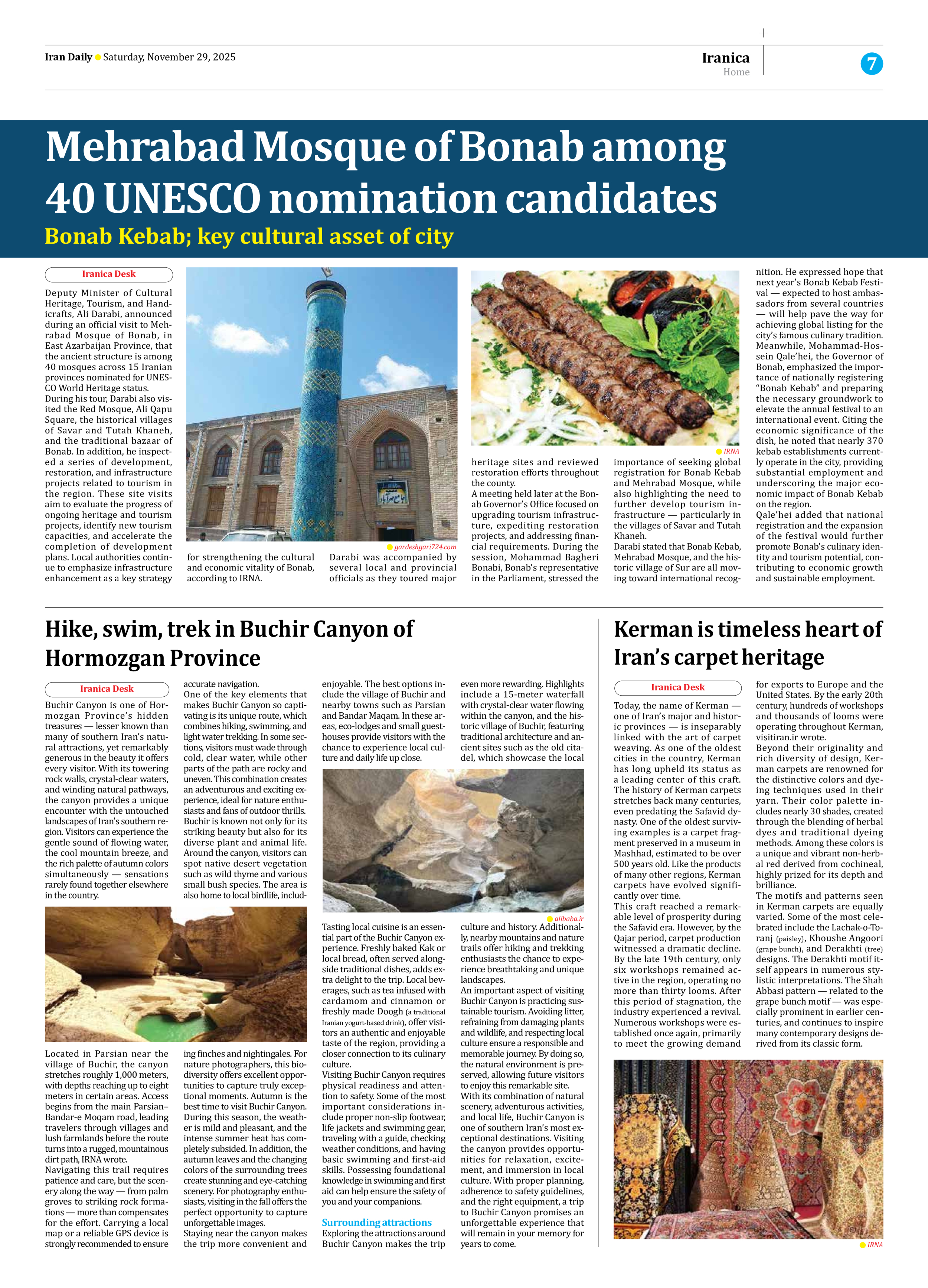
Beyond their originality and rich diversity of design, Kerman carpets are renowned for the distinctive colors and dyeing techniques used in their yarn. Their color palette includes nearly 30 shades, created through the blending of herbal dyes and traditional dyeing methods. Among these colors is a unique and vibrant non-herbal red derived from cochineal, highly prized for its depth and brilliance.
The motifs and patterns seen in Kerman carpets are equally varied. Some of the most celebrated include the Lachak-o-Toranj (paisley), Khoushe Angoori (grape bunch), and Derakhti (tree) designs. The Derakhti motif itself appears in numerous stylistic interpretations. The Shah Abbasi pattern — related to the grape bunch motif — was especially prominent in earlier centuries, and continues to inspire many contemporary designs derived from its classic form.